Amy Woodward / Connected Archives
Communion Is Alive
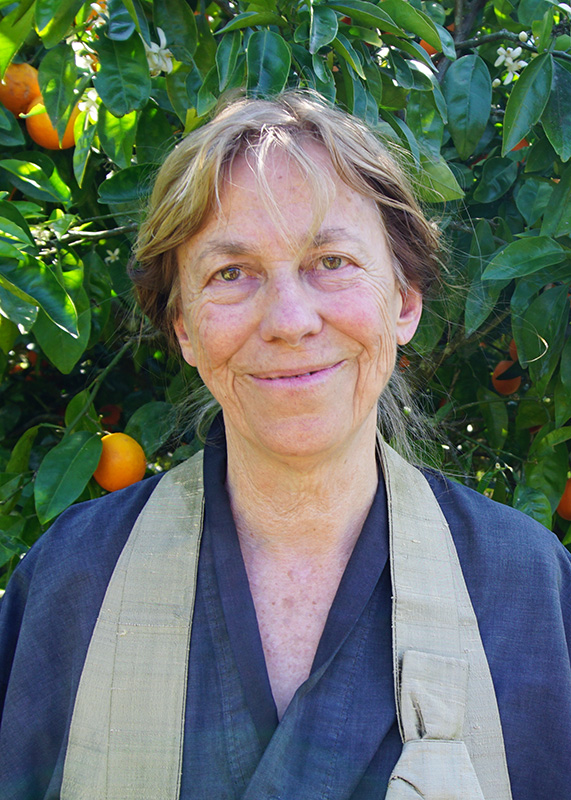
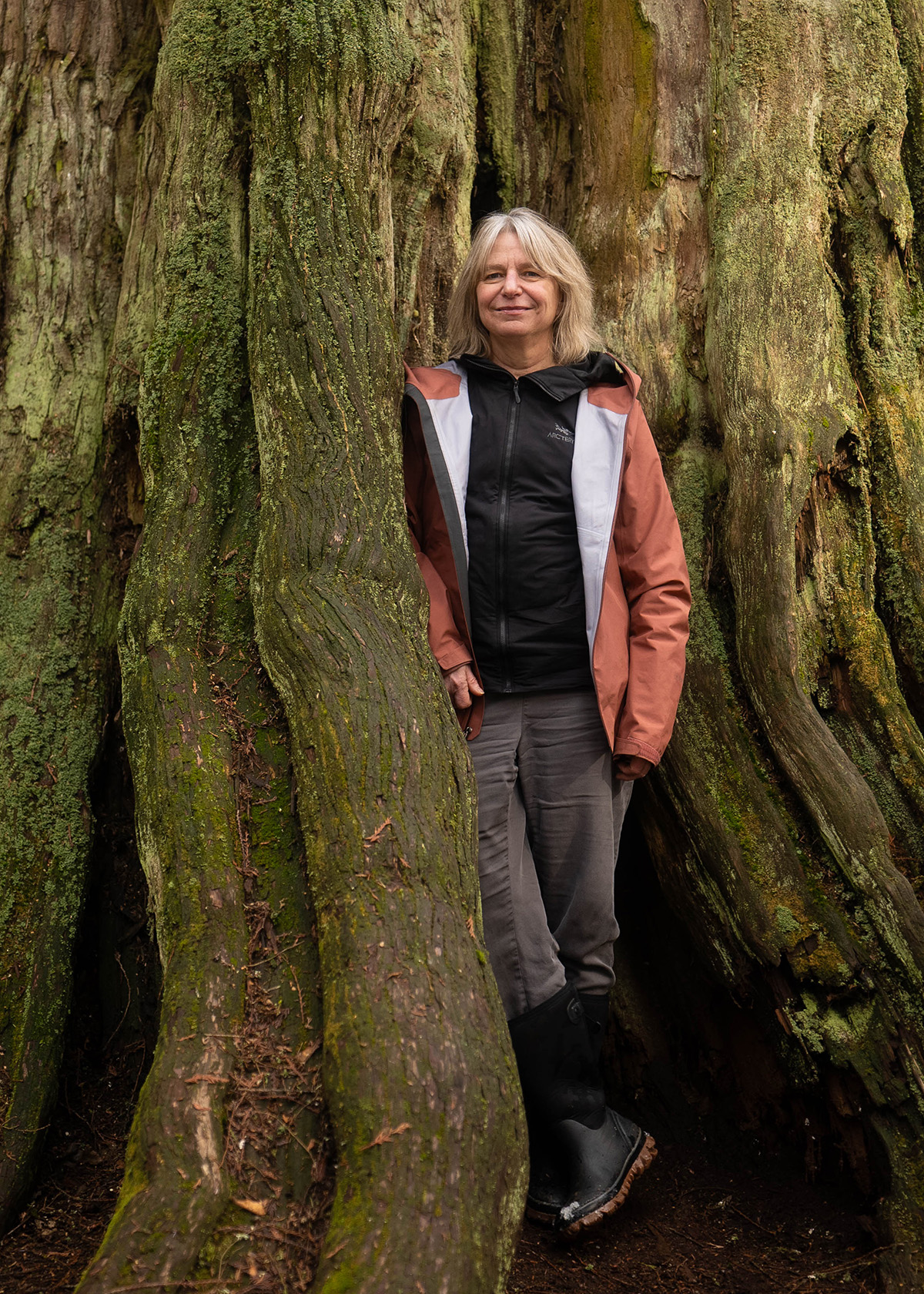
Stephen Blackmer is a writer, eco-spiritual teacher, and forest guardian based in Canterbury, New Hampshire. Over the past fifty years, he has worked as a forest ecologist, policymaker, lobbyist, coalition-builder, entrepreneur, and advocate for conserving forests at local, regional, and national scales, and promoting human well-being in harmony with the natural world. He is an Environmental Fellow with the Robert and Patricia Switzer Foundation, a Bullard Fellow at the Harvard Forest, and was awarded the National Conservation Partnership Award.
Susan Murphy Roshi is a writer, filmmaker, radio producer, and founding teacher of Zen Open Circle in Sydney, Australia. Since receiving dharma transmission in both Diamond Sangha and Pacific Zen lineages, she has been leading regular retreats around Australia and teaching a country-wide sangha that extends internationally online. She is the author of Upside-Down Zen; Minding the Earth, Mending the World; and Red Thread Zen. Her latest book is A Fire Runs Through All Things: Zen Koans for Facing the Climate Crisis.
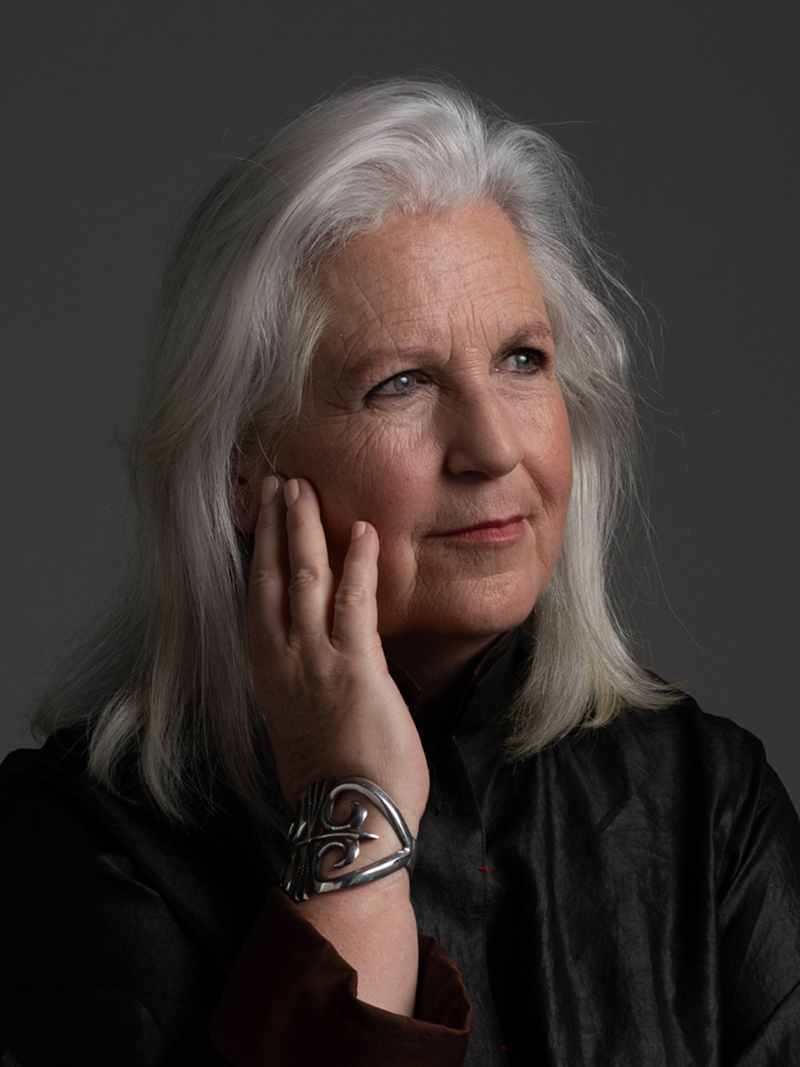
Bonnie Nadzam is an American writer and Zen Buddhist priest and chaplain. Her poetry, essays and fiction have appeared in Harper’s, Orion Magazine, The Iowa Review, Kenyon Review, and elsewhere. Her first novel, Lamb, was the recipient of The Center for Fiction’s Flaherty-Dunnan First Novel Prize, translated into several languages and made into an award-winning independent film. Her second novel, Lions, was a finalist for the PEN USA Literary Award in Fiction. She is also co-author of Love in the Anthropocene with environmental ethicist Dale Jamieson. Her next book is a work of nonfiction, The Magpie Spoke to Me: How Storytelling Shapes Our World (Shambhala, 2026). She is currently Associate Director of Ethics, Culture & Religion with the Animal Law and Policy Program at Harvard University.
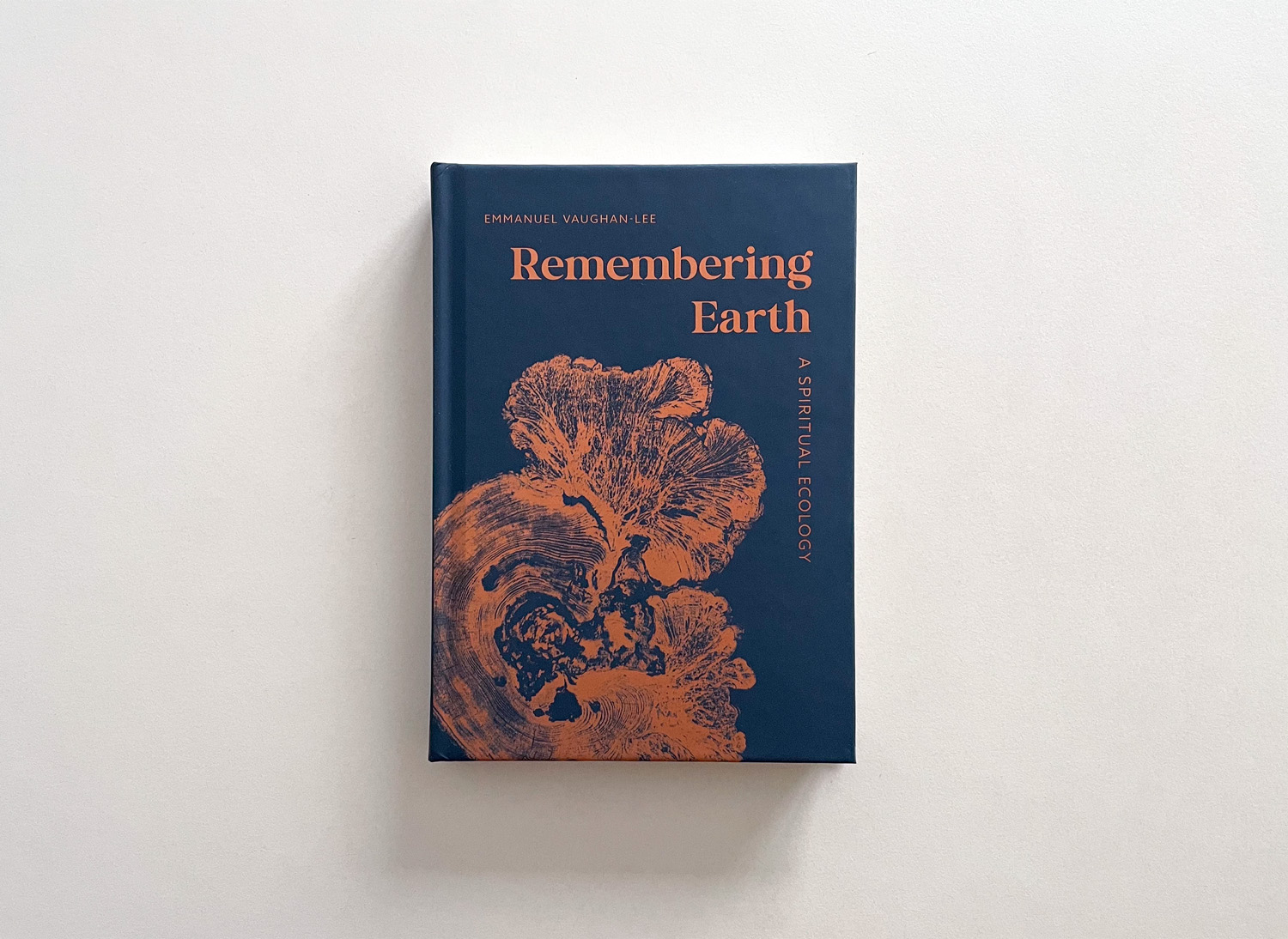
Emmanuel Vaughan-Lee is an author, Emmy- and Peabody Award–nominated filmmaker, and a Sufi teacher. He has directed more than twenty documentary films, including Taste of the Land, The Last Ice Age, Aloha Āina, The Nightingale’s Song, Earthrise, Sanctuaries of Silence, and Elemental, among others. His films have been screened at New York Film Festival, Tribeca Film Festival, SXSW, and Hot Docs, exhibited at the Smithsonian Museum and London’s Barbican, and featured on PBS POV, National Geographic, The New Yorker, and The New York Times Op-Docs. His books include Requiem, Invitation and Celebration; Song of the Seasons; and Remembering Earth: A Spiritual Ecology. He is the founding editor and podcast host of Emergence Magazine.
A Sufi teacher, a Zen roshi, a Zen Buddhist, and a former Episcopal priest come together to examine how the values of spiritual ecology are embedded within their faiths, and how restoring embodied practices of ecological reverence can help us cultivate a space where divinity becomes expansive.
Transcript
Emmanuel Vaughan-LeeI want to begin today’s conversation with a foundational question, which is: What does spiritual ecology mean to you? And how does it express itself within your faith and tradition, as well as in your practice? So, maybe I’ll come to you first, Susan.
Susan Murphy It’s almost like a redundancy to say “spiritual ecology,” because how can an ecological perspective not have spiritual depth? How can it possibly be a kind of purely conceptual or abstract or objectifying process whatsoever? The engagement in the word “spiritual” is just so obvious. It’s saying there is, at the deepest level, no other at play in this whole matter. And so every ecology, every ecosystem, makes that plain. There is no discrete other that is somehow floating separate from the Earth the way we imagine ourselves to be half the time, almost some form of extraterrestrial, I think. But a spiritual ecology is, for me, a sort of self-evident matter, almost—does not even need the word “spiritual.” It is implicit in everything that an ecological view and ecological subjectivity wakes up.
EVLYeah, there is this piece of stating the obvious that comes with the frame of spiritual ecology. And I’ve often reflected, myself, how sad that actually makes me, even though it’s the subtitle of the book and it’s something I’ve been saying for many years, naming spiritual ecology. But I always feel a certain remorse for having to do so, to have to state what is actually so intrinsically present in everything. So I appreciate you raising that.
Stephen, tell me about how this appears for you. You were an Episcopal priest. You founded this remarkable way of bringing the liturgy to a forest, back to the roots, you said, actually, of Christianity in many ways, of praying in nature. How has spiritual ecology come alive for you and how is it present in your practice?
Stephen BlackmerHow is it present in practice? I’ve spent my whole life walking in the woods, long before I was called into any more formal religious or spiritual tradition. So in many ways, the practice is just that simple. It’s that one—and Emmanuel, you speak about some of these practices or write about them in your book—of breathing, of walking, of simply being present with heart open to the presence, the greater presence that’s within everything and around everything.
When I think about spiritual ecology, it’s—since I began my work as an ecologist, working with the more material end of that spectrum—it’s a reminder that every bit of material presence is filled with a spark of divine energy. And whether that’s every human being, every creature that lives, every rock, every being, every planet, every particle of dust, the flowing of water, and the moving of air, that each of these is an expression in its own right, is an embodied expression, of the divine presence that that fills everything. So simultaneously, each of these pieces is unique and distinct and held in one.
EVLI feel like the ontological core of spiritual ecology is very much that simple recognition of the divine making itself known.
SBYeah.
EVLThat spirit is present and imbued in all things, and not just what we call living things, but also in what we see as—
SBAll things.
EVLAll things. The mountains, the rocks—
SBAll things. Nothing is excluded. Nothing possibly can be excluded. How could anything be outside of that? If one thing is in, then everything must be.
EVLHmm. And Bonnie, how has this emerged for you in your practice and in your work? And you also work very much with story as a way to bring us into relationship. I just finished reading your book about essentially moving from a cosmovision that is based on separation, the denial of the inherent reality of spirit imbued in all things, to one that acknowledges it.
Bonnie NadzamYeah, so lots of really good questions. And I resonate very much with what each of you, all three of you, have said already. I would say, to start, that nothing excluded means also not excluding a burning garbage dumpster or a pack of lies or a genocide or a pile of dog shit. And so there can be a real challenge there, in understanding that. And it’s an understanding that has to happen in the body, not rationally, so “understanding” is in some ways precisely the wrong word. And stories and poetry have this way—Susan, you know about this with haiku so intimately—that they just bypass rhetoric and go straight to the gut, straight to the heart. And that can be for good or ill, because depending on the cosmology or the ontology that’s being represented in the story or the poem, it feels completely real and whole to us. So if there are stories and types of poetry we leave out, that’s kind of dangerous.
As each of you have been saying in other words, it’s a fundamental question of Western philosophy: Am I one or am I many? And a Zen Buddhist response is not this is all one or I alone am one, but yes, both. I am one and many. That is the heart of non-dualism. And so if I am one and many—that includes your images floating before me and the stool holding up the computer—then everything is relationship. Everything.
And something I love from your new book, Emmanuel, is this very strong sentence, simple declarative sentence: Communion is alive. That the very nature of relating, of communing, of covenant is dynamic and alive the same way that a forest is dynamic and alive. And so we can’t settle into one kind of poetry or one kind of telling stories because that would be the same as thinking we know the answer, as reifying an experience, stiltifying and making something stale. But it’s hard. It’s hard to learn to tell new kinds of stories when we’re so conditioned.
EVLHmm. I mean, this reconditioning that I think we’re all working towards and that our practice deepens us into, it does put us in touch with—often slowly, revealing—this different set of values and principles than what we see in the world around us, for the most part, reflected back to us by mainstream culture. These are different values, which I personally don’t believe are the sole possession of any tradition or religion. I think they transcend that. I feel they actually come from that divine fabric that is what weaves our world together, Stephen, and is present in the Earth Herself, actually, these values. In your own work and your own practice, what are the principles and values that have come alive for you, that have emerged? Or perhaps principles and values that are inherent within Zen Buddhism or within Christianity that have suddenly shifted to be more embracing of an animate, alive, living Earth? Stephen, maybe I’ll come to you first.
SBSure. Since you invited me to speak from the tradition, Jesus says, Hear, O Israel: The Lord our God, the Lord is One. You shall love your Lord, the Lord your God, with all your heart and mind and soul and strength. And you shall love your neighbor as yourself. And in that simple question, who is our neighbor?, is that fundamental idea that we share this one world with all these creatures and beings and flowings and humans. We are all neighbors in this one small world. And indeed, this Earth is neighbors with all the other elements of the cosmos. So it is a fundamental realignment of that understanding of who are we here with? We are here with one another. There is no alternative. There is no other universe. In my tradition, the Christian tradition, which of course comes from the Jewish, the Hebrew tradition, that is the single most fundamental teaching. And from that all the rest can be derived.
EVLBut that’s often something that has been left out. It’s like the Golden Rule has stayed limited to the human experience.
SBYeah.
EVLIt feels like there needs to be a reorientation of some of these fundamental base values.
SBAncient teachings. I mean, there’s nothing new in this. It’s a returning to these things that, particularly in the Western world, have been so severely eroded as to sound strange and foreign, but they’re deeply present in our own tradition. And so a lot of my work with the Christian tradition is to recover these things that have been hidden, lost, buried, forgotten, and return them to the place of prominence from which they came.
EVLHmm. The Zen tradition—and forgive me, I am an outsider looking in to the many worlds of Zen—but from my understanding, and from what I’ve learned and studied, the roots of Zen lie with Chan, and the roots of Chan lie with Daoism, and the roots of Daoism is really an indigenous story, as much as it is an emergent new form of faith tied with Lao Tzu. And so there is perhaps within Zen a very alive connection to, a recognition of, the alive, animate nature of Earth, which is present perhaps more so than in some of the Judeo-Christian forms of faith and others. How have these principles, whether it’s compassion—you know, we think of Zen, if you don’t know much about Buddhism, you think of compassion as an example—how is that tied to this way of being with the living Earth, as just one example? Susan, I come to you.
SMJust coming off from what Stephen was talking about, I’m sometimes asked by Christian meditators to come and give them a koan, because, of course, they love to be bedeviled by koans and sort of opened up by koan. So one time I simply gave them the first line of the Communion, which is, This is my body. Just that. This is my body. And from a Zen point of view, This doesn’t leave anything out. It’s the oceans, the great wide Earth, it’s the sun, the moon, the stars. It’s the fingernails on your own hand. There’s nothing outside of This. And the very word “this” is a way of escaping from any kind of definitional capture that human beings are so intent upon doing. So this escapes all kind of capture, definition, and contrivance. So to say that these are the words of Jesus, you know, This is my body—it goes on to say broken for you—and that’s where you begin to see this human consciousness is, in a sense, absolutely dependent upon suffering, upon suffering to find its way to wisdom. You cannot separate compassion from awakeness, from realization. Awake mind without compassion is not yet awake. And compassion is not just on some kind of thing you cultivate. Yes, you can cultivate it. But it is implicit in, it comes with, it arises with, that opening of the heart and mind.
I’m very struck by just how potent, Emmanuel, your insistence upon the heart, the sense of the heart as the place from which this opening continues to happen. And, of course, there’s no sentimental love we’re talking about here. It is elemental. It is a very, very wide, embracing form, which is also very personal. It comes all the way down to the most intimate level of our being. I love the fact that the word intimate and intima—that’s the innermost lining of the blood vessels. How much more intimate can you get than that? And that is where this whole matter of the recognition: This is my body. Not other than my body. My body is nothing other than, which is the beginning of the healing of this terrible, ridiculous, idiotic split that we’ve perpetrated upon ourselves, and therefore upon the world.
EVLYeah, this split of spirit and matter—perhaps it might be described differently in different traditions, but that’s how I’ve come to see it—which of course is not a split, because underneath the veil and the denial, of course, it is present. But our veil and our denial is incredibly potent. It’s tied up in our stories, right Bonnie? It’s woven into the way we weave our cosmovision, our way of being in the world. But that is the work, I think, to remove those veils that separate us from our reality, whether it’s our ego construct or a collective, or what have you. So weaving these worlds back together, bringing spirit and matter alive, I think is essentially what lies at the core of what we have to call “a spiritual ecology” now, to make the obvious known again.
Bonnie, you wrote, similarly to Susan, about the importance of the embodied relationship to practice, where one actually feels interconnectedness and one feels a sense of kinship and one feels compassion and one feels reverence and love. It’s like it is not conceptual but actually something that is felt in the body and, yes, in the heart. How has this come to reveal itself to you in your own practice and then influenced your way of thinking about storytelling?
BNWell, I can say that if I want in general to be aware of more and to feel and experience more than a narrow sort of window of what it means to be human, that means I have to be willing to experience and feel everything. And this is what beginning Zen practice was like for me in my twenties. It was sitting down and feeling shame and hunger and lust and grief and regret and sitting there and sitting there and sitting there and planning elaborate meals in my head, and oh, now I’m feeling hunger again. And just really getting to know the landscape of my body and to not kid myself about it. It’s not easy to come to a place of love. I think if it were, we would all do it. We know that that’s the imperative. That’s the purpose. That’s what every, almost every, scripture and spiritual tradition among humans implores us to do.
And in keeping, I think, with your observations in Remembering Earth of how circular our experience is, it’s coming back and going round and round, not once in a lifetime, not once in a silent retreat, but I mean a hundred times a day I meet envy. A hundred times a day I meet some kind of judgment in myself. And it took a long time for me to understand, oh, that bitter taste in my mouth, that actual bitter taste, is because I betrayed my values somehow today. Like it’s showing up in my mouth. What a wonderful gift. Or the nausea that I feel, why is that? Did I not spend the day the way that I wish I had spent the day? So just continually turning over the stone over and over again. A veil drops and another one goes up, and a veil drops and another one goes up.
EVLHmm. Something I wrote about in the book was moving away from observer to participant, which I think begins also when we begin to confront the fact that we have humanness in our own practice, whether it is Zen or Sufi or Christian. It’s actually looking at the darkness within ourselves, or just the humanness within ourselves, and the faults.
SBYes, just the humanness. The plain, ordinary, muddy humanness.
EVLYeah, yeah. And that has many levels and many layers, this notion of moving from observer to participant. And one thing I’ve been reflecting a lot about is how once you start using certain spiritual language, it can be something that people back away from because of certain ideas of what they think spirituality is. Perhaps they haven’t been to church enough or to the mosque or to the zendō enough or whatnot. They haven’t sat in meditation for many hours. And one of the things I think is very, for me, central to a spiritual ecology is that it isn’t so much about the hours that you put in, about the personal salvation that you might associate with a spiritual path, because it is actually revealing something that is so close beneath the surface of our veil of separation. It’s right there, which is why I think when people go out into nature, they can feel it so quickly. And so this kind of stepping into a space of a participant, it isn’t a huge threshold to cross. It isn’t getting rid of every desire you might have. It isn’t getting rid of the construct of the self. Perhaps it’s making the self more porous over time, but it’s actually something that’s so available to all of us. Susan, what are your thoughts about this?
SMI’m just thinking about how tender this whole process is. The whole process of coming to the realization that your book is asking, imploring, us to come to is a very tender matter. I was struck by the fact that you started off with the same place I started off in A Fire Runs Through All Things, with fire itself coming to the doorstep. That was, of course, late 2019, the beginning of 2020, when the firestorms of Australia and California—and, and, and—were going on. And that huge cloud was circling the Earth three times, of bodies on fire, burnt bodies. And that opened up such a tender place in people. I think that the painfulness of what we have to face about ourselves and the planet has to come to a really almost grievous love and almost— It’s tender. There are places in meditation, at their very deepest— There’s a place that is almost like sitting on something deeply, painfully beautiful. You can’t separate the two.
After, there was another kind of fire event in my life that came very close to another house I lived in. I went for a walk just after, maybe three weeks after the burn, so that there was unburnt country that you could then step off into the burnt country. And I found that, for some reason, just every footstep became incredibly slow once I was in the burnt part. I could see signs of life coming back. I could see the shoots coming back and the tips of leaves coming out of the black burnt timber. But at the same time, I could hardly take a step. It just felt as though there was an immense tenderness in the recovery that was going on.
And relatedly, I just recently held a screening of David Attenborough’s Ocean. I don’t know if people have seen this film, but what it does, first of all, is reveal the most glorious undersea world, where you’re looking into the faces of creatures. They look back at you. It’s face-to-face. Creatures that are under the water, that are mysterious. And watching the coral in slightly fast motion, you see it’s alive. It’s rippling. Everything is so alive. The film allows you to fall deeply in love with this. And then it shows you the bottom scraping, seafloor scraping, trawling that is going on that instantly desertifies that living world. It was like having to realize the ocean world, which of course is the source of life on Earth, is asking us to fall in love and be a lover, and then you see that we are being rapists, that this is an act of rape and murder that takes place in front of your eyes.
Now, the audience for that film were radiating with the beauty of it and then hit by the fact of it. Somehow we need to have that sharp or that keen place where we can actually not but feel this as our own body, as our own viscera that is being torn. We live by damage and we have to face this deeply, but somehow facing it deeply releases a tenderness, releases a kind of sense that the whole world is tender. We get released back into that tenderness. And I think that’s why I really like, so deeply, the way your book is centered on heart, on breathing into the heart, walking in the heart, letting the heart hold that conversation with the Earth that is going on all the time: with the wind, the air, the water, the birds, and even the concrete pavements, and all the kind of immiseration that our urbanization does to the Earth to a certain degree. But even then, of course, things come through the cracks and there are cats sitting on walls looking at you, and it’s alive.
EVLBonnie, you look like you were ready to jump in.
BNYes, I was ready to jump in and respond, Susan, a little bit to what you’re saying. You say in Remembering Earth, Emmanuel, that to walk this path is to make grief your “constant companion.” And I think that’s right, and it’s also really hard to feel that grief; the tenderness that you’re talking about, Susan. It’s hard to come to that grief when our culture—and when I say “our culture” of course I mean the Euro-Western ontology and mainstream Western culture, but not only that—is so averse to grief and feelings of grief and expressions of grief. Grief is pathologized, in the US and among mental health providers and clinicians. If you’ve ever experienced a catastrophic loss, you know what it’s like when people avoid you because they don’t— You know, like is your loss contagious? They don’t want to touch that. They don’t know how to talk to you. If they do after a month or two, it’s on a different subject. Are you better now? Just the discomfort, the profound discomfort, of touching and really feeling grief. And I think sometimes that that comes from being so quick to intellectualize and come to solutions instead of settling into moral injury. You know, am I a rapist, too? I don’t want to feel that, so I’m going to come up with a solution to that really quickly instead of feeling that and maybe even shedding tears about it.
I was, a couple weeks ago, among a group of litigators, wonderful people litigating on behalf of rights of nature and animals. And we’re talking for days and days about all of these problems, and no one’s shedding a tear because it’s an intellectual space. And that’s part of the problem, too, I think. We need to grieve. I have a good friend who is a Lakota elder. His name is Tiokasin Ghosthorse. I mentioned him in the book, Emmanuel, so you may have read this. But he told me years ago that what’s wrong with Americans is you don’t know how to grieve. And I thought about that for years. I mean, you can tell. I’ve been carrying it around for years, turning that over like a koan.
EVLYeah, I know Tiokasin.
BNAh!
EVLIt’s been many years since I’ve talked to him, but he is a beautiful man. Very wise. I think if spiritual ecology is a story, it is one that is braided together with love and grief, and you cannot separate the two. In any mystical and spiritual tradition, one’s heart has to break. One has to be made vulnerable, broken open. And I feel that’s part of the story that’s unfolding now. And it is one of actually coming to terms with what we have done, if we are willing to face it. I know that grief is something that in the culture we live in is often, as you said, taboo. And yet everybody feels it to some degree, what is being done, whether we acknowledge it or not. And some people really do. And maybe that leads to nihilism, that leads to eco-anxiety. It leads to a lot of different things. But it is there.
And that line you quote from the book about “grief is our constant companion,” that was from my experience of really feeling like the more that you love, the more that you are going to feel. And often it is grief more than love where one’s heart is actually awakened to what is happening, because there is a potency in grief that can crack to the core of a human being. And I’ve spoken to many people—as I know you have, Susan, and Stephen, no doubt, and Bonnie, just from the stories you’ve collected in your book, I know you have too—that there are these moments of tremendous anguish and pain about what is happening to the Earth and the realization of our involvement in that, that is very painful, but incredibly transformative, because it breaks open something inwardly. It’s like, yes, it’s bodily and it’s felt in the body, but it also touches the soul, if you want to use that word, or a deeper knowing inside of ourselves. And then something really begins to shift.
One thing I was very touched by in your work, Stephen, was that your whole spiritual journey was one of actually engaging with the environmental movement and being limited in that space from actually feeling like real change could happen because it was always outer change.
SBYes.
EVLIt was this policy. It was this law. It was this coalition to be built. And that inner transformation was not part of the discussion, which led you to actually find God in many ways. And much of your work has been trying to bridge those two together. So I’d be curious to hear your take on not just the inner transformation from grief, but also this journey of actually reconnecting back with the Earth.
SBYeah. I began when I was a teenager. My first call to try and protect, in that case, it was a wetland that I had learned was slated to be filled in so a road could be expanded. And I organized my brother and sister and some neighbors, and wrote “letters to the editor.” I don’t think it had any particular effect, but the wetland is still there, so other people were doing other things. And that led on to forty years of work, in many ways, trying to stave off the fear and the grief. Places that I loved deeply and feared would be lost. And the action, the activism was the way I could do what I could to stave off that … I felt it mostly as fear. I can’t stand the notion that these places are going to be lost, so I will devote everything I have to saving them.
And, yes, as you say, paradoxically, that led me—in the middle of my life, through a series of beginning transformational experiences in the wilderness—that led me not to seek God in any way that I would have described as that, but to make myself available to be captured, might be a way of saying it. I made myself— I put myself in places where I was vulnerable to God seizing me. [laughter] And when that happened, it came in the form of the Christian tradition. It was just utterly overwhelming, although, of course, I tried to resist for years. But I lost.
The previous conversation is leading me back to the founding of Church of the Woods. And let me say just Church of the Woods, rather than Church in the Woods—the very notion that the woods themselves are the sacred space. A particular piece of land that I was brought to, when I was finally able to acquire it, I didn’t expect it to be a church. But it had just been logged, and I was buying this logged-over trashed piece of land. And I walked on it the first time after I’d been able to purchase it, and a voice came and said, Start a church—in this trashed logged-over site, not in a beautiful pristine national park, redwood forest, soaring mountains, but in a small piece of land off a little road in a small town in the woods of New Hampshire that had just been logged within an inch of its life, and that, I was told, was to be the church. And forming a sacred space, a place where people come in prayer and in practice, as a part of healing ourselves, but as a part of being present to the healing of the land itself or Herself.
And I’ve been thinking about spiritual practice. The core of my practice is to walk in those woods—and in other places, but in those woods is kind of my home base—and simply say with voice or with heart or with the rest of my body: You’re so beautiful. I love you. You’re so beautiful. I love you. And I could say that’s my entire practice. It’s not, right. But that’s the essence of it—just to walk through a wounded world saying: You’re so beautiful. I love you.
EVLThank you, Stephen. This brings many questions to mind, but something that you’ve been involved in is reimagining, revisioning what a church could be, what a form of Christian faith could be. I imagine there were a lot of people who raised their eyebrows when you said, I am going to start my church in this logged forest.
SBMany eyebrows have been raised. [laughter]
EVLAnd also, Susan, I know you’ve spoken about this and written about this—about the importance really of traditions evolving in response to the times; that if we stop responding to the times we’re in, then what’s the point? If it was valid and great two thousand years ago but isn’t now, there’s something awry there. There’s this notion that spiritual traditions, religions, that they need to evolve in response to the need and the time and the place and the people and the more-than-human, which is really the crisis now—which gets people to be very uncomfortable. Because there is this notion, often, that spiritual traditions or religions are fixed entities, and they come with some very, very thick books and guidelines. [laughter] I often think that spiritual ecology is a radical act because of the tide we’re up against, and to actually embrace the living Earth as sacred in the tide we’re up against. But I also think it’s radical within faith traditions to actually do things like walk in the woods and say, This is a church, and say, I love you. So, Bonnie, Susan, I’m very curious to hear your thoughts on this.
BNYeah, I’m thinking right now of a practice of multispecies chaplaincy that I’ve been practicing in parking lots. And similar to the woods, and Emmanuel you wrote about this in Remembering Earth too—that a pristine wilderness or a beautiful spot is not necessary. And, in fact, thinking you have to go out into nature is a real trap, thinking that nature is something you can get out into. And so how how to practice this in a way that— I mean, even within the world of Zen Buddhist chaplaincy, which is creating all kinds of opportunities for different understandings of what chaplaincy is, to say “multispecies chaplaincy in the Kroger parking lot” is a little out there.
SBI love it.
BNIt’s a little out there. [laughter]
SMThere’s a couple of things that I can’t help but pick out. First of all, Stephen, when you’re talking about having no choice in the end, coming down to the point where you have no choice but to be taken, you sound like a Zen student, I’m sorry. [laughter]
SBPlease don’t be sorry! [laughter]
SMThere’s another thing there, too, which is that whole sense of grief that we’ve been talking about. You’re in a clear-cut sort of forest, a former forest, but obviously it’ll have a sense of, it’s coming back, it’s coming back. The Earth comes back with a roar. That’s one of the parts that’s so powerful about Attenborough’s Ocean, the film called Ocean, because it also shows the extraordinary— What would you call it? The bounceback of the ocean is faster than any other environment on Earth. It’s almost shocking how fast it rebuilds, recreates. Life wants to live. That’s what this planet tells us. Life wants to live. And that’s a kind of beautiful reassurance as well.
I can remember that moment when the fire was coming towards where we were, and we had to abandon our house and zendō. And at that moment I went up and sat on the earth. I followed an old Indigenous practice here—Australian one—to sit on the earth. Find the place that wants you to sit down, sit there, wait until you feel completely present there, and then ease your fingers very delicately into the earth and ask— First of all, you say: This is your daughter—and your name—Susan, speaking with you, Mother. And I actually ask— You wait to say what you need to ask. I ask: What is it you need us to know about this moment? And then you wait for the response. And it does come. It comes as unexpected words and often a tingling in your fingers.
And what came was, Your suffering, your grieving with me, is my care for you. It was a really koan-like response in a way, because how could suffering be care? Well, the important word there is with: with me, completely with, moving with. And that sense of the way that is a turning. There’s a turning there in that very word with: your suffering, your grieving with me is my care for you, is what is taking care, is what is opening the path of healing, of awakening. Healing is awakening. Every time we awaken, we are healing a little further. So coming back to that sense of mutuality—obvious, complete mutuality—between this very body and the Earth is such a kind of huge privilege, such a huge kind of— It leaves you, in a way, stripped of any kind of sense of self in the best way. It’s just a sense of boundless self that is: At last, I remember this. This is who we are. This is what we are.
So that process absolutely came through the heart of the painfulness of watching the forests all the way up the east coast being eaten alive and destroyed, and the sense of grief at the sense of loss of the place. But somehow already in that This is my care for you just made it feel: We can be with this. We can move with this. We can open with this. This is an opening. This is not an ending. This is the resilience of the Earth speaking, this beautiful desire of the Earth to live. It’s alive. It’s so alive.
EVLAnd it also reveals—a beautiful story, thank you, Susan, beautiful experience—how much we are held and contained by the Earth in the midst of whatever we do to Her. Something I’ve been very, very moved by is this expression of compassion that is the Earth, this expression of abundance, this expression of care, that we are held by Her—physically and spiritually—by the Earth.
And grief—going back to what you were saying, Bonnie—one of the reasons it’s stigmatized and people are afraid of it, is because people don’t want to engage with it, then people feel alone in dealing with that grief. The grief comes up, and then who’s going to be there to support? And human community, human love, human support, human friendship is needed now to help any of us who are embarking on being broken open and responding to the need of the time, whether we’re part of a faith tradition or not. And I really do believe that community is incredibly important. But community in combination with the Earth as a support network, as a support being, as the mother who holds us.
As I was saying earlier, the more I love, the more I grieve, the more I feel. And the only way I can cope with it is to surrender inwardly to my Beloved and outwardly to the form that my Beloved reveals themselves in in this world, which is through Her, as this outpouring of this multiplicity of the One. And to take solace in that I am not alone, and I can never be alone. Which is why this notion of limiting how we can experience the living world to places of often romanticized beauty and wildness is very dangerous, because it limits Her, and it limits how we actually acknowledge how we are held by Her, if we are only held when we leave the city and enter the romantic landscape. But when we are walking down the paved street with the weeds that are going through the cracks, if we look closely, She’s everywhere. And we’re not alone.
BNI’m thinking, too, of the idea of a dark Mother, and that if we conceive of the survival of our species or any particular species or any particular iteration of what we think Earth is supposed to look like, or anthropocentricizing what the Mother is. And the Mother is darkness and death.
We’re standing on soil. All the time.The soil is the dead. And we can trust that. And when we can trust that eventually every one of our hands will be taken and pulled back into that embrace, whether we like it or not. And I think that’s important to hold, to hold in our heart-minds, too, that living and dying are conditions that give our lives meaning. They’re not problems to be solved.
EVLOne thing that what you just shared touches in me is—and it’s, to me, part of how we want to think about a spiritual ecology, but also just a relationship to the Divine or Buddha nature or the eternal—and perhaps this is part of this broader shift that is unfolding, which is not limiting the Divine. There is such a limiting nature to how we perceive Earth, how we perceive the Divine, that I think is also part of what’s on the table here to look at. It’s like there’s a lot that needs to be reexamined.
I was speaking to Terry Tempest Williams the other day for the podcast, and she shared this story—I think it was the first commencement speech at Harvard Divinity School, where she’d been teaching for many years, which was a speech given by Emerson. And it was six students and a hall full of pastors and clergy. And he started by giving an ode to the spring, and they were not so happy. And at the end of his speech he said, Your notion of God is too small. And that’s where I find myself coming back to again and again, that our notion of God or or the Mystery or the Eternal or Buddha nature—all the different names which all point to the same absolute truth—it’s become too small. And perhaps spiritual ecology is part of a way for us to widen that circle again in a way that includes the ground beneath our feet, the immanent. There is this split between the transcendent and immanent, which is part of this story as well, which you spoke about and wrote about, Bonnie, in your book.
So perhaps the hour is drawing to a close. And maybe a way to close out this conversation would be, I’d love to hear your thoughts on that, on this notion of the expansion of the Divine, of the sacred, of the mystery to be more encompassing. So maybe we come to you first, Stephen.
SBThe phrase that’s running through my mind as you speak is something that I have written about in the book that will be coming out next year: the phrase “the incredible shrinking God.”
Precisely what you have just said. I think—again speaking from the Christian tradition which is how I’ve come to have been called to work through this—by placing God into these boxes that we call buildings and closing the door, by placing God into these marvelous books and closing the covers, we have shrunk the experience of this vastness not only of our own bodies and of the Earth, but of the entire cosmos, this extraordinary thing. And yeah, I think that’s exactly what’s been going on. And it’s time to break that open, to crack that open, to allow the new life to spring out of the soil, where all of the soil, made up of rocks that have crumbled and beings that have died—that is where new life will spring, as it does every year. Constantly new life is springing out of those things that have died and crumbled.
EVLThank you, Stephen. Bonnie, I come to you next.
BNThinking of one of my important Zen teachers, Susan Myoyu Andersen. She is the roshi and abbot at Great Plains Zen Center in the Driftless in Wisconsin, a really beautiful part of the country. And I just have this memory of being face-to-face with her and her face being both still and totally animated, saying: You know less and less. Do you see? Do you see?
SMLuckily. Luckily. [laughter]
BNYes. Yeah, and that feeling of— There’s also a Buddhist sculptor, Anita Feng, and she was visiting at Zen Center of Los Angeles once, and she was creating Buddhas that were female, for one, but also that had an expression on their face of [gasps]. You know, like this gasp of wonder, like, Oh, my gosh, instead of the peaceful, serene “Got it. I’m good.” [laughter] And so both of these, Anita’s sculptures and Myoyu Roshi, are coming to mind, and how many opportunities there are a day for that [gasp]. Just looking into your own heart, like, Oh, my gosh, I’m such a jerk. I am so mean-spirited. I can’t believe it, to something about spring happening that is, you know, you’re surprised by joy all over again.
SBAll of that.
BNYeah. All over again.
EVLThank you, Bonnie. Susan?
SMI think there’s something fierce about the absolute requirement that we embrace the whole. It’s a fierce fact. I think of the words of Barry Lopez when he talks about, “Embrace fearlessly this burning world”—a fierce love. And a fierce love doesn’t turn away from anything, and, in fact, it’s interested, it’s curious. We were talking earlier about the old religious traditions wanting to close in and be, sort of, as if in possession of something. Whereas, in fact, the whole thing, the whole relationship of spirit to matter—if you call it matter—is one improvisation. An improvisation is alive at every point. It easily dies. It dies from the moment that you don’t accept the offer, you just slightly turn it away. Something is offered, like you’re out in a tricky moment. You’re right on point, in a way. You’re right at that very kind of growing tip of something. And you get a kind of strange offer, like, for example, a clear-felled forest. That’s a very strange offer to the human heart. So how do you accept the offer? How do you embrace it? The embrace is just—if there is no other at the deepest level, there’s no other, then we can’t push anything away without immediately capturing ourselves into the confinement of our own skulls once more. That sense there of accepting the offer, of being playful, of seeing this as a kind of immense creative ask that the Earth is asking of us right now. We have to accept the offer of all that has been happening, all the dog shit.
There’s a case where Yunmen, a koan case, where Yunmen is asked, probably by someone with a very religious sort of moment, saying, What is Buddha? And Yunmen says, Dried shit-stick. [laughter] There’s still discussion about exactly what this is, but clearly it’s something to do with cleaning up the mess. So he just completely embraces that. That’s where it reaches to. It doesn’t leave anything out. That’s the starting point and that’s the continual live point, to accept the offer of what is being presented. Accept the offer of the grief, of the joy, even to accept the offer of the ridiculousness of human beings, because we are, at a certain level, ridiculous. [laughter] And if we start there and know that we’re not kind of in a holy state at every moment, as Bonnie has been pointing out—we’re not. And so that’s the offer at every moment: Enter here. Enter here. Continually enter here. And it’s a fierce matter. Takes everything we are. And that’s the lucky fact.
EVLThank you, Susan and Stephen and Bonnie, for such richness in your responses to that question, which we could explore for days on end. I want to go back also to what you shared about your practice, Stephen. You were talking about just offering your love as you walk. And it reminded me of a story—maybe it’s a good ending point for the conversation—my father used to like to tell when he was teaching. It’s a Christian story. And it’s a story of these three monks, they were brothers, who lived on this island not far from the mainland. And they were simple monks. And they lived in a cave, and they just had one practice that they did over and over and over again. We are three, and Thou art one. And we love Thee. And this was their practice. They didn’t say any other prayers, and they just repeated this over and over and over again. And people who lived on this island eventually started to notice that around the cave little miracles would come to life. If you were ill and you went and sat there for a while, you might feel better. And the story started to be spread about these miracles and what was coming forth in this cave.
And so eventually the bishop on the mainland heard of this and rowed across with some clergy to go and visit these monks. And so he climbs up to the cave and he meets them and he says, Well, what’s your practice? What are your prayers?
Oh, we just say, “We are three, and Thou art one. And we love Thee.”
And the bishop said, Well, that’s okay, but I’d like to teach you some proper prayers to really take it to the level required.
And so they said, Okay, okay.
So he taught them some good proper prayers that they should be doing, he thought. And so they repeated them back. Have you got these prayers?
Yes, I’ve got them… I’ve got them.
Okay. So the bishop has done his job, and he descends down to the shore. And by that point it’s early evening, it’s getting dark. And he gets in the boat and he starts rowing across, or the clergy is rowing the bishop across, I should say, back to the mainland. And then halfway across, one of the clergy says, What’s that? What’s that over there? It’s just lights coming across towards them. And they get closer and closer and closer.
And all of a sudden, there are the three monks standing on the water, these beings of light. And they go: Bishop, Bishop, Bishop! We forgot the prayer that you told us. Could you tell it to us again?
And the bishop said: Go back. Do your prayers.
BNThat’s wonderful.
EVLSo, Stephen, Susan, Bonnie, thank you so much for joining. It was really a privilege to be in conversation with you. Thank you, all of you, out there joining us today from different parts of the world, and for your support of my book, I’m very grateful. And I must encourage you to keep a lookout for both Stephen and Bonnie’s books, which will be coming out from Shambhala soon, and for Susan’s several books, which are all essential reading. So, thank you all very much, and we wish you well.