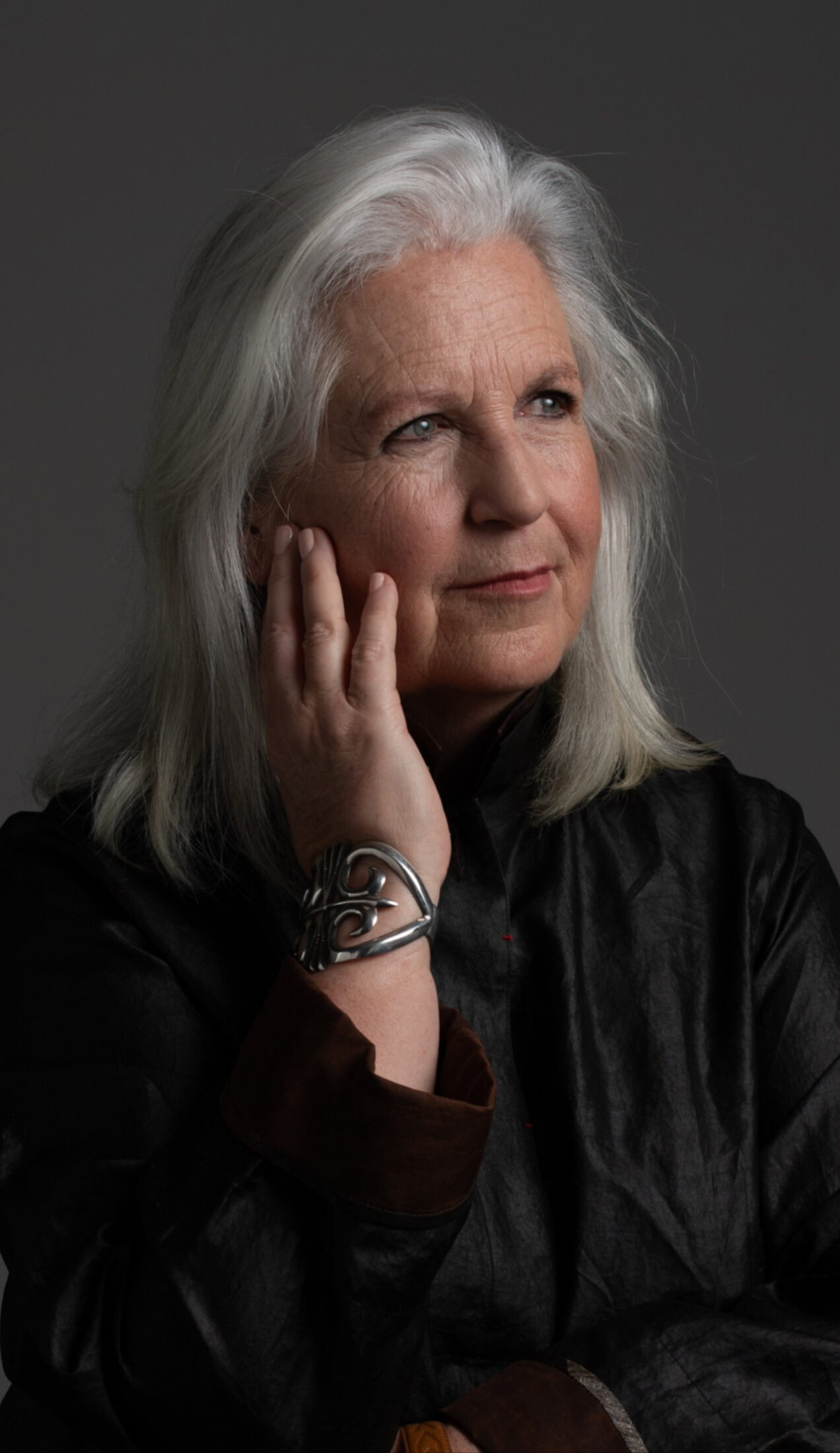
Photo by Barb Kinney
A Glorian Is a Moment of Grace
Emmanuel Vaughan-Lee is an author, Emmy- and Peabody Award–nominated filmmaker, and a Sufi teacher. He has directed more than twenty documentary films, including Taste of the Land, The Last Ice Age, Aloha Āina, The Nightingale’s Song, Earthrise, Sanctuaries of Silence, and Elemental, among others. His films have been screened at New York Film Festival, Tribeca Film Festival, SXSW, and Hot Docs, exhibited at the Smithsonian Museum and London’s Barbican, and featured on PBS POV, National Geographic, The New Yorker, and The New York Times Op-Docs. His books include Requiem, Invitation and Celebration; Song of the Seasons; and Remembering Earth: A Spiritual Ecology. He is the founding editor and podcast host of Emergence Magazine.
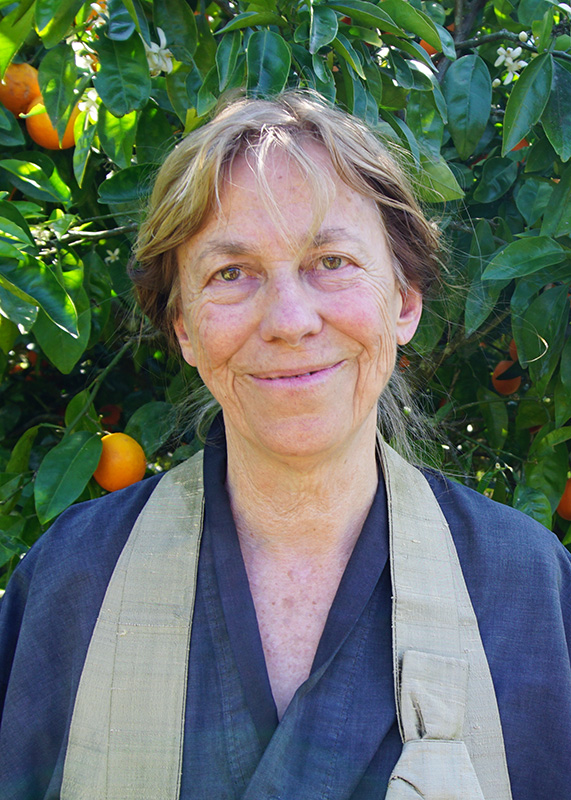
Terry Tempest Williams is the author of numerous books, including the classic in environmental literature, Refuge: An Unnatural History of Family and Place; Finding Beauty in a Broken World; The Hour of Land: A Personal Topography of America’s National Parks; and Erosion: Essays of Undoing. Her latest book is The Glorians: Visitations from the Holy Ordinary. She is the recipient of a Lannan Literary Fellowship and a John Simon Guggenheim Fellowship, and is currently the Writer-in-Residence at Harvard Divinity School. Terry divides her time between Cambridge, Massachusetts, and Castle Valley, Utah.
In this intimate conversation, Terry Tempest Williams shares the dream that set in motion her ongoing work of attending to “the Glorians”—moments of wonder, loss, and joy that fuse our attention with the mystery of Earth. Terry explores how visitations from the Glorians can help us engage with a spiritual life that recognizes wildness as the taproot of our consciousness.
Transcript
Emmanuel Vaughan-LeeTerry, welcome back to the show.
Terry Tempest WilliamsThank you, Emmanuel. It’s always a gift to be with you in conversation.
EVLI just finished reading your new book, The Glorians, which I really loved. And I really wanted to start our conversation by asking you about your grandmother, because this is a book that emerged from a dream, and it was your grandmother who really introduced you to the importance of dreams. And you wrote that when you stayed at her house as a child, when you woke up, she would ask, “Did God speak to you last night?” So tell me about your grandmother and how her relationship to dreams influenced you.
TTWYou would have loved her, and she would have loved you. She was way ahead of her time. Growing up, I thought Krishnamurti, Carl Jung, Marie-Louise von Franz, Joseph Campbell, Sri Aurobindo—I thought they were all Mormons, and it was a shock to find out that they were not. But she was a dreamer, and she grew up as a Mormon. She married a non-Mormon, actually, and an atheist, my grandfather. But she was a seeker. And after she raised her children, she would tell you that she had a breakdown, that her conditioning, as she called it, growing up Mormon—in the patriarchy, misogyny, racism—it did not serve her at all. And she found solace in her books. And she was a self-taught Jungian scholar. I remember Sam Weller at the bookstore said, “Terry, do you know what your grandmother’s reading?” She ordered every book. She went and studied with J. Krishnamurti and went to Ojai and sat under those oak trees and listened to him faithfully. She went to Esalen. Can you imagine? And, again, found those teachers. And whether it was Alan Watts, whether it was Autobiography of a Yogi, she read everything she could get her hands on … and Castaneda—all of those were her friends. Her library was bright turquoise, with turquoise carpeting with chartreuse squares in it. We were raised under the panels of heaven and hell [The Garden of Earthly Delights]—Hieronymus Bosch. I would love to have asked her, when she was alive, why we did not know the body of the triptych. She had a telescope set up in her front yard. She knew the names of birds and made certain that we did too. So it wasn’t just the inner life that she was tending to. It was also the outer life. And she felt that the convergence of the inner and outer life was in the dream.
EVLWell, that must have been a beautiful introduction to a magical world that she gave shape to. And I imagine it allowed you to really want to listen to your dreams as you grew up and became a writer. I think you do write somewhere in the book, though, that someone gave you the advice, Don’t ever write a book about a dream or tell a story about a dream, which you challenge very much in this endeavor, this latest collection of your writings. And it came to you, really, in the pandemic—the impetus behind this book, which was this dream. So I wonder if you could just share that?
TTWOf course. Like everyone, we realized that the pandemic was upon us. I was in Cambridge, Massachusetts. I was teaching a class called “Finding Beauty in a Broken World.” We met on Monday. I said to them, “This is our last class. Our syllabus is irrelevant. Writing is not. And if we’re present, we’ll know what to do.” And we gave each other hugs. We probably shouldn’t have. We took a class picture. And I said, “I will see you on this strange configuration called Zoom at that time.” Then on Tuesday, we took a master class on Zoom. On Wednesday morning at 4 a.m., I was on the corner of Mass. Avenue and Arlington Street with a backpack and a roller bag. I could not wait to get home to Utah.
As we were told, the world shut down, lockdown, because of coronavirus on Friday the 13th. And on March 20th—the only time I remember the date of a dream—in my head was this: I was walking across Harvard Yard. It was fall, resplendent. Red maples, gold birch trees, and bronze oaks. I knew I had to get to the Tower. There is no Tower. I turned, there was the Tower with two entry points: a staircase in the center going to the top and a spiral staircase to the side. I chose the spiral staircase. Around and around and around, I am on top of the tower, and I realize, looking down, I am standing in the ruins of Cassandra’s Temple. I have this strong feeling that I forgot something. I heard my name called. I turned. There was a woman professor walking up the direct route, the direct stairway, with students behind her. The gate was locked. I walked toward her. She said, “Terry, do you remember the vow you made to us?” And I said, “Remind me.” And she said, “Your vow is the Epic Documentation of the Glorians.” And then I woke up.
EVLIt’s quite a dream.
TTWAnd I thought, what is a Glorian? And because of my grandmother, Mimi, I’ve always had a pad of paper and pencil by my bed stand so that when I dream I can write, even in darkness. And I wrote “the Epic Documentation of the Glorians,” because I didn’t want to forget that vow for a second time, and then went back to sleep. In the morning when I woke up, I did what I think anyone in this era does: I googled it, G-l-o-r-i-a-n, and pushed the return button and nothing came up. Certainly glory, glorious—those root words, but not Glorians. And so I sat with that for a year. And it was both a haunting and a hunting.
EVLWhen you do begin to describe the Glorians, which of course becomes really the entirety of the book and unraveling what that really means on many levels, you start by describing it as “the ant carrying the coyote blossom across the desert is a Glorian. A Glorian is an encounter. A Glorian is a meeting with Élan Vital. A Glorian is a moment of grace.” There’s a lot there. Tell me more about what a Glorian is or what you’ve discovered about the nature of what a Glorian is?
TTWI think the key word is discover. A year later, as I told you, I looked it up again because there was nothing there the first time. And I typed again: Glorian. This was, what, March 2021? And the Urban Dictionary popped up, and I saw a definition: “Glorian: a hoarder of toilet paper.” [laughter] I just said, this is not what I want to devote my life to. And I let it go.
And it was a couple of months later that I encountered the ant. And the way that happened— In fact, if we were to go outside, the coyote blossom is just about to bloom now. It’s a beautiful plant in the desert. It … what should I say … bursts forth, at the end of May, magenta blossoms the size of our index fingers. It was wild with blossoms that year. And I remember running in to get my camera, and by the time I came out, the wind had blown them all off on the patio. I thought, I’ll just go get a basket in the name of gratitude—gather them. I went in, got a basket, came out. The wind had blown them in the other direction, all the way off. But there was one blossom that remained. And I went to pick it up and it moved. It had six legs. And that was the ant carrying the blossom as a sail across his little back.
And in the pandemic, all we had was time. And in the desert there was a lot of it. And I thought, I’ll just follow the ant. And for I don’t know how long, Emmanuel, I followed that ant across the patio, carrying that little blossom on its back, in its mandibles. I thought it’s going to tip over. And just as it falls off the lip of the patio to the desert floor, three attending ants meet that ant, carry it over, down. It picks it back up. They vanish. It continues. I see a prickly pear patch. I think that it’s going to be impaled. It will be over. Again, ants arrive. Around. Up. Through. Down, Out. It was not impaled. Those attending ants, again, vanished. Now we’re about thirty minutes in. It moves toward what looks like a clay-covered fist in the desert, pushes that blossom up that hill, over to where the entrance is. Lays its blossom down. Dozens and dozens of ants appear, shred it into tiny bits, disappear into the ant colony. And I imagine they are lining the entrance to the queen. And I thought, Glorian. That is a Glorian.
When our attention is fused with another being—it can be a plant, animal, insect, a moment, a memory—I think it’s when our attention is seized. And I do believe that a Glorian is a moment of grace, unearned, unexpected, unwarranted. It arrives. And we are enveloped.
EVLThis vow that’s brought up in the dream to create the Epic Documentation of the Glorians also doesn’t seem something new in your writing, at least to me. I’ve read your books for years and admired them deeply, and one of the things that has always moved me is your attentiveness to beauty and divine presence that comes through your writing, whether you’re talking about the natural world or the human one, memories, dreams, futures. But in this book, it feels as if you are now reflecting on this undertaking from perhaps a deeper place within yourself, if I can impose that word? One that also feels more wise and maybe more vulnerable? I was struck by vulnerability in this book. You were very unabashed about it in a certain way.
TTWI didn’t hold back.
EVLNo.
TTWAnd maybe that’s the difference of this book. I think in the other books, I hid behind structure, I hid behind a topic, whether it was wildness or wilderness, national parks, public lands, a painting, my mother’s empty journals. This was raw. And I do think there was a deeper place that I was drawing from. I think being away from home, Emmanuel, for the last decade, teaching at the Harvard Divinity School, I think I have learned a lot, and not what I thought I would learn. And I also feel, it was coming home.
TTWYou know, it’s interesting. I don’t see it that way. And maybe I just live— You know, I think grief is a raven that sits on my shoulder. I live in that. But I also live in joy and awe and wonder. And so I think they’re companions. I feel like this is a hard time in the world, but I also believe it’s always been a hard time in the world. Being human is not an easy enterprise. And especially now, given the costs of climate, the politics that we find ourselves in in this country, whether it’s the indignities that we’re seeing with ICE; whether it’s the Voting Act, where we’re seeing pressures on Black and brown voters now; it’s not as easy to vote as women—now we have to have our full name, or our birth name. The list goes on and on, right?
Where I’m living, north of where we are right now, Great Salt Lake is in retreat. We also have a data center that has been approved. We’re fighting it. It’s twice the size of Manhattan. It’s larger than Bryce Canyon. It will use twice as much water as Utah uses in one year. And we are in a megadrought. It’s absolutely insanity. And I believe we will fight it, even against our governor’s wishes, even against Kevin O’Leary’s wishes, of Shark Tank. So every community is facing these things. Right here in the Colorado River, just a few miles, again, north of us, there are places that you can walk across. That’s how deep the drought is in this desert. As we speak, there’s fires in California. So, if we’re paying attention, there is grief, but there is also so much beauty that remains. And a Glorian is not just about paying attention to the positive things. I think it’s also paying attention to what we are losing. I think death is a Glorian. Wherever we find that moment of transportation, transformation, transmutation, I would call that a visitation by the Glorians.
EVLGoing back to dreams for a moment, you explore how, as a collective, we’ve become very adept at constructing our own dreams that place us at the center of all things on Earth, which allows us to make decisions that end up resulting in many of the things you just described. And as we face climate collapse, the Earth is asking us to wake up from this dream. I wonder if you could talk to me about this, because this also felt like one of the meta stories that was being unraveled within the intricate intimate moments that you described throughout the book.
TTWWe had five flash floods within a matter of weeks in 2024. And if that isn’t a wake up call, I don’t know what is. And it awakened our community. This is a small desert hamlet with two hundred and fifty people that live here, largely because we don’t want to be bothered. We love our solitude. But it changed us because we needed each other. And we had tough conversations: Are we going to be able to live here with the heat and the extreme floods? We’ve always had flash floods here, but never in this kind of sequence, never with this kind of violence. And it’s such a surreal moment when, in the middle of such dryness and aridity, you smell it before you hear it, you hear it before you see it. And when this massive wall of water turns the corner, it’s like looking into the face of God and it is not human. You can’t look away, it’s that compelling, it’s that wild. It was within thirty feet of our home, and we were not alone. What do we do in that moment? There are people in this valley that have not believed in climate change. It’s hard not to see the changes.
And so I do think that there is an underlying theme here that we are in the middle of massive changes, and can we love ourselves enough to change? Can we love our communities enough to engage in becoming climate-facing towns in the arid Southwest? Can we engage in a way that is transformative not regressive? And right now in this country we call America, it feels very regressive.
EVLIn the book you describe an encounter you had with the wonderful late Kiowa writer and artist N. Scott Momaday, who told you, “Perhaps what is needed now is for us to atone for the damage we have done to Earth,” which you described as being caught off guard by, because atonement often comes with strong Christian connotations. But he led you to think differently about practices of reparation and gestures of atonement and what becomes possible in a remembrance of what we have done to each other and to the Earth. And hearing you describe what just unfolded in the last few years in your valley, it seems like there’s a connective thread there too. The awareness leads to a response and atonement might have a role in that in some way.
TTWI love that you’re bringing that up. And I’m thinking this for the first time. Scott— This was maybe a year or so before he passed. I loved him so much and…
EVLHe was a wonderful, wonderful writer, gosh.
TTW…and talk about grace and wisdom and presence. In the end he was saying, atonement is at-one-ment, staying with, not looking away. And this is what I’m thinking for the first time. He said, in order for us to reach atonement, at-one-ment, we will have to go back to the time of the bison. And I’m thinking about where we are at this moment with bison—it’s the American symbol. Our president Donald Trump is now asking for the removal of bison. When did that happen last? It happened with the whole Trail of Tears, with the Indian removal across the entire North American continent. And now it’s happening again. They are asking, for example—the American Prairie Preserve—to have bison removed, just at the point when restoration is our story.
And, again, in June, the Smithsonian Institute is coming to Sundance, which is where Robert Redford built that beautiful community around independent films, independent thinking. They’re going to be talking about the American bison. What is the future? What does resistance look like? And Indigenous people, White people, Brown and Black people are gathering to say: Are we just going to let this happen, again? And who benefits? Who’s behind it?
Charles Wilkinson, a great writer and attorney of public lands and Indian law, talks about the lords of yesteryear in the United States of America. What would they be? Mining. Timber. Grazing. Those, now, are coming to the forefront just as we were moving in another direction of sustainability. And so I think it’s interesting to look at, in this moment where so many people are viewing the planet as one-with, we have another group of people that are advocating to going back to the frontier ethos. And I think we need to call it for what it is: nostalgia in the worst sense, which goes back to the Civil Rights Act, Voting Act, which goes back to Indigenous lands, which goes back to bison and the Endangered Species Act.
EVLYou write in the book, “We are crossing over from a place of transactional living into the space of transcendent being. Suffering and joy live at the roots of our ancestry.” Tell me about this statement. There’s a lot in there.
TTWI think it’s what we just have been talking about.
EVLYeah.
TTWOn one hand, we have this looking backwards and acting in a retroactive, destructive way. On the other hand, we are in this transcendent moment that you’ve been so vital in—your voice, among many. And how do we bring these two together in prayer? That’s what I keep asking. And that, to me, is something deeper than hope. How do we engage? How do we reflect? How do we resist and insist on another way of being?
EVLIt makes me think of something you describe in the book: unsuicide, which is this idea drawn from Richard Powers’s book The Overstory. And you write about this, because he came to the Divinity School, I think, and spoke about this, and in the context also of the story of the Divinity Tree, which is something you devote a great deal of time to, a great deal of story to, in the book—a tree that was sadly removed because of a new building project at the Divinity School. And you write about how this term “unsuicide” resonated profoundly with you and that committing unsuicide is spiritual work, which is something you just spoke to: prayer in response to the time we’re in, this transcendent moment in the midst of what feels like a going backward and unraveling, and not the right type of unraveling. Tell me more about what this means to you and why you think unsuicide is so essential at this time.
TTWMy brother chose suicide, death by suicide. My brother hung himself. And my brother’s death— He suffered decades from depression. I was haunted by the fact— How to say this? Months before, my brother called me and said, “Terry, I have the rope.” And we talked very openly about death by suicide. And he said, “I used to think my suffering had meaning. I don’t feel that anymore. I have to believe there is grace. I have to believe there will be forgiveness.” And this was a man who did not believe in an anthropomorphic God. But in that moment, in those moments, I think he said, “I have to believe there will be grace from suffering.” And when I heard, when Brooke, my husband, called me and said, “Dan…” He didn’t even have to say it. I said, “Is it Dan?” And he said, yes. What came out of my mouth was, “I’m so proud of him.” That could seem inappropriate to a lot of people, I’m sure. But in Dan’s case I felt it took courage. Even so, every single day, Emmanuel, I wish he was alive. Every single day, I wish I could do things differently. Every single day, I think, Where was I in that moment? And I think the idea of unsuicide is how do we commit to life? How do we build a capacity so that we can endure the sorrows within our own families? How do we practice unsuicide in our very actions? Can we slow down? And I’m talking to myself about this. How do I stay home? What does that look like? And I think… I’m asking myself now, because I think we, all of us, are in acts of suicide—of racing, of running, of avoiding the very issues that can contribute to unsuicide.
And I think one of the things that was so powerful about the Divinity Tree—it was a two-hundred-plus-year-old red oak. I like to think that Ralph Waldo Emerson knew that tree. Thoreau could have known that tree. That tree was there before Harvard was a divinity school. I remember—it’s a long story, a throughline through The Glorians—but I remember the night before it was killed, I slept with the tree. And, again, that may seem odd, but I laid my head down on the roots of that great red oak, and my hand was on the trunk of that tree, and I could feel this pulse, call it the xylem and phloem—the life force of that tree. And as a writer, I know my vocabulary, and this was not mine. I said to the tree, I’m so sorry for our actions. And what I heard in my heart was: My absence will be my presence.
EVLI remember that line. It was very, very potent.
TTWI think that has turned out to be true, that since the killing of the tree— And it was Robin Kimmerer who said, Call it murder. It was Richard Powers who talked about unsuicide, who said, In every community I go to, there is a divinity tree.
EVLRight.
TTWI remember it being in Rwanda: How do we take in the enormity of a genocide? We know the death of one person. We can’t understand the death of millions. I felt that about this tree. I felt this tree was every tree, every forest, every ecosystem. And I also felt it was my brother. Because the question that haunted me was, who removed the noose off my brother’s neck? And I saw fifty times a noose put on each branch as the crane took it and it moved across the facade of that Gothic school and then brought back down. And there was one beautiful man who took that noose off of every single branch. So we’re talking about huge paradoxes: grief as love, love as grief, suicide being a moment of grace, unsuicide being those acts of courage that inform both. Our absence will be our presence.
Since that encounter with the tree, our students are different. They’re not just coming to learn theology. They’re not just coming to be religious scholars, although they learn. They’re coming to embrace the world. They’re coming to be artists, writers, filmmakers. Creativity as spirituality. And in The Glorians—and this wasn’t conscious, Emmanuel—there’s many encounters with artists and writers and creatives, because that’s also a way forward. And what is dangerous to this administration? The artists, the writers, the comics—those who have a different set of allegiances.
EVLThe storytellers and the role of story at this time. Yeah, I’m very much in agreement with you there. When you described the experience of the Divinity Tree and its ultimate murder, as you just called it rightly, you also talk about how this relationship took you into a presence or a space that allowed you to engage with the larger more-than-human world in a deeper way; that this tree and its loss opened you as well. And I’m intrigued by that because, as you described, the genocide in its larger form is too much for us to take in. Climate change is too much for us to take in. It’s so enormous we can’t really grasp it. It’s through the personal experience of loss that we come to understand it most, usually. But it’s also through the personal experience of love, of something that can take us into a larger capacity to be present with love, that can encompass something that is larger to comprehend. And I also felt that was just something that was there throughout the book, that this experience with the Glorians as they revealed themselves, it was like the space of your heart—and please forgive me if I’m projecting here—was expanding as a result of these encounters.
TTWI think you’ve identified something for me, which I appreciate. And the difference with this book is I think I’ve so crossed over from any human-centered world, that— You know, I view the body of the tree as my body. I view the body of the Earth as all of our bodies. I view Great Salt Lake as a being that has agency and sentience. And I think that’s where the love is, that’s where the sorrow is. And what are we doing? And I feel the most important thing we can do right now is— How to even say this?
I guess it’s that week in April when we heard the president of the United States say: We will obliterate this country—Persia, Iran, one of the great civilizations on the planet. And the horror of that moment for all of us who heard that. And the same week we hear from Christina Koch, an astronaut who had seen that beautiful sliver of Earth rising, saying, “We will always choose Earth. We will always choose each other.” I feel like that is our call. It is no longer about obliterating the planet, obliterating a country, building an economy of war, but communities of peace. That we will choose Earth again and again, and that we will choose each other again and again. And to me, that’s where I see us moving.
And I just feel like if we can’t commit ourselves to each other and this planet, then we are committing suicide. And so to go back to what Richard Powers was saying, that is the power: unsuicide. Loving each other. Loving the planet. Taking time to follow an ant. Sleeping with a tree. Honoring our choices. Knowing that sometimes when it’s the most difficult, we’re in the middle of the story.
And what I can tell you is with the Divinity Tree what we couldn’t see is that five hours later a man would call and say, “My name is John Monks, and I have the body of the Divinity Tree.” The man who was charged with taking the body of the Divinity Tree, after it had all been cut, to Maine for firewood—that’s what we were told—he turned left and went to Vermont to an artist’s home, who had a business of taking heirloom trees and turning them into beauty. The remains, consider them relics. And when John Monks woke up in the morning, here was the body of the Divinity Tree: the trunk, huge big pieces of wood. And he said, Terry, when I saw green spray paint on the bark of that trunk saying, Good luck, humans—you’re going to need it! Love the squirrels, I knew there was a story here. [laughter] It was just the note that was left that said, This is the Divinity Tree. Please make something beautiful. That act of courage, you know?
And then two years later, a different group of students asked for a class on grief, asked for a class on joy, and ended up in a procession honoring the return of the Divinity Tree to the Divinity School with a beautiful roundtable that is holding difficult conversations, three benches, some that are now being used as altars. Those are the stories we didn’t know would follow the main story. And I believe that that wouldn’t have happened had it not been the tree’s consciousness at work—that’s what I’m not holding back. I may have thought those things. I didn’t put them in print.
EVLYour experience at the Harvard Divinity School is really a throughline through the book. Many of the people that you really share are students who are artists, students who are lovers of this tree and the journey they go through. And you also talk about how certain things were just challenged within yourself through your experience there. One of the things you describe is how actually going to the Harvard Divinity School made you question how much you knew about religion and spiritual life.
TTWI knew nothing about religion, I can tell you that. The one religion I knew something about, I left, which is Mormonism, even though I still believe in prayer, even though community is the size of my heart. I remember—talk about a difficult dinner party—I was invited to go to a dinner. I think I’d only been at the Divinity School less than a month. It was in a very fancy restaurant. Most of them were men, with all due respect. And they were talking about the fourth century, and how powerful that was in terms of religious history, and on and on and on about all the details. And I just quietly asked, “What happened in the fourth century?” And you could have heard a pin drop, Emmanuel. And there is this deathly silence. This one gentleman said, “If you don’t know what happened in the fourth century, then you have no business being at this divinity school.”
EVLWow.
TTWAnd they never did tell me what happened. And I remember walking home thinking, I know nothing. I do not belong here. And I got to my flat, and I took out a piece of paper and I just wrote at the top of it, What do I know?, and underlined it, and just did an exercise of automatic writing for, I don’t know, twenty minutes, half hour. And then I stopped and I looked at both sides of the paper, and more paper, and they were all the names of birds. And I just burst out laughing. And I thought, Okay, I’ll begin here. Every class I teach will begin with birds. I think I’m leaving the Harvard Divinity School—I’m going back next week and this will be it, a decade’s-worth almost—I think I’m leaving with the gift of how much I don’t know. But what I do know is what I love. And that’s more than enough, because I think it leads us to those unexpected places, even Glorians, who become our greatest teachers.
EVLYou did describe how this experience, which I imagine the dinner party was just one of many, did change your relationship to prayer and that you now feel your relationship to prayer is rooted in listening in its many forms. Talk to me more about listening and prayer as listening.
TTWYou know what comes into my mind first is my grandmother. My grandmother was a great listener. And even though she left her religion as well, and really opened the door for us to all walk through, I think she did teach us how to listen. Listen to our dreams. Listen to our heart. Listen to the land. Listen to birds. Listen to elk bugle. Listen to the wind. I mean, in a way, all those are prayers. I think it’s not so much— It used to be I would pray when I needed something. I needed my mother to be well. I needed to feel safe. Now, I think it’s just in the stillness of that gesture of truly being on my knees, that act of supplication, of restoration, of surrendering—things come to us, they’re available to all of us. How do we behave? Where do I belong? How can I serve?
EVLYou point towards how the Epic Documentation of the Glorians has brought you into contemplation of “the hiddenness of it all.” And you also name it as the “hiddenness of God,” which moved me very deeply, and I feel it connects very much to this notion of listening, too. What is there when we just make space for something through that act of devotional listening?
TTWI mean, I would love to ask you. What does prayer mean to you? And what does the hiddenness of God, however we define it, mean to you? Because it’s certainly where, as I read you, you dwell.
EVLI don’t like the notion of limiting the description of prayer. I think prayer is very personal, very intimate. And, in general, I feel like the deeper we go, the more expansive prayer becomes. It has this transcendent nature which we can go into and that really has no end, and it also has this immanent nature which also has no end. And so I find it to be more and more a way of my own way of being with myself and with Earth and with what lies beyond Earth—the mystery. I think it becomes more unknown as the days go by. The hiddenness is the unknown and being more comfortable with the mystery, which is what I felt there in the space between the words, as much as the words themselves, as you go on this journey. And you being more comfortable with the mystery. And you just described, also, this book being a place where you kind of hang it all out. You’re not hiding behind the form or the story. It’s like, this is me, this is what I know, this is what I don’t know, and I know less than I know, and I’m writing about what I don’t know. And so, to me, that prayer is intermingled with all of that.
TTWI mean, you remind me, I think writing is an act of prayer. It’s certainly an act of faith we return to, again and again, with no hope of success. Can I find the words? The final gesture of writing this book was I had a definition of Glorians. I had a four-point definition, just here it is, for the reader. It was right up front: here’s what a Glorian is. And about three-quarters of the way through I thought, who am I to say what a Glorian is? And I took it all out. And when Brooke was reading it—he was probably the first person that read it—he goes, “Terry, you’re not giving us a definition of a Glorian.” And I said, “No, because I’m not sure.” But it’s that cliché, I know one when I see one, which is terrible for a writer. I think it is the mystery, and it is the hidden of things. And to me, that’s the joy. I thought I was taking a picture of blossoms and instead I ended up for an hour following an ant carrying one. The things that you can’t anticipate or know but you can experience. I think it’s sensorial. I think it’s experiential. I think it’s reverential. It’s hilarious and it’s devastating. All those things at once. I think it’s about how do we be alive in a world that asks us to be dead? And that’s the protest.
EVLThere were many Glorians that organically revealed themselves through your attention in Castle Valley and your time there, and they were also Glorians which came to you through other forms. And there was one that struck me that you wrote about: the horseshoe crab—a creature whose blood played a critical role in testing vaccines during the pandemic. And you write that it is a creature both beautiful and grotesque, who understands liminality and allows us to “blur the boundaries between the sacred and the profane.” And you take what the horseshoe crab embodies, especially during the pandemic, to consider how interacting with the “other,” with the liminal, can organically change society, giving rise to “new formations, structures, and rituals.” And it was like you were rising out of this creature into the whole paradigm shift that you feel is possible if we have the courage.
TTWAnd it’s Eli Nixon. They are this amazing human being that is calling for a blood holiday on behalf of horseshoe crabs. Why shouldn’t they be honored, because it was their blood that was in the vaccines that saved so many lives? I didn’t know that until they presented this bloodtide movement to have a holiday on behalf of one of the oldest living creatures on the planet. Again, the role of the artist, the role of the comic, the role of the trickster, as well as being deeply serious. It adds a different comprehension to blue bloods. [laughter] I mean, again, just the discovery of these things. And I think that’s the joy. And I think there are many hilarious moments in this book. I think that is another form of intimacy: to be able to laugh, to be able to take those risks that are—
EVLI laughed out loud in your book more than once, but the penis dress story will forever remain with me. And I don’t know if we should recount it here, it’ll take too long. But, for listeners, I encourage you to read the book for many reasons, but there is levity here. You laugh at yourself, and you’re willing to put yourself out, all I would say is, on a stage in a dress adorned with penises and dildos in front of Washington’s political elite. That alone should make you want to pick up the book to find out what happens. [laughter]
TTWThank you so much. No one has mentioned that story. No one. Not one. So thank you, Emmanuel. Yeah, I thought I had a dress— Obviously my eyes are going. I didn’t see the embellishments that I thought were just design elements. And it was the fiftieth anniversary of the Endangered Species Act. It was hilarious. But we all find ourselves in those moments, right? What are we going to do? Own it. Wear it. Rise to the occasion. [laughter]
EVLOh gosh. [laughs] There were many, many lines in your book that I underlined and that have stayed with me. I think it’s a text I will go back to over the years, so I’m very grateful for that. But this one, maybe for me, stands out among those many: “Wildness is the taproot of our consciousness. It is the place where our theologies are born.” And I loved this very much, because something that we think of as deeply human—a conscious contemplation of God—is actually something also belonging to this space of wildness that encompasses the more-than-human.
TTWI mean, resurrection. Serotinous cones of a lodgepole pine. The minute the flames come and lick those cones, they open and the seeds drop before the trees are even engulfed in flames. If that’s not resurrection, I don’t know what is. I think that is the taproot of theology, of a spiritual life. Whether it’s Christ on the cross or serotinous cones on lodgepole pines in Yellowstone, to me it’s the same story.
EVLThere is a part towards the end of the book where you reimagine Psalm 91 that speaks to God’s protection during dark and difficult times. And you revise this verse, exchanging the Almighty with the Glorians, and reframing it through an ecological lens. And I found this very moving and interesting in so many ways, as I think a lot about the role of faith in our moment, in responding to the many crises, and the forgetfulness of the sacred nature of Earth being at the root of that. And I felt like this was your way of bridging worlds within yourself and responding to that from your own faith as well. So I’d love you to speak more about what drew you to do this and also the importance of reimagining sacred texts to serve the crisis of the present.
TTWI think we’re in times of revision—revisioning our texts, revisioning sacred texts, bringing them to the moment at hand. And it’s what Emerson said to six students at the Harvard Divinity School when they invited him to be the commencement speaker. And Divinity Hall was filled with ministers and priests, many of them from the Unitarian churches, and they were skeptical. He started that great speech with a paragraph about nature, the refulgent nature of spring. And by the end of his address, he said, Your God is too small. He was banned from Harvard for thirty years. And I think that chapter that you’re speaking of is maybe the most important in the book, because I think it is about revision. I think it is about redefining what spirituality is in the twenty-first century on a burning planet, and can we replace “God” with, not something outside of Earth, but with the Glorians here on Earth? And what would that kind of focus look like? That our prayers or prayerful lives would be directed toward the land we stand on rather than the heavens above.
EVLSo we walk on holy ground as much as we walk into holy ground—those places of worship which are deeply important but are not the only form.
TTWThat’s right. And as part of the cosmos, the totality of it all. And I think that’s the bringing in of the eclipse. Any of us who have witnessed the eclipse—it made me less fearful of death. It made me realize we have no idea of the glorious nature of the universe, that we are literally floating in space, being held by a gravitational pull of a tremendous being, Earth itself. And that we are part of that dream, the dream of the Earth that Thomas Barry talks about. I was with our grandchildren, and talk about awe. We were in that moment of silence and Sheja, who at the time was six, he was explaining the penumbra. He knows more than— I can’t tell you. It was his life. Some children love dinosaurs, he was fixed on eclipses. And when that darkness came and that corona of fire in that moment—three minutes plus—I just saw those children in absolute awe. All of us. We were in Maine, and we were on top of this pass, and all the people around us—we were silent together. And then when it started moving again and that diamond effect and then when the light returned, Sheja just started crying, and he said, “I want more. I want more.” And I just feel like we are living in this abundance. How can we not respond? How can we not respond?
EVLWell, perhaps as a way to end our conversation, you could share the final words you wrote in your book, in The Glorians, which you call “After Words,” which I found very powerful and I think could be a wonderful place to leave this conversation.
TTWI just want to thank you, Emmanuel, for the power of your perception. I’ve learned something in conversation with you again, as I always do, whether it’s on the page or in the world, and I’m so grateful to you.
EVLOh, thank you so much, Terry. It’s always such a privilege to be able to share space with you.
TTW“‘After Words.’ After words comes the revelation—what Shinran, the Japanese Buddhist monk (1173–1262), called jinen or ‘naturalness’—the emancipation of the self in confluence with the ‘widening of love.’ The Shin Buddhist scholar Kenryo Kanamatsu writes, When doctrine ceases to be regarded as something external to one’s inner experience, it becomes at once the living principle of conduct. What might it mean to conduct ourselves in accordance with life, rather than in opposition to life in all its manifestations? It is this kind of natural conduct I wish to embody in a soul-life supported by faith in the sensorial authority of Earth: what we see, hear, touch, smell, and taste. I trust the processes of life. Some may call this God, some may bow to Allah, others may speak the name of Amida Buddha or Elohim. We can name this force field for ourselves as we celebrate each moment when our interior and exterior landscapes fully meet and merge in a story of humble astonishment.
“I can never define the ‘natural movement of the spirit’ that occurs and is generated right here on Earth our Mother, at home. But I can bear witness with awe and gratitude—translating what I see and feel—and then, share it as an offering of joy or bewilderment or love.
“We are living in a time when we are being brought to our knees. I have certainly been brought to mine and I am learning how to pray again, not to one god, but many gods, and none of the gods I am seeking look like me. I am praying not in the way I was taught by lay clergy, but in the way I remember as a child when the holy ordinary was right in front of me every hour on the ground and in the sky, calling forth rituals as forms of play that were deadly serious.
“I am seeking a new language to help me name what I cannot define—like the Glorians—and all that is ineffable driven by the beauty of Earth herself. But it is also true that in the act of naming we are drawn closer to the edges of the unnamable, where all we feel and cannot articulate is reflected back to us in a state of loveliness. The burden I carry is knowing I will always fall short in the conveyance of beauty. And with time, I am less afraid of failing as an individual; and more terrified of failing as one of eight billion human beings witnessing the mounting sorrows spanning the globe as we watch our planet burn.
“If we refuse to see what is coming, expedited by our unwillingness to make the necessary changes to not just survive, but flourish, then we are the creators of our own demise. Change is upon us and change is within us. Whatever future may be collapsing before our eyes, we can dream a new world into being. We can protect what is vulnerable and restore and rebuild what remains with love for those who will follow us.
“In offering our attention to a world being remade by heat and drought, fire and floods, resulting from climate chaos—we see our lives are inseparable from all life on Earth—and when separation occurs, we become isolated and endangered without the full support and awareness of intact ecosystems. During the pandemic, the eyes of our fellow humans that we were focused on when we were masked are the same eyes responding to us now, unmasked. Empathy prevails most powerfully when our shared gaze with humanity is extended to all species.
“In my dream, I was standing in the ruins of Cassandra’s Tower. In my life, I was standing in the red rock desert of Utah; and working as writer-in-residence at the Harvard Divinity School. In the vitality of the struggle, I found myself required to walk through shadows—and when I did, I saw we have to throw out what is dead in order to make room for what is alive. By reimagining home, we create a place and a peace for all we stand to gain: a livable future in a landscape of burning hearts that implores us to stay soft when things become hard. And stay strong when things fall apart.
“I pray for the strength to embody change—and to be explicit in what I love, where I wish to serve, and what I want to protect. The poet Jack Mueller writes, What I can’t change—changes me.
“The Glorians are reaching out to us, inviting us to engage. They arrive unplanned, unearned, irrefutable. They are Grace.
“We are dreamers, and I believe Earth is dreaming us into a new way of being. With Venus shining in the twilight of dawn as my witness, something deeper than hope is emerging. The coyote willow’s magenta blossoms have just burst forth for the first time this year.”