Photo by Bill Heath
The Scaffolding of Life
Cyclical Structures of a Forest
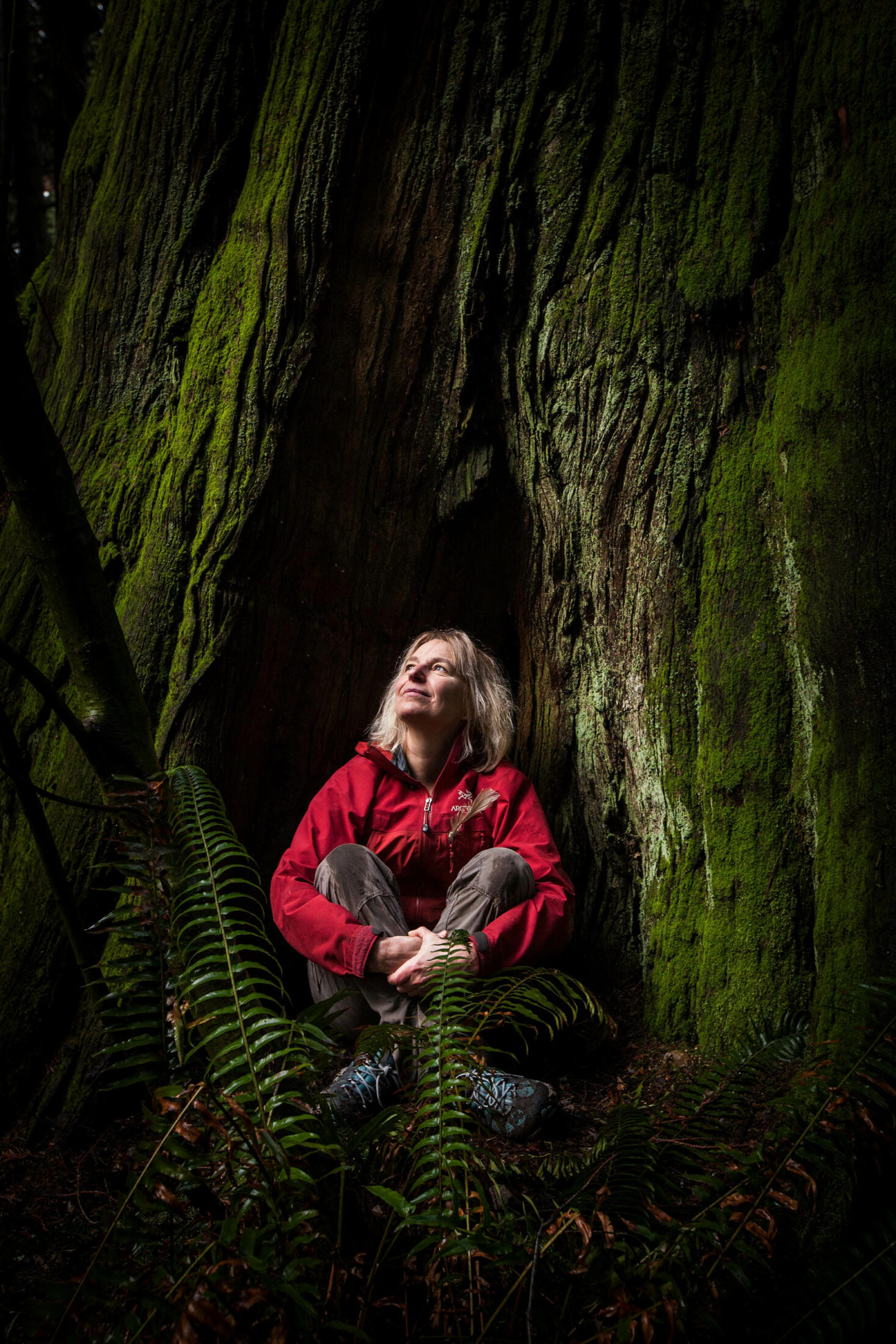
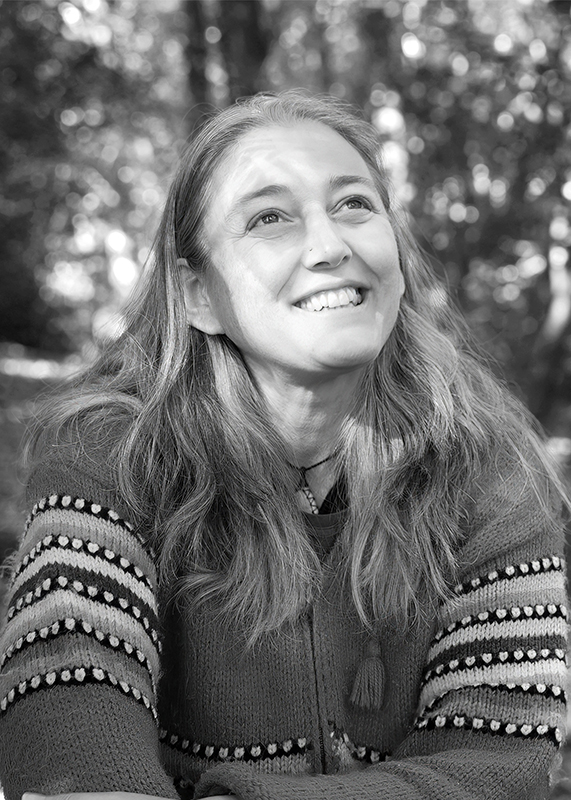
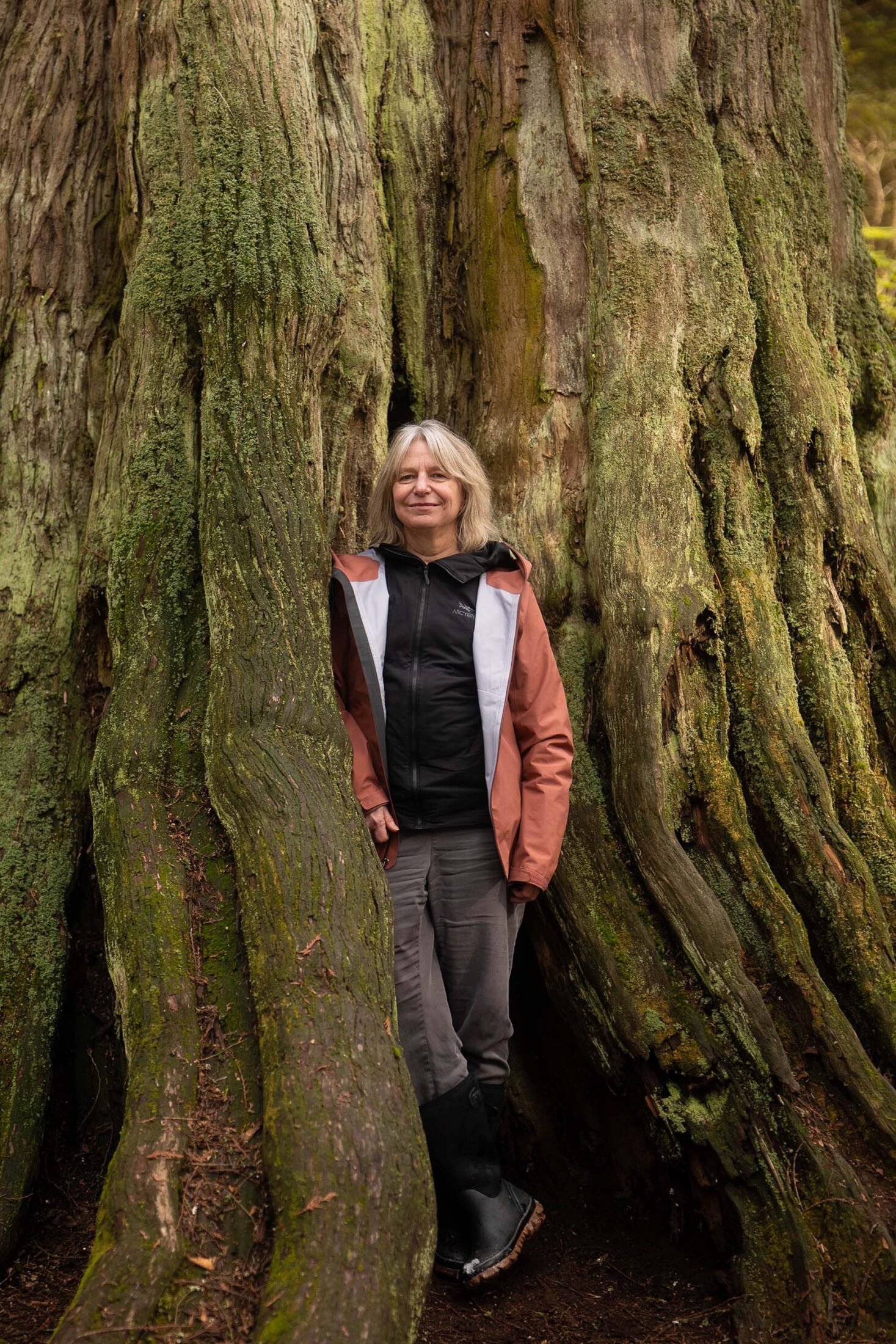
Suzanne Simard is a professor of forest ecology at the University of British Columbia, known for her groundbreaking research on how trees interact and communicate using belowground fungal networks. Her work with her students led to the recognition that forests have hub trees, or Mother Trees, which are large, highly connected trees that play an important role in the flow of information and resources in a forest. Her current research investigates how these complex relationships contribute to forest resiliency, adaptability and recovery. At UBC, Suzanne leads the Mother Tree Project & Program, a collaborative research initiative that identifies and designs successful forest renewal practices. She has published over two hundred peer-reviewed articles and is the author of Finding the Mother Tree: Discovering the Wisdom of the Forest and When the Forest Breathes: Renewal and Resilience in the Natural World.
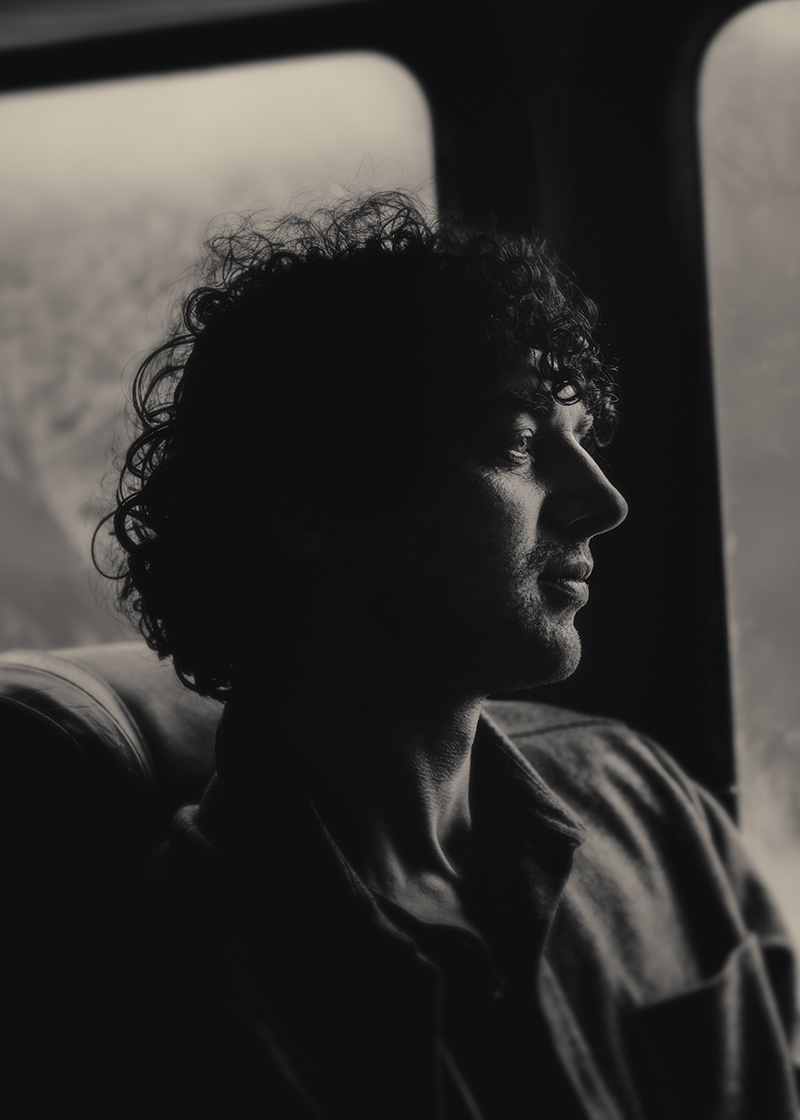
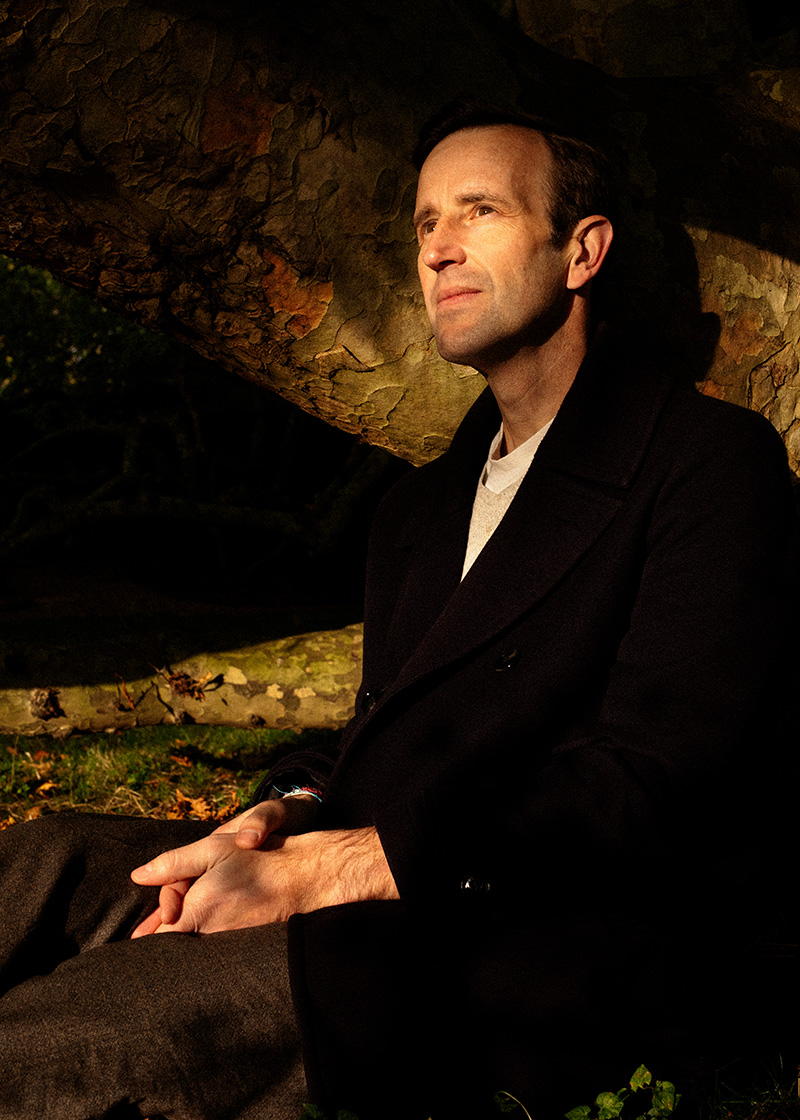
Emmanuel Vaughan-Lee is an author, Emmy- and Peabody Award–nominated filmmaker, and a Sufi teacher. He has directed more than twenty documentary films, including Taste of the Land, The Last Ice Age, Aloha Āina, The Nightingale’s Song, Earthrise, Sanctuaries of Silence, and Elemental, among others. His films have been screened at New York Film Festival, Tribeca Film Festival, SXSW, and Hot Docs, exhibited at the Smithsonian Museum and London’s Barbican, and featured on PBS POV, National Geographic, The New Yorker, and The New York Times Op-Docs. His books include Requiem, Invitation and Celebration; Song of the Seasons; and Remembering Earth: A Spiritual Ecology. He is the founding editor and podcast host of Emergence Magazine.
Forest ecologist Suzanne Simard returns to talk about her latest book, When the Forest Breathes, and her decades-long Mother Tree Project, which seeks to reimagine how we harvest forests. Integrating Western science and Traditional Ecological Knowledge, she shares her team’s landmark findings on what the forest is telling us about the role elder trees, carbon stocks, salmon nutrients, and the relational networks between plants play in its survival. Suzanne challenges us to begin working with the intelligence of the forest and to see Mother Trees as models of generational resilience.
Transcript
Emmanuel Vaughan-LeeSuzanne, welcome back to the show.
Suzanne SimardThank you, Emmanuel, for having me.
EVLWhen we last spoke, your book Finding the Mother Tree had just come out, which told your story of breaking free of the status quo around forest science, your groundbreaking research into the “wood-wide web,” and the fight you went through to make this discovery known within Western academia. And your new book, When the Forest Breathes, in many ways picks up where you left off, but perhaps dives more deeply into the science of the forest through the lens of a long-term study you call the Mother Tree Project. What is the Mother Tree Project, and what is it hoping to accomplish?
SSThe Mother Tree Project is the biggest experiment I’ve ever done, and given that I work in forests, which are long-lived, large creatures, it’s a necessarily very large and long-lived experiment. So the idea of it is to test different ways of protecting legacies of the forest—the largest trees especially, what we call Mother Trees, and in different amounts and configurations—and compare them with: What if you take them all away? That’s what we call clear-cut logging. Or, what if we just let the forest grow naturally on its own? And we are trying five different ways of doing this across this large climate gradient. It covers an area about the size of Denmark: It’s a thousand-kilometer, latitudinal gradient, and it includes nine different research sites where we’re trying these five different harvesting—if you can call them harvesting—or retention treatments. And then within that we are also testing the migration of seedlings, or migration of genotypes, to keep up with the pace of climate change.
So then within that experiment we’re examining how the ecosystem is responding: How is it able to protect its carbon pools? How is it able to protect the biodiversity of the forest? How is it buffering climatic extremes? How is the regeneration of the forest faring? So we’re ten years into it, and we’re getting some pretty cool discoveries so far.
EVLThere seems to be a main question at the heart of the project, which is: Can we design our logging and harvesting practices to better emulate natural disturbance patterns in forests? Could you tell me a bit about this central question and where it emerged from?
SSYeah, so there’s been a paradigm in forestry that nature itself, Mother Nature herself, is a great example to emulate in forestry practices. That if we emulate the natural patterns in forests and try to protect those legacies that create those patterns, that there’s a greater probability of success of having a healthy forest going forward. And so we look at natural disturbances like the patterns of wildfire or insect disturbances, in particular, and try to create harvesting patterns, or we call them regeneration cutting methods in silviculture, or silviculture systems, to emulate those patterns and protect those very legacies. And I would say that was a really popular paradigm that was developed out of the Pacific Northwest in the US in the late 1980s, early 1990s. It was adopted to a great extent in British Columbia and parts of Canada. And then it’s actually shifted a little bit as we’ve become, I would say, even more extractive in our forestry in the last few decades and really departed a lot from that paradigm of emulating natural disturbance to “let’s just get the wood out.” So that was the idea: Can we actually do this and does it actually help protect the health of the ecosystem?
EVLTalk to me about the urgency of reimagining our forestry and industrial logging practices. Why is this so critical now? I mean, it’s always been something that those who are ecologically conscious have looked at as a problematic way to harvest wood for our needs. But there seems to be an urgency now that is at the forefront.
SSYeah. Well, I would like to first cast back through time and say that historically we’ve known better ways to harvest trees from the forest, had a lighter touch, done selective harvesting. Indigenous people always did selective harvesting to meet their needs. Even when settlement occurred across the Americas, selective harvesting was kind of the standard. There just wasn’t the capacity to take down a whole forest. And there was no need. And then that evolved into this sort of capitalistic-driven extraction process called industrial forestry. And so today, if we look around the world, probably half of the forests have been affected in this way. Some would say they’ve been degraded in certain ways.
And why is it so urgent that we get a handle on this? It’s because forests are large natural sinks for carbon, and they also are home to the vast majority of biodiversity in the world. So if we’re losing or degrading forests, we’re actually degrading those two ecosystem services, if you want to call them that. And it’s an existential problem. And I would add that not only is it degrading, also we’re counting on forests to be natural solutions to climate change. If you look at what the International Panel on Climate Change is saying, our priorities for dealing with, or to mitigate climate change—to bring down greenhouse gas emissions, these natural solutions—forestry is right there. It’s about protection of ecosystems, restoration of ecosystems, better management of ecosystems. And yet here we’re doing practices that my research is finding aren’t actually doing that. So it’s really essential. We’re counting on this, and yet we’re not really following the guidelines that we’ve set out ourselves that we know are tried-and-true practices.
EVLYour work with the wood-wide web, which had huge resonance globally and ramifications in how people perceive their relationship with trees and forests and this idea of communication and intelligence. I mean, it went far beyond the scientific establishment that I think you imagined it would influence when you put out that study all those years ago. And the Mother Tree Project in many ways seems like a natural evolution of trying to apply those learnings into practice, perhaps in a way you didn’t conceive of back then. I’m curious about your journey and your scientific process, to want to kind of put this into practice, put this into action. What took you there?
SSYou know, I’ll just start with that I grew up in forests. I understand forests in a deep ancestral way. When I was growing up in the 1960s, they were all old-growth forests and primary forests. And I saw those forests get taken down, basically, through my lifetime. And I have a visceral, intuitive reaction to this, that we’re undermining our own vitality by doing this, and we don’t need to do it. And so I wanted to take my research, which shows the connections in the forest, that the forest is an intimately connected place, that it is interdependent, it’s based on these intimate relationships between all the creatures, all the beings in the forest, including the water and the soil and the forest floor and the trees and the animals. They’re all in relationship and connected together. And by severing those linkages and severing those relationships, we’re actually unraveling the forest—through the practice of clear-cutting, which is the dominant form of forestry that’s practiced in Canada and in many parts of the world—that we’re actually severing those connections. So I thought, I want to take that fundamental knowledge that we learned through the work that’s outlined in Finding the Mother Tree: that the forest is an interconnected place, that the energetic centers of the forest are these big old trees, what we call the Mother Trees. And how do we protect those? And so I really wanted to figure that out—practical solutions that can be adapted and applied, and to demonstrate that we can do this in a different way. And we’re finding that the answers are right there in the forest. We’re finding these beautiful discoveries, like you can apply this basic fundamental understanding to protect those relationships and therefore protect the integrity, which means the health and patterns of the ecosystem, through careful stewardship.
EVLYou referenced earlier how there have been practices in the past where people knew how to selectively harvest. And, of course, this brings up the history that dates back millennia upon millennia in Canada, the US, and throughout the world of Indigenous peoples’ relationships with forests and more broadly Traditional Ecological Knowledge. And you talk about this a lot in your book, and you referenced it in Finding the Mother Tree, but it’s more dominant here and it gets into more detail. And so I wonder if you can talk about your relationship with Traditional Ecological Knowledge and how this really informed the way you approach this project.
SSYeah. I’m a forest ecologist, and so I understand the importance of place and people. And I did my research under the supervision of Dr. David Perry, who has Athabascan ancestry. And I didn’t really know it at the time, but I was listening to him in a deep way. But I never really put it together. And I was working at UBC (University of British Columbia), and I got a postdoc, Dr. Teresa Ryan, who’s from the Tsimshian Nation. And we just started talking. And she had written her dissertation on salmon in forests and also on her ancestral knowledge systems: the way of seeing the world, the way of valuing the world, the methodologies that were used. And it was just such a relief to hear, because I had been sort of fighting this institution of forestry, industrial forestry, for my entire career, trying to get the powers to be to understand the forest as a connected, sensitive system. And she just said, yes, well, that’s our value system. And, from that point on, she just started to teach me about the methodology of her Nation, which is, as I said, the Tsimshian Nation. And we just started doing research together. And that’s just expanded to where all of my work now is with Aboriginal people and understanding, as I said, their ways of seeing and their ways of knowing and their ways of doing, which are much more embedded and more respectful of the land than the colonial approach.
So that includes basic principles of, first of all, respect for the land. Respect meaning that you honor this place that is our home, and that we are that home too, we are nature ourselves; that we’re integral with it, not separate from it. The first principle of colonial Western thought is that we are separate, right? And from that we’ve lost basically the respect for our home, because we thought we were separate from it. So that’s a major departure in the ways of seeing the world.
The second thing that I learned so much was this idea of reciprocity. So reciprocity means that first you look, you ask permission, and then if the forest is able to provide, then you harvest, but you always give back as much as you take, if not more. And so that means that the forest is under a continuous cycle of health and growth and well-being. And in Western forestry, that is not the case at all. We take and take and take, and we don’t give back. And so then the result is these forests are, in my view, being degraded over time.
The third principle, I would say is a deep, deep responsibility to the land. So that means that there is ancestral responsibility to look after the resources, care for the resources, and that is handed down through the generations. And in colonial forestry, that sense of responsibility to the land just isn’t there as much, you know? It’s like, okay, I got a job here, I’m going to do this job for a while and then I’m going to move on. And certainly at a personal level, at the industrial level, the big major companies that basically have jurisdiction over harvesting of the resources, they don’t feel that responsibility to the land. They feel their responsibility to the shareholder, which is dispersed throughout the world. So that’s a major, major departure. And I think those basic values and ways of doing things translate into a much different look on the land of what you have after you’ve been working with the forest.
EVLYou also talked about how Traditional Ecological Knowledge helped you see forests not merely as elements in the ecosystem, but really as reflections and mirrors of the people who tend them, which I thought was a really important point, because as you just outlined in these principles—reciprocity, respect, responsibility—that involves the human being on so many levels. And so the forest becomes a reflection. Talk to me more about this.
SSSo yeah, I think that, just to step back a bit and say, we all come from a deep ancestral knowledge base, right? We all have in us, in our DNA, a connection to the land and respect for the land. And so, this feels right in people. I mean, I think that’s one of the reasons why Finding the Mother Tree resonated so well with people: It tapped into the very fabric—
EVLOf ancestral knowing that they have inside of them.
SSAbsolutely. Absolutely. It touched them at the heart, and that’s so great. And the spirit of renewal, the spirit of longevity, the spirit of wisdom, the spirit of respect and awe and reverence for nature is in all of us. So I just want to remind people that if you feel something when you’re in the forest, that’s what’s calling to you, right? You have that in you. I think in the industrial model, that gets stripped away, it becomes ignored. It becomes almost shamed in a way, right? Indigenous knowledge systems were basically laughed at for a long time by the colonial movement into the Americas and disregarded and pushed aside. And we kind of fooled ourselves into thinking that we were separate. And we’re not. And it was kind of easy, I think, for settlers to come and feel that way, because they didn’t know the land at that deep millennial level. And so it started to become, you know, that unfamiliarity, that permission from the capitalistic movement that started with the Industrial Revolution—which started even before that with Descartes separating man from his body and man from spirit—then the land started to reflect that separation.
So, if you look at Indigenous-led stewardship practices—and I’m thinking of the Menominee Nation in Wisconsin, for example, or in the Great Bear Rainforest of the Pacific Coast, where Indigenous people do have the rights and jurisdiction to manage their own land in their own way—that those forests are highly productive, and they’re diverse, they’re carbon rich. And in fact, worldwide, there’s a lot of evidence that with Indigenous-led stewardship those forests are more biodiverse and more carbon rich, the cycles are more intact, contrasting with colonial stewardship of the land in Canada—I can speak to Canada in particular—that we’ve basically harvested so severely that we’ve pushed these ecosystems to the point of almost collapsing. To where we’re having wildfires and plantations that were planted with flammable species; to the point where we’re logging steep slopes, and the slopes are giving way and sliding; to where we’re flooding out whole communities because the headwaters have been cut 80 percent. That’s a massive change.
EVLHow have your learnings from Traditional Ecological Knowledge or in partnerships with Dr. Ryan and the many other communities that you’ve learned from and worked with—how has that shaped your relationship with Western science? Because the experiments you’re doing with the Mother Tree, they come with the rigor of a Western scientific model, and you’re trying to use that model to, I guess, prove something that you shouldn’t have to prove, because it’s already known in Indigenous knowledge systems. So, how are you bridging those worlds in your research and now in this application of your research?
SSIt’s such a great question. You know, I’m trained in the Western scientific methodology. I use that methodology mostly because there are certain principles that are very useful—that Indigenous science also follows, maybe not within the formal sense of an experimental design, but things like replication, right? If you repeat something you tried and it works in many places, then that’s a principle of experimental design. If you randomize— Randomization means that you’re going to try this in a number of different places, but you’re not going to select those places necessarily because you know it’s going to work. You’re going to say, maybe it’s going to work over there too. So that there’s an element of randomization that is also basically used in Indigenous science as well. And the use of controls—like, what if you don’t do something here and you try this over there? Those are all really good principles of any kind of testing and trying and experimenting with.
So I still use all of those principles. I still use the rigor of Western science, because those elements are intact. Right now it’s the paradigm that’s the dominant paradigm, used across the world. And I would say it’s only one way of seeing the forest. It’s not the only way. Repeated observations over time is another way you can do it. And unfortunately, we don’t have time in our lifetime to watch a forest go through an entire life cycle over and over again. That’s one aspect. So, just to say, there’s more than one way to look at things. Western science is only one way, but it’s become the dominant paradigm. Throughout all of our institutions it’s the credible way of doing it. And if you don’t follow that methodology, your work gets ignored or criticized or disregarded. And so I see my role as: I’m going to use that tool as a translator for the knowledge that I’m learning from the forest, from my Indigenous colleagues, and try to get it out to the world in a way that is acceptable and understood. And it will get critiqued for sure, but it is a useful tool in that regard. But again, it’s just one way of seeing the world.
EVLPerhaps one of the biggest discoveries to date, and you alluded to this earlier, of the Mother Tree Project is the degree to which clear-cutting and the use of heavy logging machinery instantly decimates forests’ carbon stocks that have taken thousands of years to build. Tell me more about this finding. I mean, it’s enormous in the implications that it’s revealing.
SSIt really is enormous. And I think when we were making this discovery, it was quite shocking to me. But so, first of all, some of this is easy to understand. It’s actually quite easy to count carbon and what happens to it in a forest—when you measure a tree, how tall it is, how wide it is. About 50 percent of a tree is carbon, and so you can easily measure how much carbon is in the tree when you know the size of the tree and the number of trees. So it’s very easy to count carbon aboveground: the trees and the logs and the plants growing aboveground.
When you clear-cut a forest, pretty much all of that disappears. So clear-cutting takes down all the trees—that’s why it’s called a clear-cut. Everything is gone, basically. The shrubs, the plants, the mosses are also removed through the use of the heavy machinery. What’s left behind is some slash, and usually it’s the twigs and branches and any broken bits of wood that are left behind. And actually that new material—you could think of it as new material—is still on site, but it’s completely different than a living tree or a living organism. So you can assume that almost all of the aboveground carbon pool is removed with a clear-cut except for this new slash.
Then the second thing, and this is the most important discovery, is that we also found that the forest floor, which comprises, in a temperate forest, about 50 percent of the belowground carbon pool— Okay, so just to put in, what is the belowground carbon pool? That’s all the carbon that’s in the organic layer on the top—we call that the forest floor—and all the carbon that’s in the mineral soil: so that is basically sequestered and attached to all of the mineral particles in the soil. So about half of that is in the mineral soil, half of that is in the forest floor. And that amount, that total amount in a temperate forest, is about equal to the amount that’s aboveground, which is the part that you actually see when you’re walking through the forest. So we found that when you do this harvesting—and this harvesting has evolved over the last few decades to where it’s most cost effective to drag an entire tree out of the forest, delimb it at the landing, meaning cut off all of its branches and needles at the landing, buck it into lengths, and then put it on a logging truck.
So the act of dragging that whole tree through the forest really disrupts that forest floor and takes all that sort of labile carbon and nutrients that are in the needles and leaves off the site, leaving a very damaged forest floor. So we found that we lost 61 percent of that forest floor through the act of doing this whole-tree logging.
EVLWow.
SSYes. And thinking, why is that so devastating? It’s because it did take ten thousand years to develop that forest floor. Soil processes, we call them pedogenic processes, by their very nature are very slow and happen over thousands of years. And so the instant destruction, I thought, was absolutely devastating. I have another part to that story that isn’t quite so devastating, but that was a big finding from the Mother Tree. And it didn’t matter where you were, whether you were in a dry forest, a moist forest, a wet forest, a cold forest, it was the same result across all of our nine sites. The other thing we found is that it didn’t matter, actually, if you clear-cut the forest or did selective harvesting; if the machines were on the site and moving around and dragging things around, that was the key. It was the machines themselves that were doing the damage and the dragging of the trees out of the site.
EVLRight. And, I guess, the implications for this are far-reaching, but the idea that one could replant a forest in an environment where you’ve decimated it to the degree you were describing becomes an enormous obstacle.
SSYeah. I mean, you can replant those forests. And the idea in Canada was to convert the old-growth and primary forests. So, a primary forest is a forest that’s never been logged before. And the idea was to convert those old and primary forests to what Europeans called the “normal” forest. And a normal forest is like a plantation, basically, that follows a bell curve or a normal curve. So you’ve got a fairly narrow range of sizes of trees and also species mixes. So these very simplified forests. That means that there isn’t as much biodiversity, there isn’t the capability to actually photosynthesize as much as a multilayered old forest. And so replanting the forest—okay, we can do that, and we can actually establish the forest even in a diminished forest floor, but what we’re establishing isn’t the same thing that we took away.
And so those two combined: the loss of some of the forest floor, which is where the soil food web is, and all those mycorrhizal networks—it’s diminished; and also you’re planting back a very simplified forest. Those two things together mean that the forest isn’t coming back to where it was before.
EVLOne of the most interesting things from your book and the research was how you describe the relationship between salmon and forests and trees. And I find this beautiful because it spoke to perhaps another dimension of relationality that exists in the forest that you wouldn’t normally expect, and one that’s really understood by Indigenous communities. And you write about how salmon-rich forests offer yet more evidence of how death creates the currency for the next generation. So I wonder if you could talk about this and this relationship between salmon and trees.
SSYeah. Okay. So what we’re talking about here is the agency in the more-than-human world and the human world to work together to create a beautiful thing. And so, let me preface the story of the salmon with that—the previous thing that I just said, that we’re diminishing the forest floor through harvesting and that this is devastating—we’re actually finding that that forest floor is recovering fairly quickly. Okay, so this is new information. We’re just analyzing that data, and it’s another one of those incredible aha moments. And the salmon story illustrates, largely, I think, what’s going on. So the details are different for my forest, but it’s the same concept of the human and the more-than-human world working together to create a beautiful thing: a forest that is beautiful and productive and diverse.
So in the salmon story, it’s a beautiful example of how Indigenous people have increased the health and the wealth of the ecosystems through their stewardship practices. And so along the Pacific coast, many of the coastal nations—so that would include the Haida, the Tsimshian, the Heiltsuk, the Nuxalk, the Kwakwaka’wakw, the Nuu-chah-nulth Nations, Coast Salish—would build what were called salmon stone traps. And those salmon stone traps are arcs of rock wall along the Pacific, along the estuaries, where, when the tide would come in during spawning season, that salmon would get trapped behind these stone walls. And the people would selectively harvest those fish, letting the big fish, the big mothers and fathers, go upstream to spawn or go back out to the ocean. And then they would keep just the smaller fish. And so, in a way, they were selectively harvesting the fish to encourage the retention of the bigger fish. So bigger fish create bigger fish down the road. They were also able to moderate their harvest depending on what the population was like. There are ebbs and flows in the size of those populations. And so then they could shift the harvesting where they were doing the fishing from year to year.
This is great care, right? This is really tender care of the ecosystems. It’s careful monitoring, careful observation, being there on the land to do that year after year after year, and being handed down this knowledge through the generations. So then the fish that were allowed to go up to spawn, these great big fish would go up and spawn, and then they would die, the parents would die on the riverbank after they’d left their eggs. And then there would also be bears and wolves and eagles hunting to get food from these spawning salmon. And they would carry some of the salmon into the forest, or a lot of it they would carry into the forest, which made sense, because there’s a lot of cover there and if there’s cubs or little ones around, they can protect them under the shade of the big old trees.
And so in our research, we would go into these forests and we would find the bear beds, where they would lay under the big trees and you could see the bones of the salmon, and even in some cases lots of salmon themselves that were left behind. And so the salmon then would decay, because a lot of the body was left behind. The bears and the wolves are very selective about what they will eat because they’re trying to avoid parasites and so on. So a lot of the flesh decays right on spot and then enters into the soil food web, and the mycorrhizas will pick up those salmon remains, the amino acids, and basically deliver them right into the tree. And so people have been using N-15 analysis, looking at the heavy isotope of nitrogen—which accumulates in salmon when it’s out in the ocean—as a signature of salmon abundance in those trees. And so that’s why we know that there are salmon in these trees. And of course, the more nitrogen, the more phosphorus, the more fertilizer that the salmon provides, the bigger the trees grow. And our research also shows, it changes the entire soil food web, so that the whole species composition changes because of the salmon itself. The soil is shaped by the salmon, the trees are shaped by the salmon, and the productivity of the forest is really, really high. Which then provides better habitat for the streams and the spawning salmon coming up, which of course increases salmon populations.
So it’s a beautiful circle of life that shows how human stewardship, careful stewardship, really enhances the population of salmon, but also the productivity of the forest and its ability to sequester and store carbon.
EVLIt’s a beautiful example of, as you said, like a circular way of supporting relationships. And you alluded at the beginning of your response to how this was playing out in the Mother Tree Project, perhaps in a way that’s different than this salmon story. Can you share a little bit about that? Or is it yet to be talkable?
SSIt’s barely talkable. We’ve been looking at this data now for the past year, I would say, and we’re just about to write up our papers, so it’s pre-publication. But what we’re seeing is, much to my surprise—the surprise to me is because I’ve been into so many forests where the forest floor has gone from being in some cases a meter deep to just being like a few centimeters thick. And this is from multiple rotations of industrial forestry to where the forest floor keeps getting more and more … there’s more and more loss over time. And I surmised that it was because not only was there the logging impact, what I call “the chainsaw effect,” but afterwards, if you don’t have trees and plants in place feeding the soil food web, that the forest floor starts to collapse.
So the learning for us in this new finding—so I’ll repeat that new finding, which is: In the Mother Tree Project, we saw a 61 percent loss in the forest floor from the active logging, which I call the chainsaw effect. And then two to three years later, we found that it’s starting to grow back. So it’s recovering. It’s actually, in many cases, doubled in size. So we’ve diminished it, but then it’s grown back like by half, I would say. I need to be very careful about these numbers because we’re just analyzing them. But it’s a significant recovery. And my theory is that by leaving behind the big old trees, so in different patterns, and encouraging the growth of the understory plant community, the shrubs and the plants—not herbicide spraying, which is a common practice, especially, I would say, in the US, or any brushing where we are removing plants to in order to allow the conifers to just grow—if we allow those to just do their thing, recover, and with the big old trees, that we’re pumping a large amount of carbon into the ground. So through photosynthesis, a lot of it ends up in that soil food web, and the soil food web, which includes many trophic levels of soil creatures—bacteria, fungi, nematodes, mites, columella, centipedes, millipedes, tardigrades, entire complex self-organized food webs—they’re doing their work of using that energy, and they’re decomposing that fresh litter and they’re building back the forest floor. And I just think it’s such a great example of this more-than-human world doing their thing, which is to heal the Earth.
EVLData that has come out of the project shows that the location of a forest matters deeply to the way it is tended. Essentially, a homogenous response to clear-cutting does not work. It has to be place specific. I wonder if you can talk about this, because it touches on so many things you spoke about already: in Traditional Ecological Knowledge systems, place-based learning is so different based on millennia of observation. You can’t just apply anything to every place, whether that be extraction or solutions.
SSYes, that’s right. So again, getting back to knowing the land, that’s a really serious thing, that you need to know: What kind of an ecosystem is it? Is it rich? Is it wet? Is it dry? Is it poor? Is it inland? Is it coastal? Is it in an inlet? Is it up a stream? All of the processes are very specific to those places. And to really work with a forest or any kind of ecosystem in a really meaningful craftsman-like way to engender this productivity, you’ve really got to understand— You don’t need to know all the detailed science, but you need to know the place and to know it through time. And that is not what we’ve been doing for quite a long time. We do it to a certain extent—like we’ve mapped out ecosystems to a certain extent, we’ve got classifications of ecosystems, we can go to our guidebooks, basically a lot of it is guidebook-led—but knowing that piece of land is really important so that you can monitor it, adapt to it, work with the plants, know what the companion plant should be, what trees belong together. That’s what I mean by place-based. It is very specific to what’s going on at each place, and the broader landscape or context which it is within, which is not what we’re doing right now.
EVLYeah. The central hypothesis of the project, or at least how I read it, was also about the potential for reseeding a forest, the Mother Tree’s role. I mean, there’s many things this project is trying to show. It is interconnected in the way that you want it to be, which is what I found so inspiring about it. But this reseeding piece was really interesting to me. I wonder if you can talk about this and the role that Mother Trees play in reseeding and regenerating forests.
SSYeah, yeah. Thank you for asking that. In the industrial forestry model, we replant forests. Replanting is fine, but the whole idea is very economically driven. So replanting a forest means that you grow seedlings in a nursery of a certain species, and we tend to focus on the ones that are fast-growing and commercially very valuable, have historically been commercially valuable. We go out and we plant those seedlings; there are genotypes that are supposed to be matched to the site. And there have been all kinds of genetic studies to show that you can move seed from over these quite large distances. But the idea behind growing these seedlings that are matched by genotype to the site, more or less, is that they can get a headstart and grow fast. And in order to grow fast and big, they basically have been bred to grow big stems—they’re not bred to grow big, deep root systems, they’re bred to grow big stems because that’s where the money is. And so that forest then becomes a tree farm, right? We’re farming trees for the next rotation. Okay. So they tend to be simplified, because we’re all trying to grow big trees and we’re trying to grow like only a handful of species.
Whereas a forest with these old trees left behind, they’ll seed into the forest. And then if you leave multiple species behind, you’ll get multiple species seeding in, and they generally come in great abundance. And when they germinate on the ground—in some of our sites, we’re getting thousands and thousands of seedlings coming back underneath an old tree.
EVLWow.
SSIn some cases, like tens of thousands of trees per hectare. And so, when they germinate, the seedlings are—which is a miracle, right? A seed germinating and becoming a plant is a miracle. But their roots really start to explore to get into the soil to get what the seedling needs. And so, I call them like guerrilla root systems. They’re designed to get the needs met. Whereas a nursery-grown seedling, it’s like a carrot, right? It’s confined into this little plug. And then over the course of a few years the roots will kind of find their way through, and they’ll send out like a root here and a root there. Meanwhile, that naturally regenerated seedling is like totally adapted to the site. It’s got roots everywhere. It’s getting the water and the nutrients. And they’re like really great soldiers in the forest.
And why is this important? Well, for one, you’ve got that better root system, but you’ve also got precisely adapted seed for the site, not generally adapted. So they’ve come from that site. Also, our research is showing that the trees that provided that seed can recognize which are their own offspring. And so they start to communicate with those offspring through the soil and through the mycorrhizas. And people have even been researching communication of kin through the air. And so they will create conditions that will favor the survival of those seedlings or the adaptive traits of those seedlings. So you have a lot going on there to favor those naturally regenerated seedlings.
And in a lot of cases, when you go into a forest in British Columbia, maybe it’s been twenty or thirty years after the plantation, and the natural seedlings will be the ones that are doing the best, right? So it’s not that planting is bad; I’m not saying that. It’s just that it’s only one thing and that we’ve ignored this natural regeneration for a long time. And yet, it is—especially when sites are under stress, climatic stress—it’s those really wily seedlings that are the ones that are going to make it through.
EVLRight? And they hold knowledge. These seedlings hold knowledge, because they’re extensions of the Mother Tree versus a replacement species, which has knowledge of its own. But if it’s been bred for a specific purpose, it’s not in relation to place and the knowledge within that forest floor. I mean, there’s so many levels to what your study is revealing here about how we can conceive not only healthy forest practices, but really just the intelligence that’s held within the forest. I mean that’s what your work all those years ago really sparked, the realization that—and this goes deeper and is one of the things I was reflecting on when reading your book: What are the deeper lessons here beyond what the study is revealing and the practical applications; the deeper lessons that are trying to be revealed to us as a species? I know you’ve thought a lot about this, because you don’t just want to say this is the science alone, this is how it is applied to a forest in British Columbia. You’ve always wanted to broaden the discussion to how we think about our relationship to the living world more broadly as a species.
SSYeah. I think that what this kind of work shows—and it’s not just mine, many people are really building out this knowledge—is that the forest is an intelligent system. It’s got the genetic knowledge in it to rewire itself, to be healthy going forward. And I think that we need to be paying attention. We need to listen to the forest. We all have that in us. We are capable of this. Everybody does it when they go to the forest. They can hear all the sounds of the trees. And right now, the trees are screaming at us, and the forest: that we need to recognize the intelligence of these systems, we need to break out of our little boxes and really say, what are we doing here? Because, at least in my part of the world, wildfire has become, in the last ten years, more severe, it’s more extensive. It’s like a lot of us are now fleeing wildfires every summer. And we call it now the “smoke season” instead of the summer season. That’s the forest sending us a big message. Or huge insect outbreaks. We had the mountain pine beetle outbreak that took out millions of hectares of trees in the 1990s. Like these are messages from the forest, talking to us, saying, you’re not doing a great job here right now. And we really do need to listen and then use that sort of intelligence of us and how we interact with the forest to shift course and really start caring for these places.
EVLAnother thing that struck me in reading the book was kind of the larger story of primordial cycles that you point to on many levels, within your own life too, and how that was revealed to you. And I wonder if you could speak to that a bit, the learnings or experience of cycles and how we’re bound up in these cycles with the forest and the broader living world.
SSWhen you look at a forest, you think you’re looking at a static thing, but what you’re looking at is this incredible cycle. It’s right before you every time you go out there. There are little trees or saplings, which are teenage trees. There are mature trees, there are old trees. They’re going through a cycle of growth and maturity. And eventually they become an old tree, and eventually they die and they become a log, and that log starts to decay. And that decay is fed upon by the soil and aboveground food webs, which then transforms that energy that was once a tree into nutrients and other chemicals and other elements that the new life really needs to grow itself. So the old basically transmutes into the young, and it’s really just a transformation of energy through those cycles.
We follow the same cycles in our lives. We don’t live as long as trees, but we go through that too. We’re born, we grow, we mature, we get sick, we die, and then our spirits, our energy is basically dispersed to the world. But it doesn’t disappear, right? It’s transformed, and that wisdom that we pass down to our next generations becomes the energy and wisdom of those generations. So it’s just a reminder that we are all part of the same cycles. Our energy is never lost. It’s just circling among and being transformed into different parts of the ecosystem. And one of the reasons I really wanted to show that was that I wanted to sort of dispel this myth: One, that we keep ourselves and our forests in a never-ending young part of our cycle, right? That we’re always young, we never want to die, because we’re afraid; and for a forest, that we want to keep them young, we don’t want to let them grow too long, because we need to cut them down to make more money. And we keep them in this perpetually young stage. And by cutting off the elder, by cutting out the wisdom part, by not letting it flourish, we’re really undercutting the whole cycle of the forest and our own life cycles.
And so I wanted to show we’re so similar and we’re so entwined, we’re in relation with each other; and that we’re also part of the larger biogeochemical cycles, which also follow a cycle as well. And the carbon cycle is really just that transformation of energy from the old to the young and back to the old again. And to help people understand, by really feeling like we are part of this cycle—we breathe out carbon dioxide, and we breathe in oxygen that comes from the trees—that we’re essentially in the cycle ourselves. We are the cycle. And I just wanted people to really love it, right? Not feel like it’s foreign or alien or dangerous. We are part of it, and we influence it all the time.
EVLIt makes me think about the fascination with perpetual youth in our current culture. And it’s like there is a connection there. You just described wanting to maximize profit by keeping a forest young, not having the patience to let it grow old, and not having the patience to let ourselves grow old. Before you spoke about mirroring, or that that had come up in your work, about a place and a culture mirroring each other. I mean, there’s so many depths to this relationship we share with trees and forests.
SSYeah. Yeah. That’s one of the learnings from going with my Indigenous colleagues to feasts and potlatches and seeing the honoring of the elders and the honoring of the youth, honoring the entire lifecycle. It is just such a joy to have the elders there. I mean, I’m getting to be an elder myself. There’s so much richness, and it’s essential for our lives, for our learnings, and our ability to be strong and resilient. We need people that have been through these things before and are able to pass on ancestral knowledge to us; and not to shortchange ourselves by being so focused on the young, and trying to cover it up, and put our elders away. And we need to honor them and keep them here with us as long as we can.
EVLAnd perhaps that’s a good place to bring up what I thought would be maybe the last question of our conversation, because I wanted to ask you about a vision that you share towards the end of the book of yourself being a Mother Tree. And a Mother Tree is an elder. And this Mother Tree is within a vast community of living beings. And I wonder if you could speak about what it is in the image of a Mother Tree that we can take away as a model for a way of being, or a way of orienting ourselves toward being, in service to the future.
SSYeah, I mean the Mother Tree—I call them the energy centers of the forest, but also the wisdom centers. So a Mother Tree has a prodigious crown, a prodigious root system. It’s got years and years of growth rings. And so when I say “energy,” I really mean that they hold actual photosynthetic energy in their bodies, and they redistribute that energy through the entire cycle, or food web, of the forest. And so they’re really energizing all of the creatures, the heterotrophs, the animals. All the creatures that are interdependent with that forest are interdependent with those Mother Trees, because they are able to capture so much sunlight and turn it into the energy that drives all these cycles. And also the wisdom part of it: The seeds of an old tree are developed through the lifespan of that tree; they reflect the lifespan of that tree. And in some cases, these trees can be thousands of years old. And so they’ve seen thousands of years of climatic fluctuations, and this calamity that’s come along, and they’ve adapted and changed. And so that is encoded in their seeds. And so that means that the seeds are not only adapted to the site, but they’re resilient, right? They’re mapped out to encounter odd things and still survive. And so that wisdom is in the seeds. And then, of course, in their tree rings they hold stories of the past: how much salmon was in this forest, or how much of any other creature that has some kind of a chemical signature in it that you can actually see. But those tree rings hold the stories of the repleteness or the depleteness, if you will, of the changes over time.
And then of course they shelter, they buffer climatic extremes. That’s one thing that we’re also looking at in the Mother Tree Project is that they actually mitigate high temperatures, loss of relative humidity. They mitigate these things and keep a favorable environment for all the plants and animals growing in the understory of these old trees. So they serve many, many functions. They’re the homes for bears, in many cases, if they have a den. Most of the black bears and grizzlies will den inside old trees. They’re host to myriad animals and mosses and lichens. They really are the scaffolding of life itself in the forest.
EVLSuzanne, it’s been an absolute pleasure being in conversation with you again. Thank you so much for joining us.
SSThank you so much for having me.