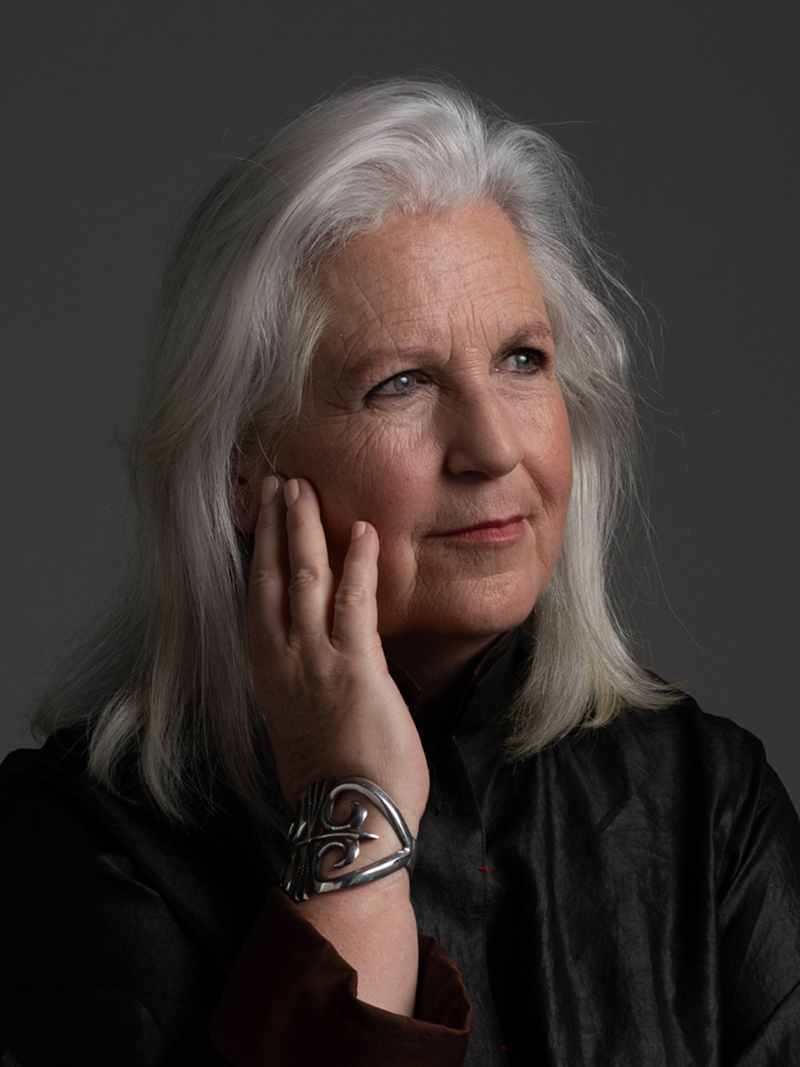
Emmanuel Vaughan-Lee is an author, Emmy- and Peabody Award–nominated filmmaker, and a Sufi teacher. He has directed more than twenty documentary films, including Taste of the Land, The Last Ice Age, Aloha Āina, The Nightingale’s Song, Earthrise, Sanctuaries of Silence, and Elemental, among others. His films have been screened at New York Film Festival, Tribeca Film Festival, SXSW, and Hot Docs, exhibited at the Smithsonian Museum and London’s Barbican, and featured on PBS POV, National Geographic, The New Yorker, and The New York Times Op-Docs. His books include Requiem, Invitation and Celebration; Song of the Seasons; and Remembering Earth: A Spiritual Ecology. He is the founding editor and podcast host of Emergence Magazine.
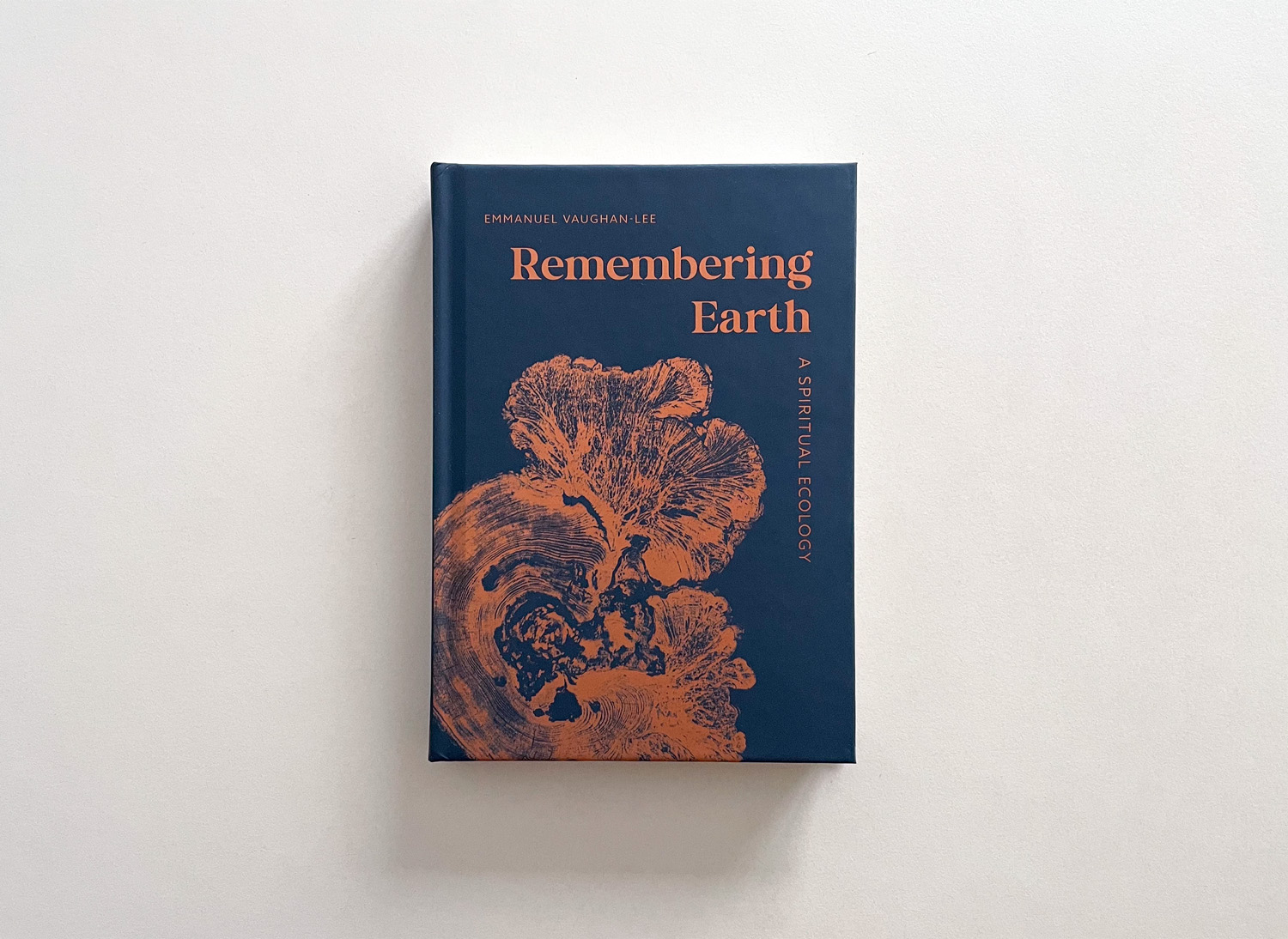
In this excerpt from Remembering Earth, Sufi teacher and Emergence founder Emmanuel Vaughan-Lee sees within our moment of ecological and cultural crisis the invitation to reawaken our ancient bond with the Earth.
In the early days of the COVID-19 pandemic in 2020, the world was thrust into a shared experience of vulnerability and disorientation. The familiar ground beneath us shifted and the future became unknowable. More than simply disrupting daily life, the pandemic dismantled our illusions of stability, exposing deep fractures within the systems we rely on. What had once appeared as minor cracks were laid bare as gaping chasms, revealing not only the fragility but also the falsity of the world we had constructed.
As we remained locked down in our homes watching our world unravel, it was hard to ignore the weight of the moment. Millions of lives were being lost to the virus, while further ruptures began dismantling life in other ways. What had long been a reality for many—a life lived on the edge of crisis, shaped by the fateful consequences of colonization, imperialism, capitalism, and greed—suddenly became a collective reckoning. The killing of George Floyd, an African American man violently asphyxiated by a white police officer during a routine arrest, ignited a wave of resistance that rippled far beyond the borders of the United States as people came together to demand an end to systemic oppression and racism. Soon after, war erupted in Ukraine, sending shock waves of violence and displacement across Europe and upending the post–World War II sense of security in the region. And in Iran the brutal killing of Mahsa Amini, a young woman taken into custody and severely beaten by Iran’s religious morality police for not wearing a hijab, sparked a powerful movement as women took to the streets under the rallying cry: Woman, Life, Freedom. Amid fear and uncertainty, a rising tide of authoritarianism and right-wing politics began to take hold across the United States and Europe, manifesting as nationalism, repression, and the steady erosion of rights.
As these upheavals unfolded, the Earth Herself mirrored the unrest: Wildfires raged throughout California, Australia, the Amazon, and the Congo Basin; floods submerged entire villages in Pakistan; and record-shattering heat waves were experienced across continents, 2023 becoming the hottest year on record, only to be surpassed in 2024. These were not isolated disasters, but a glimpse of a wider collapse.
This convergence of crises—global sickness, social uprising, ecological destruction—was unrelenting. Where I live, it had already become routine each autumn to wear n95 masks to shield against the smoke from wildfires burning through forests and towns across Northern California. But in the fall of 2020, the flames came to my doorstep. A ferocious lightning storm, unlike anything we’d ever seen before, ignited fires along the whole West Coast from California to Washington state. For over two months, the blaze consumed everything in its path, transforming familiar landscapes into ash and smoke. The death of trees, animals, and entire ecosystems was no longer abstract but had arrived as a visceral presence, falling as gray remains around me.
Navigating the unknown has always been part of the human story, and yet this moment of change is unfolding within an unprecedented global polycrisis of overlapping and interdependent issues that is vaster in scale than anything we have experienced before. While the challenges we’re facing are overwhelming, they are most likely just a foretaste of what lies ahead in the decades to come. In a hundred years we may look back at this time as the calm before the storm, a moment that preceded a world increasingly destabilized and ravaged by conflict, climate change, social upheaval. Yet any story of transformation, both personal and collective, is born from the crucible of crisis, inviting us to imagine how we might reorient ourselves in an uncharted time.
The experience of the pandemic was, in many ways, a global initiation: a threshold moment where the veils were lifted, revealing what had long been obscured. In times of initiation, whether personal or collective, there is always the potential for transformation. Things can shift, old attachments and illusions can fall away, and what is nonessential burns in the fire of change. Initiation is a burning—not a burning of destruction alone, but of renewal. It clears the path for what truly matters to emerge.
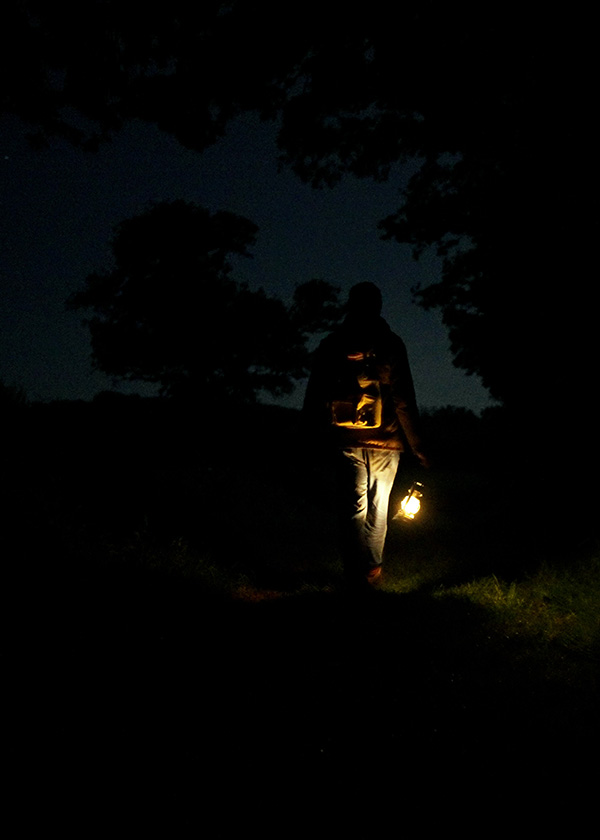
Initiation always requires that you walk in a field of ashes, confronting what has been lost, just as I did outside my home. And within this space where much is burned away, in the starkness of what remains there is an invitation to return to what is real; in the process of return something essential is revealed. During the pandemic we all experienced the revelation of what truly matters—kindness, compassion, care for one another, and the shared breath that connects all life. These revelations, stripped of pretense, point to what endures. And from this place of what is real and essential, new futures can take root and begin to grow.
How do we find and begin to work with those roots that will hold us steadfast through the unraveling of our world? What pathways of healing can we walk in such a time? And how do we bear witness to profound loss and the grief that follows without becoming consumed, so that we remain present and able to participate in what is still unfolding? To respond to these questions, we need to look beyond the immediate experience of living with the unknown. We must situate them within the larger story that has given rise to this moment, one that is not new but ancient. It is the story of our time: a story of forgetfulness.
This story of forgetfulness has held the world in its grip for centuries. My friend the late eco-Buddhist philosopher Joanna Macy called it “The Great Unraveling”—a collapse of all that has been built on illusion, like a house of cards falling away.1 At its heart lies a great forgetting of creation’s sacred nature. This forgetfulness has fractured the fundamental relationship between human beings and the living Earth, separating what was once whole. It has led to a crisis of separation, tearing apart the human and the more-than-human world and pushing the sacred, once woven through all of life, to the margins of memory. The climate crisis, for all its urgency, is not at its core a crisis of emissions or even of capitalism and greed. These are symptoms, expressions of a deeper rupture: the loss of an ancient connection, a sacred kinship that has bound us to the Earth since time immemorial.
And yet within this story of forgetfulness lies the possibility of remembrance. Joanna called this “The Great Turning”—a turning toward the sacred, a return to what was forgotten. This story is not without pain, for remembrance often requires us to confront the depths of our forgetfulness and the consequences it has wrought. But through that pain, by walking through the ashes, we are invited back to what it means to be human in the most essential sense, back to connection, kinship, reciprocity, and relationship with the living Earth and all its beings. Within this story lies the potential for transformation, for healing, and for the restoration of a sacred bond that has always been ours to hold.
How do we find our ground in a groundless reality where the world can shift in an instant? First we must recognize that the ground we stood on was never real. It was built on illusion, on quicksand and falsehoods. Then we turn away from the illusion. This means recognizing how we have ignored the sacred nature of creation and approaching creation once more with respect and, ultimately, with love.
Because this is a story of love. It is as much a story of love as it is a story of forgetfulness and remembrance. At the heart of that primordial relationship between humanity and Earth is love—not fleeting or sentimental, nor even solely human, but a love that is vaster, simpler, more ancient. It is a covenant of love between the human and the living Earth, a binding force understood by ancient cultures since the beginning.
These cultures wove this love into the fabric of their existence. Their ceremonies, songs, prayers, and dances were expressions of this love, its language made visible. It was their foundation, their remembrance, and their offering. This love was not passive or indulgent but active and reciprocal, inspiring awe and respect. It demanded humility before the majesty of creation: the storm, the tidal wave, the unknowable mysteries of the living world. This was not fear in the sense of terror, but reverence, a deep respect for the mystery, for what cannot be fully understood.
Now, as we find ourselves in a time of the unknown, we are being called back to reverence. To navigate this space we must return to something that can hold us in the midst of uncertainty. The sacred nature of creation can hold us, but it must be more than an abstract idea. Love for the sacred is not a concept; it is something we feel in the heart, the gut, the body. It is more real than the pavement beneath our feet. It carries substance and depth, layers of history, and a web of relationships woven through time.
We have forgotten this, but that does not mean it is lost. We are not tasked with creating something new. Instead, we are called to return to what already exists. Even if it lies dormant, buried deep within us, it remains. It is in our bones, in our DNA, in the marrow of who we are. And it waits patiently, endlessly, to be remembered.
This love is forgiving of our forgetfulness because it wants to be awoken, it wants to be reclaimed and lived in right relationship. For much of our history we lived in a state of remembrance with this love at the root of our entwinement with Earth. Our past reaches far deeper than we imagine, stretching into epochs when this covenant of love guided our existence.
Moments of great turmoil, initiations such as the one we are living through and those that will most certainly come in the future, can wake us. This global initiation concerns more than a virus, more than social upheaval and war, more than a changing climate and the rise of the authoritarian political right. It is part of a larger story that has been illuminated by all this chaos—the story of connection, of how closely we live, of how deeply intertwined we are. It has revealed the fragility of what we thought was unshakable: Our society is built on illusion, and it is a house of cards with no foundation.
Suffering has the power to break us open. And in that breaking something long dormant can stir. The heart, so often overlooked as a vehicle of transformation, begins to awaken. It feels, remembers, and leads us back to our deepest selves. There is great power in being thrown back on our-selves, in rediscovering what it means to feel love. If we are to move forward from this crisis—this crisis within a crisis within a crisis—the path ahead must be built on a foundation of what is real. And nothing is more real than love.
At the heart of that primordial relationship between humanity and Earth is love—not fleeting or sentimental, nor even solely human, but a love that is vaster, simpler, more ancient.
At its core this is a spiritual crisis, and any true response must be a spiritual response. This does not mean that we should neglect practical action. We must do our best to reduce pollution and emissions, to simplify our lives so that we are no longer reckless consumers, and to seek real-world solutions to the crises we face. But these solutions, no matter how well-intentioned, will remain hollow if they are not grounded in love for the Earth. Without love, we ignore the heart of the crisis: the deeper spiritual rupture. And in doing so, we also miss the lesson we might learn and the contribution we are being called to make.
Suffering, loss, and grief can open our hearts. From that openness we can begin to live and act from a place of love and remembrance of the sacred nature of creation. This shift is not only transformative; it also offers us a grounding that remains even when the literal or metaphorical ground beneath us is taken away. The love that binds humanity and the living Earth is not governed by human rules, nor is it ours to control. It is part of that ancient, primordial covenant of relationship, greater than any individual yet intimate enough to hold, nourish, and sustain us. It is real.
But this relationship, like all relationships, demands our effort. It demands attention and care. It asks for our engagement, for our own ways of remembering, honoring, and participating in it. This is not a passive bond. It is alive, dynamic, and reciprocal. And while it may seem daunting, there is comfort in knowing that none of this is new. Nothing we are being asked to do is new. It may take a different form in a different time, but the essence remains the same. The prayers, ceremonies, dances, songs, and poems of our ancestors are technologies of love and remembrance, threads braided between the human and the living Earth.
With each breath, each step, each syllable of those ancient songs, love and remembrance are strengthened. And while times and contexts have changed, we can still return to these practices, albeit in different forms. They need not be elaborate. It can be as simple as holding a moment of silence each morning, recognizing the sacred nature of the living Earth in your heart before stepping outside. It can be walking, consciously acknowledging with each step that you are in relationship with the Earth beneath your feet. It can be breathing, recognizing that every inhale and exhale is an act of communion, not isolation, and honoring that relationship with intention.
These simple practices are rooted in the ways humanity has moved, breathed, and lived on this Earth. The breath has been the foundation for sacred practice in traditions across the world for time beyond measure. Walking in a sacred manner, too, has always been an act of connection. For eons we navigated landscapes and traversed great distances across the surface of the Earth on foot, the soles of our feet always in contact with Her skin. These ways of being are not innovations; they are remembrances of what has always been.
Yes, there were ceremonies, festivals, and special prayers to mark the sacred rhythms of life, to honor deities and ancestors and holy days. These moments were and are vital. But even between the days of celebration, in the quiet rhythm of everyday life, there was a constant remembrance of creation’s sacred nature. It was so fundamental that it needed no explanation, no justification. It simply was. Now, in this time of unraveling, we are invited to return to that simplicity, to remember what has been forgotten. To weave once again the threads of love and remembrance into the fabric of our days. It is not a task of invention, but of reconnection; it is an act of humility, reverence, and belonging.
This remembrance is in the marrow of who we are; it is a cry waiting to be heard. It doesn’t require us to have university degrees or attend retreats or weekend workshops. It only asks for our attention, openness, and, above all, love. With love, this remembrance settles deep within us. And from this a transformation occurs. We begin to see differently, feel differently, and hear differently. The world ceases to be a backdrop to our lives, and we realize that we are the backdrop to Her story.
This is another aspect that remembrance reveals: the journey of listening. To truly listen—to hear the winds as voices, to understand the call of a bird, to feel the rain not as weather but as communion—we must first be grounded in a real connection with the living Earth. Listening is not passive. It requires a willingness to be opened by heartbreak, by pain, by suffering. Only then can we hear the languages of the Earth—the voices of the world that have always been speaking to us. Only then can we hear the stories that are waiting to be told and return to what the geologian Thomas Berry called “the great conversation.”2
Listening is essential for whatever lies ahead. Whatever emerges from the ashes of this time must be born of listening, not imposition. We have imposed ourselves for too long. But when we approach from a place of love and remembrance, the Earth Herself begins to speak. Voices and stories rise like sprouts from the ground, waiting to be seen, heard, and nurtured. These stories and the voices they carry are pathways to healing; they are ways to find ground in a groundless reality.
But we must also hold the loss. To live in this time is to bear witness to immense grief. We cannot turn away from it. With a foundation of remembrance, we can hold this grief without being consumed by it. We become a container, grounded and steady, capable of bearing both the sorrow of forgetfulness and the hope of awakening. For we are living in a world of unraveling, yes, but also in a world that can awaken. Grounded in remembrance, love, and reverence for the sacred, we can face the enormity of what is unfolding.
We do not know the future—how high the seas will rise, how many forests will burn, how many songs and voices of creatures will fall silent. We do not know. But we know this: Things have been set in motion that cannot be undone. If we believe we can control what is coming, our hubris knows no bounds. Instead, we must return to and live what is essential. We must bear witness to the losses yet to come—losses even greater and harder than we can imagine—while also looking toward a future built on love, remembrance, and the sacred. These must be our foundation, guiding us in the ways we live, listen, and create.
“‘The Great Unraveling’: an ongoing collapse of living structures. This is what happens when ecological, biological, and social systems are commodified through an industrial growth society or ‘business as usual’ frame.” Joanna Macy, “Entering the Bardo,” Emergence Magazine, July 20, 2020, https://emergencemagazine.org/op_ed /entering-the-bardo/.
Thomas Berry first introduced the idea of “the great conversation” in The Dream of the Earth (Sierra Club Books, 1988), 18. He later expanded on this theme in Befriending the Earth: A Theology of Reconciliation Between Humans and the Earth, coauthored with Thomas Clarke (Twenty-Third Publications, 1991).
A new book of reflections and practices, by Sufi teacher and Emergence Magazine founder Emmanuel Vaughan-Lee, offering an embodied spiritual ecology that moves beyond ideas into lived experience and restores our sacred bond with the Earth.
Sign up to receive our biweekly newsletter, arriving every other Sunday morning. We are an ad and subscription-free magazine committed to sharing stories crafted with care. Join us as we explore the threads connecting ecology, culture, and spirituality.