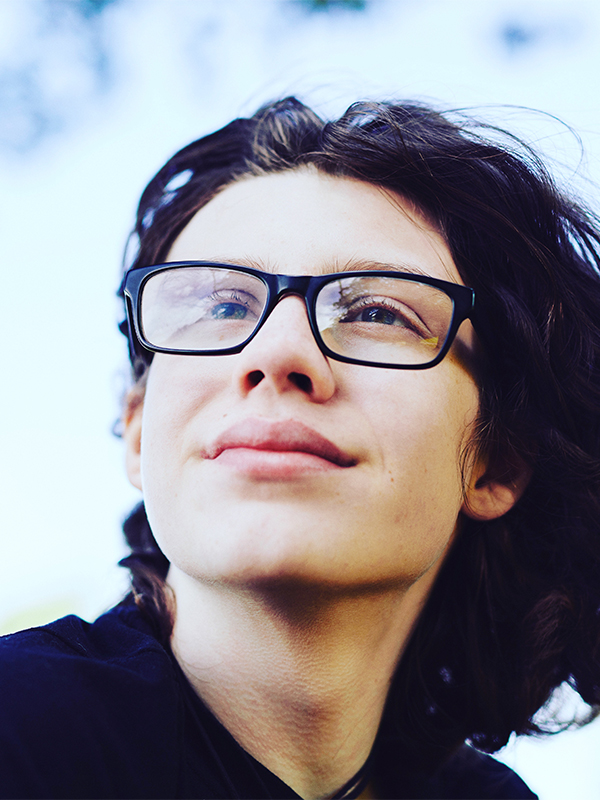
Dara McAnulty is an award-winning autistic author, naturalist, and conservationist from Northern Ireland. After writing his blog, Naturalist Dara, he published his debut book, Diary of a Young Naturalist, when he was fourteen years old, which won the 2020 Wainwright Prize for Nature Writing and the British Book Awards Book of the Year for Narrative Non-fiction; most recently he published his third children’s book, A Wild Child’s Guide to Nature at Night. Dara was the youngest person ever to receive a Medal from the Royal Society for the Protection of Birds (RSPB) and was also the youngest in King Charles III’s first New Year’s Honours List. Other recognitions include a British Empire Medal for services to nature and the autistic community. He is an ambassador for the RSPCA and the Jane Goodall Institute and has worked with Chris Packham, the RSPB, National Trust, and the Wildlife Trusts. Dara is currently a student of natural sciences at Queens’ College Cambridge.
Irish writer and naturalist Dara McAnulty enfolds us in the earthly belonging that emerges when we feel ourselves flowing with the seasons.
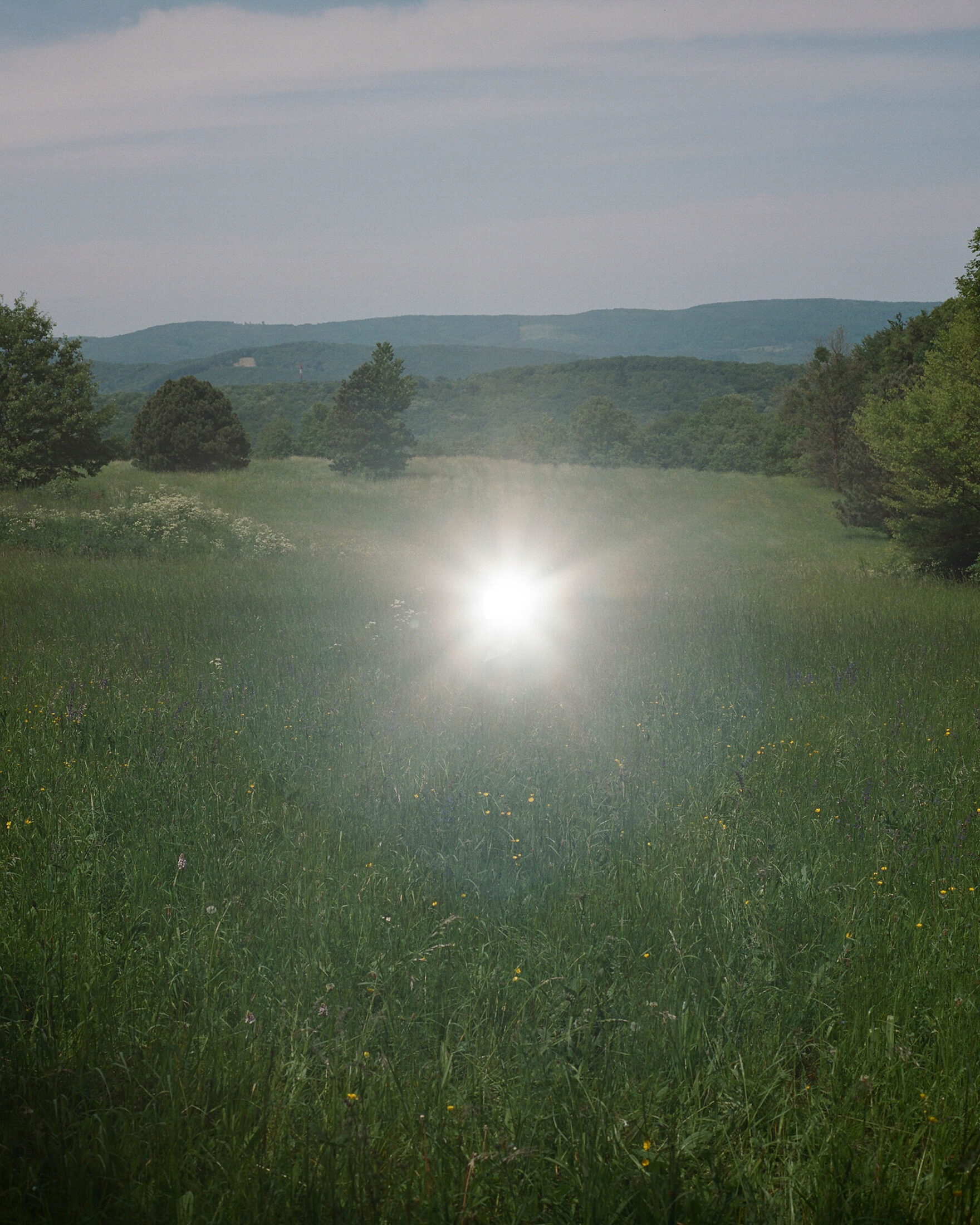
WE WERE SAYING GOODBYE to another year of the hardest and most intense work, making a celebratory circle on the fast-becoming-brittle June grass. Cambridge, even in early summer, is too hot for my temperate Irish bones. The meadow flowers were still long and luscious, though, tickling our cheeks and tipping fragrant notes into our already bubbling chorus of excited chatter. Exams were over and we would all soon be blowing like dandelion seeds to our foundation corners, to feel the clucking and fussing of those who had missed us.
Summer shone in without my realizing, a novel experience as I, from a precociously early age, had categorized and chronicled each week and every month of my cognizant childhood. Notebooks filled with dated pressed flowers, weather reports, birds and animals sighted, festivals celebrated. Descriptions and feelings. A young naturalist alongside a young writer. Reliving every moment to ease the overwhelming noise of the other world: that of people and the unnatural soundscape of hustle and bustle.
I had then become a “seen” chronicler of that same “other world.” In front of it for all to critique, to disseminate and form opinions, not just on my words, but on my appearance, my autism, and the confusing notion that I was who I am. And who I am—so synchronized with the seasonal happenings of nature—had fast become lost as the requests and requirements rushed in; what had once been a natural flowing of my being became, admittedly, a false introspection. My joy and wonder formed into a public simulacrum rather than an authentically lived experience. So, I became untethered, frighteningly so. I cut all ties with my pen and channeled my vision toward just becoming an essence in the world.
University life was beckoning, and wiping the slate clean became irresistible. Arriving in Cambridge I began to seek out sensory adventures, much as I had in my younger years. I sought out places where wildlife existed, from the intimate activity outside my window to the horizontal expanse of the fens, which breathtakingly, dizzyingly, gave me roots to grow into myself, away from all I knew. I then became surrounded by friends I never thought I would have; and although my brain considered each intricate detail of life amidst the living of it, my spirit did not itch to fill a page. It did not last, though, for writing to me is like breathing. Deep breaths which when easily forgotten leave us breath-less, but not for long. Inhaling all and letting it once again fill thought crevices. My body, as nature does in each turn of the season, sent out signals that it was time, and so (to use a favorite Seamus Heaney analogy), I dug once more with my pen, and (like in Heaney’s peat bog) I have been reaching new depths with it. Equilibrium once more. As small tremors happen above and below ground, innate propulsion, the desire to scratch the surface with ink or the tapping of keys, writing, once more, becomes uncontrollably natural.
THE BARN OWL CAME silently, and we silenced our revelry, as outstretched spectral wings caught our breath in its wake. Glowing against the arches of oak. Traversing low and capturing unspoken reverence. The light! Summer had at last descended upon the dull ache where homesickness lingered, and with quickening pulse, so did the realization of coming home. Of leaving the horizontal land of the fens for the contours of the mountainous coast, for waterfalls and waves. Oystercatchers and redshanks, their luminous calls ricocheting against my bedroom window. The starlings, coating next door’s field with their pulsed shapeshifting. The wonder of seeing how our Brigid’s cross had gone from green to wheat.
Although seasons in Cambridge are more clear-cut, marked by distinct weather, they are clouded by deadlines, lectures, supervisions, and a moody anxiety. No family rituals of walking down the Holloway to Ballynoe Stone Circle to welcome each paragraph of our yearly story. The only respite: early morning rowing. Stillness as the sun rises. My walk to the boathouse is the anchor, a window of heeding. My feet crunching on just-fallen autumn leaves. The glistening of kingfisher on winter mornings, my patterned breath catching dunnock song as its first spring notes hit the bare branches. The first primroses on the riverbank. The ever-present mallards, quacking rasps of melody, keeping me company as I walk across the Mathematical Bridge to my lectures; energy fizzing in my arms and legs, muscles purring from the stretch of the morning’s action. Back and forth. Swerving the river surface. Small happenings seeping between the cracks, making me whole. Noticing. Nature and the cyclical turnings—they complete me; satiate my inner hunger for depth. Knowledge can only partially fill the soul. It can excite, thrill … transform it. But not weight it with the satisfaction of sensation.
During moments of intense home heartache, when going to the ceilidh house for the songs of home is just not enough, I recall from my inner curiosity cabinet of memories the seasonal chimes marking Earth’s cadence and rhythm: Hanging the washing out with Mum in March as three whooper swans bugled vernal honks. We smiled knowingly. The first time I saw an otter as the river felt the straining branches, laden with late winter snow. Scrabbling amongst the fields and peering over cliffs on Rathlin Island to find hints that all was well with its nature—the pyramidal bugle flowering, the puffins arrived. The constant need to know that all is as it should be. The swallows that come—during my last week of homely rest before another April drive to the ferry—and nest in the woodshed. Tucked tightly within their astonishingly robust architecture. The joyous relief of beholding is as intense as the reluctant oncoming suitcase packing. Walking as a family through Murlough Woods to welcome the cuckoo’s steadying two-beat harbinger, my exit call to exam term. Returning home exhausted in June to find fragile fledglings; we have much in common. And the pond! No longer stagnant but brimming with life. Emerging emperor dragonflies, red darters, pond skaters, water beetles. Daphnia. All whizzing and scrambling. A frog! Camouflaged on the grass. Just one, but one can become more than “just one.” Water forget-me-nots and marigolds attracting hoverflies. Continued blossoming. I stare for hours. Thinking time. We all need a lot more thinking time, to observe not just our atmosphere but our inner workings and how they charge together.
These are the moments which bind and bond. Nature’s pulsating, stamping imprints on memory, love, and fellowship. Connection to all living things enlivens spaces into ecosystems. Everyday places into wonderlands. When the aperture is expanded to panoramic or narrowed to proximate, everything becomes a living painting. Claude Monet painted his Water Lilies series: two hundred and fifty paintings of his beloved flower garden, from all angles, in all seasons. Each work shows the subtle changes of a space in time. I find them tender and yet, stirring. An act of quiet, delicate presence and patience. Patience seems to have been overtaken by instant gratification, a frenzied need for increasingly more. Now, now! Tempered observance brings awareness of the intimacy and intricacy of change, enabling us to withstand change within ourselves and our lives.
As an autistic young adult, I have embraced change—an intense and difficult journey—by becoming more than an onlooker. Entwining myself with the knowing that change is a gift of renewal and growth, an invitation to feel truly alive. Nature and seasonal change have thrust me towards emerging wisdom and self-acceptance. As I move from teenager to young man, seasons are no longer about marking the points of time, but its passing: leaving and coming home. The thread of belonging separating into a trinity of home, friendships, and college life. Gone are the one-dimensional, juvenile note-takings, replaced now by a cornucopia of feeling in my entire being, propelling every sinew and muscle into action. A need to keep moving through the world with eyes wide open. I find now that my mind photographs and catalogues all by itself, without hints, prompts or evidence. Over time nature has become a role model for living and it has taught me all the lessons I need to know. Reciprocity. Patience. Resilience. Understanding connection, and limitations.
Of course, there is one blaring roar not to be ignored. A seismic shift precipitated by capitalism, greed, and the carousel of ideologies which threaten to pull the wool over our ever-necessary discerning eye. That of our changing world, where the seasons are no longer particular folds in the Earth’s map of existence. Where extremes are causing immeasurable damage and distress. Death and destruction. I cannot go there very often, though; it paralyzes my capacity to be of use. Powerlessness and despair are just feelings, though; they are nothing more. We can acknowledge them and still go through the world doing the best we can.
When the aperture is expanded to panoramic or narrowed to proximate, everything becomes a living painting.
AS I WRITE, in late August, I am preparing for a field trip to Borneo. I have never left Europe, and although I see destruction on a small level—a few felled trees, the mowing down of a wildflower verge—and on a bigger scale—the blue-green algae in our beloved Lough Neagh—I need to prepare myself for vast swathes of deforestation. And displaced animals. Indigenous lives forever altered. I know, too, that I will experience such colossal difference in air and nature. That anticipation also excites me. I can still feel wondrous feelings, despite the background noise of desperation. Suffering and beauty can coexist; albeit uncomfortably. Occasionally, the heaviness does become too much, and then translating the beauty, illuminating it for myself and others, feels like a band-aid on the suffering, writing, at best a momentary whoosh of pain relief for a terminal condition. I must stop myself before the dark propellers that power the negative thoughts have won. When harsh winds and storms darken my own weathering, I must breathe my own light into the shadows. Dispersing, even lightly, some veined webs of possibility. I reach for the flow of life and allow rivulets to spring into cascades, to force me back into movement, to keep me connected. As a mycelium network connects a forest, I must do so with all that I touch, feel, see, and hear within nature. I am not whole without it.
Thinking now about how I will be on the other side of the world as the willow tree outside our sitting room window goes auburn, as the swallows scythe the sky in gluttonous swoops—a nourishing preparation for their long flight home—already floats nostalgia. My early years crashing through leaf piles, lying on my back, looking up at scudding clouds, signaling change. Comforting the pain of going back to school, the arrival of the first brent geese to the wetlands and shores, the safety net of visiting them at weekends, inspiring me to calm, to look slightly ahead. A balm to cover wounds of difference and loneliness. Punctuations of soothing respite.
The curlews will come down to the coast from the uplands, their remembered song ambushing melancholy, and fluttering within me an inescapable assurance that nature keeps striving. That we are striving, too much. They will come and I will not be there to pick the blackberries and laugh with Lorcan and Bláthnaid as they meander down the lane to the beach, mouths full and dribbling burgundy juices. No blackberry crumble in the jungle! I will miss it all.
I wonder if my own internal clock will be suspended, returning to so much change without moving myself along the lived surface of it. For immersing myself in the worlds of the creatures and phenomena we share the Earth with is how I regulate my nervous system. How I view the seasons is inextricably connected with all living things and matter. When we moved house three times during my childhood, I saw them as a beat I could march to that aligned with the wonder of the natural world and how it swayed, danced, larked; that bound me to something bigger than my own smallness—and to be reminded of our own smallness is a lesson in much needed humility.
THE BARN OWL DISAPPEARED and left in its slipstream a tremendous rippling. Of feeling, friendship, and our oncoming fragmented lives. I explained aloud, “This is summer! The meadow. The hunting barn owl. The way the light slants through the heavy leaves of the oaks. The singing blackbird. The skylarks! Not the heat, not the end of exams, not a date, not the obvious.” They laughed with fondness, looked around, and wholeheartedly agreed. As darkness finally descended, we had embossed the emblematic on our collective remembering.
Afterwards I returned to my family, the fledglings, the greenhouse full of tomatoes, and the broccoli, green bean, and carrot seedlings, all lined up, ready to bloom, grow, and feed us. To the long, light evenings full of laughter, love, the pond, and the life happening all around us, with us, in us.
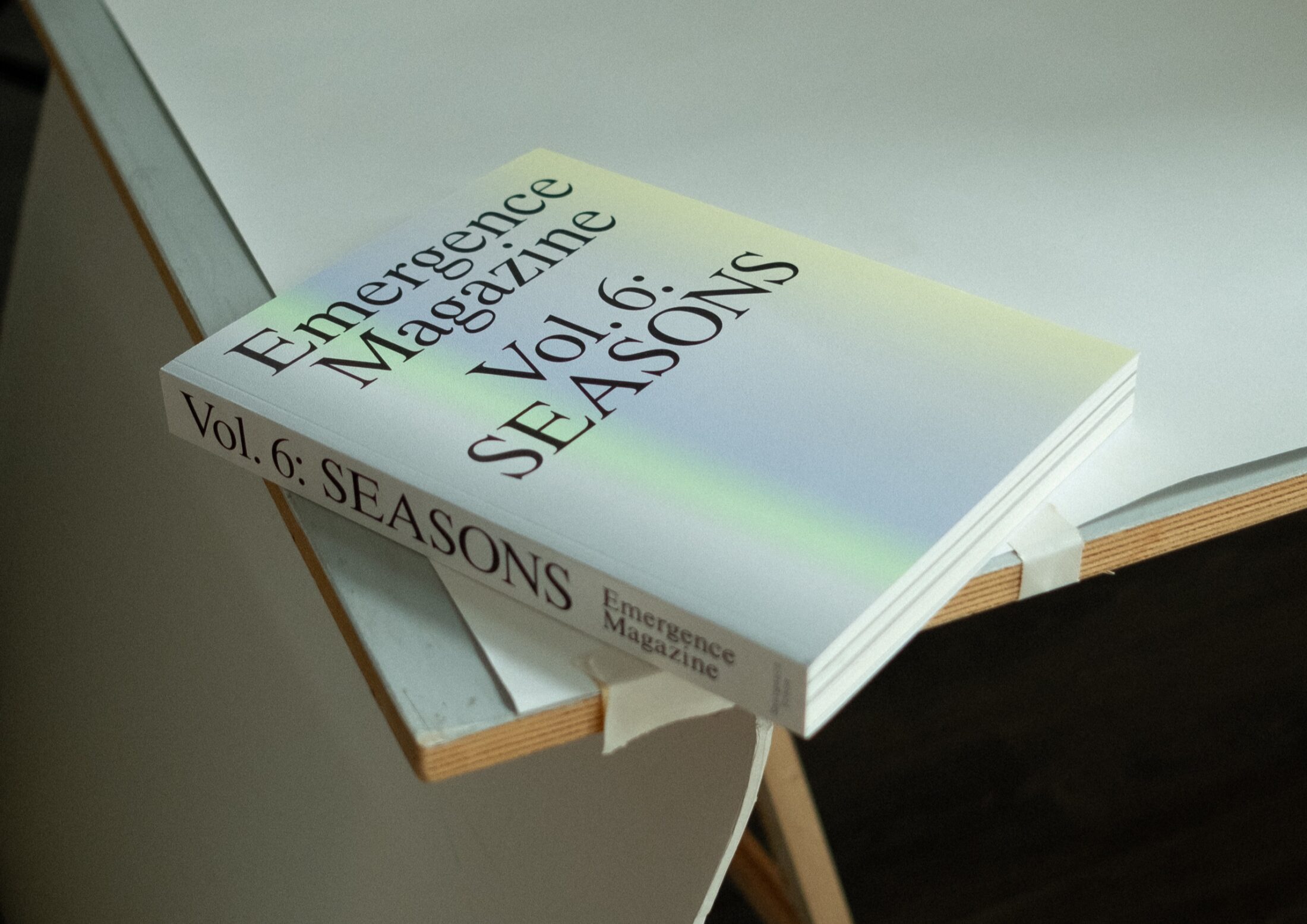
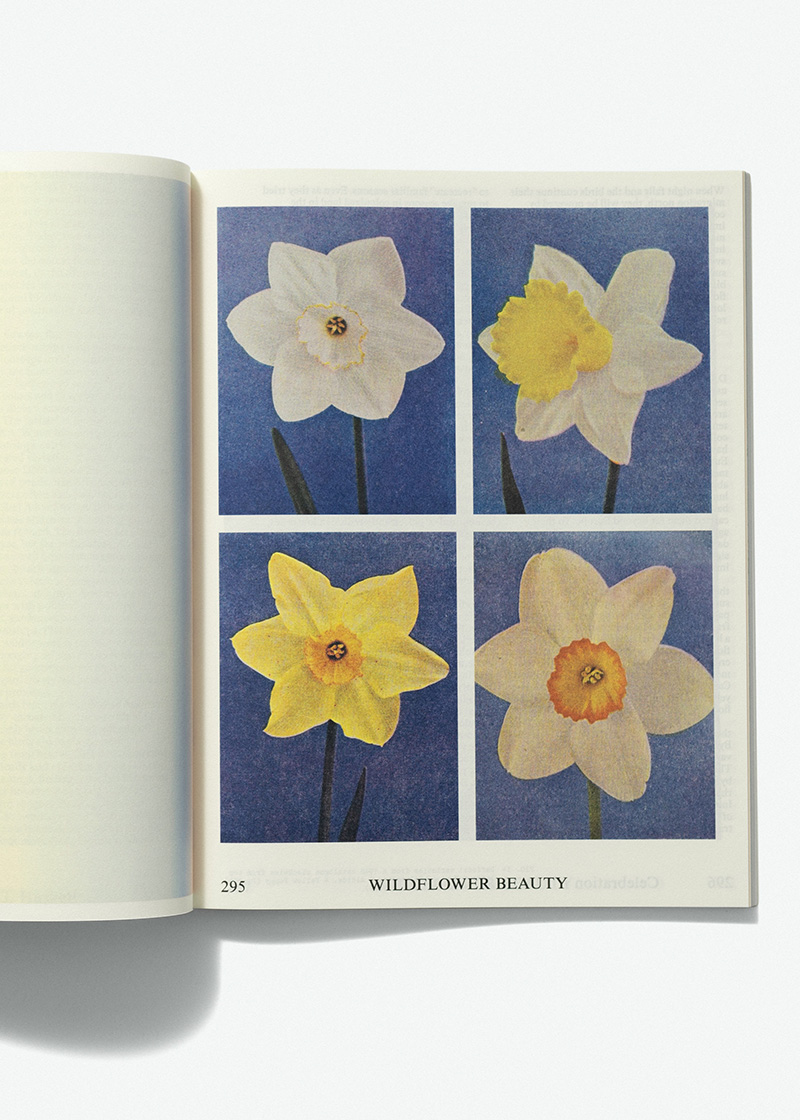
Reflecting a world where snow no longer arrives, annual migrations fall out of time, yet first blossoms still burst, Seasons, our sixth print edition, moves through three themes: requiem, invitation, and celebration—each a contemplation on the paradoxical ways the seasons now beckon us into intimate relationship.
Sign up to receive our biweekly newsletter, arriving every other Sunday morning. We are an ad and subscription-free magazine committed to sharing stories crafted with care. Join us as we explore the threads connecting ecology, culture, and spirituality.