Millennium Images / Gallery Stock
Language is a Fluid
Jake Skeets is the author of two books of poetry: Eyes Bottle Dark with a Mouthful of Flowers, winner of the National Poetry Series, American Book Award, Kate Tufts Discovery Award, and the Whiting Award; and his new collection, Horses. His work has appeared in journals and magazines such as Poetry, The New York Times Magazine, and The Paris Review. He has been awarded an NEA Grant for Arts Projects, a Mellon Projecting All Voices Fellowship, and the 2023-2024 Grisham Writer in Residence at the University of Mississippi. He is the third Navajo Nation Poet Laureate and teaches at the University of Oklahoma.
Diné poet Jake Skeets explores the purpose of poetry in the space between what we live and what language can bear.
A POEM SHOULDN’T attempt to do anything. I don’t mean to say that a poem shouldn’t accomplish anything. A poem can do many things in fact, such as cause impact, incite sensation, deliver experience, and resist, in some way, the dominant forces present in our lives. However, a poem shouldn’t attempt to do anything. I’m worried because deep down I know the word “attempt” is not the accurate word. The word causes poets agony because they believe in the desired ends of their writing. I learned that the root of the word “attempt” also means “to attack.” What does that mean, then, if we ought to attempt something in our work?
In Springdale, Utah, I walked down the corridor of Zion Canyon Boulevard after everything had closed for the night. Don’t be impressed, everything in Springdale closes early. It was no later than 9:30 p.m. on a Saturday night as I slowly made my way down the long main road of the small tourist town. On either side of me, tall red and pink sandstone cliffsides rose up like buildings and stamped out part of the night sky. The moon was nearly full as it backlit the top of the eastern cliff. The town was quiet. The small river that moves through Springdale was alive, chucking along its sandy embankments. Some winter bird could’ve been floating among the thin foam on its surface. Perhaps a fox was there. Perhaps a poet on its shore, dreaming into their notebook this moment, this night, the cool breeze that swam through the rock, wood, and metal.
I say that because my instinct was to attempt a poem, to try to capture this moment in a poem. Attempt to not only translate this experience to a reader but also clue them that I was likely walking through a canyon ancestrally known to me. Ancestral Diné made their way through that same canyon, noting the tallness of the cliffs on either side of them. Their words of course expressed something beyond the English language. Their metaphor was something that rests somewhere deep inside the marrow of my bones. Their bones are mine, after all.
How do I capture this in a poem? How do I capture anything? I instead attempted to take photos with a thousand-dollar phone. With each attempt, my thousand-dollar phone’s “dark mode” took over and asked me to remain steady enough to capture the photo in low light. The universe, I guess, is too immense for a pair of lenses to capture its organic design. My eyes were able not only to register the photons and send them to my brain, but to map the area around me along with the sensations, sounds, and scents, and histories. The point being the thousand-dollar phones in our pockets will always fail.
A poem would also fail. I don’t know this for sure, even now, because I haven’t even attempted to write the damn thing, but I know that failure is always a possibility when dealing with something as strict and frail as language. Language has always come up short for me. The processes behind a poem fail to render the experience the way my body does no matter how steady I remain in low light. Like the thousand-dollar phone’s arrogant way of displaying two targets on its screen—one white and one yellow, one the ideal target and the other my steadiness—my job of capturing this moment becomes a videogame-like exercise of trying to steady myself enough to match the two targets so I can take the “perfect” photo. Poetry, basically.
Perhaps, it is the promise of the thousand-dollar phone to have the capacity of the human eye that was making me upset. I mean, the phone literally costs a thousand dollars and yet I was stuck on the fringe of its abilities, not steady enough for the right mechanisms to click into place so that I could somehow document this moment in a canyon I was sharing with ancestors so that I might one day reference the photo when I sit down to capture the experience in a poem.
It’s no wonder I’m not a photographer because the lenses were pissing me off. I wanted to shout: “Just take the fucking photo.”
Enough of my existence on this earth has been spent paying for this thousand-dollar phone that it should have taken the fucking photo for me. A disposable camera would’ve been more worth it at this moment. Sure, the photos would’ve come out blurry or distorted but at least the experience of taking the photo would not have been enraging. Also, the distortion of the final image would most likely not bother me so much because it would be a disposable camera after all. Unlike the thousand-dollar phone in my pocket, a disposable camera never attempts to do anything. It just does the thing it does when you press down on the button. What I really wanted was to experience the canyon at night on this road, and a disposable camera would have offered the least amount of disruption. Point-and-shoot. What could be simpler?
God, are poets the problem? Not the techniques and conventions of language, but the actual brain of a poet that desires their poems do something, change something, attempt something. For a poet, the writing process is so fraught and frail and flailing because we’re taught poems should attempt to do something on the page; because why come to the page in the first place? Why this? Why now? And, most importantly, for what?
Poets are the problem because poetry is the problem. Audre Lorde has already articulated the ways poetry is not luxury, and Alice Notley, in her interview with Paris Review, said, “Writing is not therapy. That’s the last thing it is. I still have my grief.” Poetry is the problem because the language of its expression is the problem. So, I should clarify that I’m thinking through the narrow main road that is poetry in North America, and poetry in English at that. I’m tunneled through this stream of coloniality because of an inherited violence. This is a violence we all share because the English language has become a language of absoluteness, where law and order is the attempt of power. Power attempts to do so much. It also accomplishes so much.
In Tsaile, Arizona, I was having a conversation with the poet Haesong Kwon and he told me everything I needed to know about poetry. We were sharing cigarettes in the dark light of a heavy moon on a crisp Tsaile night. The Chuska Mountains were backlit as they overpowered the night sky. We were asking these questions of poetry, for poetry, and about poetry. He told me the only appropriate response to decades of colonial violence is poetry because poetry illuminates how language has been commodified and assimilated as an agent of power. The only appropriate response is poetry because poetry is not a luxury and while it is not my therapy perhaps it can be a therapy for those who engage with it. It cannot be therapy for me, because to capture what I’m trying to give, I must keep steady long enough so that the right mechanisms click into place and result in a poem. It’s a job of the impossible.
It’s only impossible, though, because I’m thinking through language transactionally; that if I come to the poem with enough investment and labor that all of it will pay off in the end, that if I come to the poem through the administrative functions of language that all of it will begin to make sense to me, that if I come to the poem as someone with a destiny to manifest that I will accomplish the means and ends of my writing. Language, however, is more a fluid. It morphs and changes. Even if I demand its rigidity and scripture-like authority, language finds a way to river and creek across the page, no meaning, all meaning, obscured meaning, clear meaning. I find the poem on a foggy morning in gray light. It comes like rain.
Language is a fluid in its pressures, motions, circuitries, power, and malleability. I can feel its softness in my mouth and at other times its torrential downpour on the roof of my house. Language is a fluid because it simply does what it does. It’s a truth that humans have harnessed for centuries. It’s one of the truths that exists in our reality, the truth that fluids fluid.
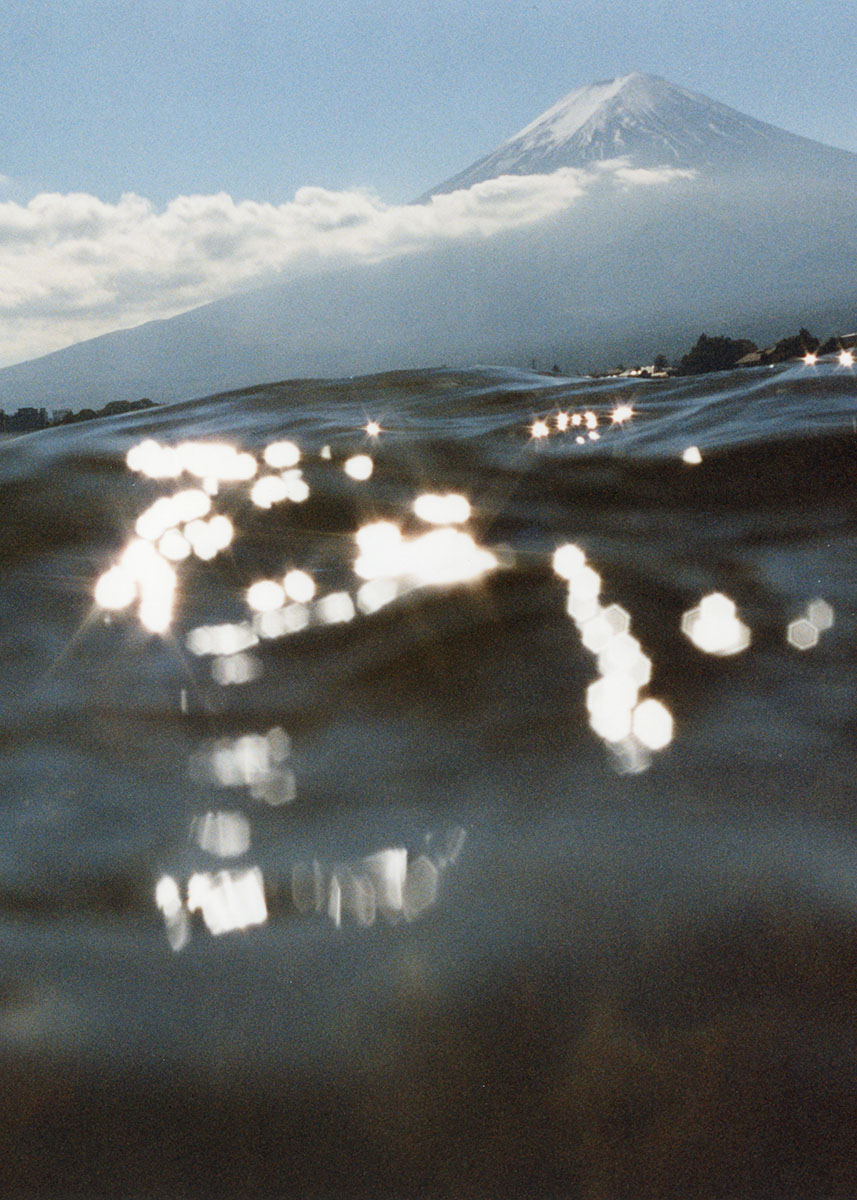
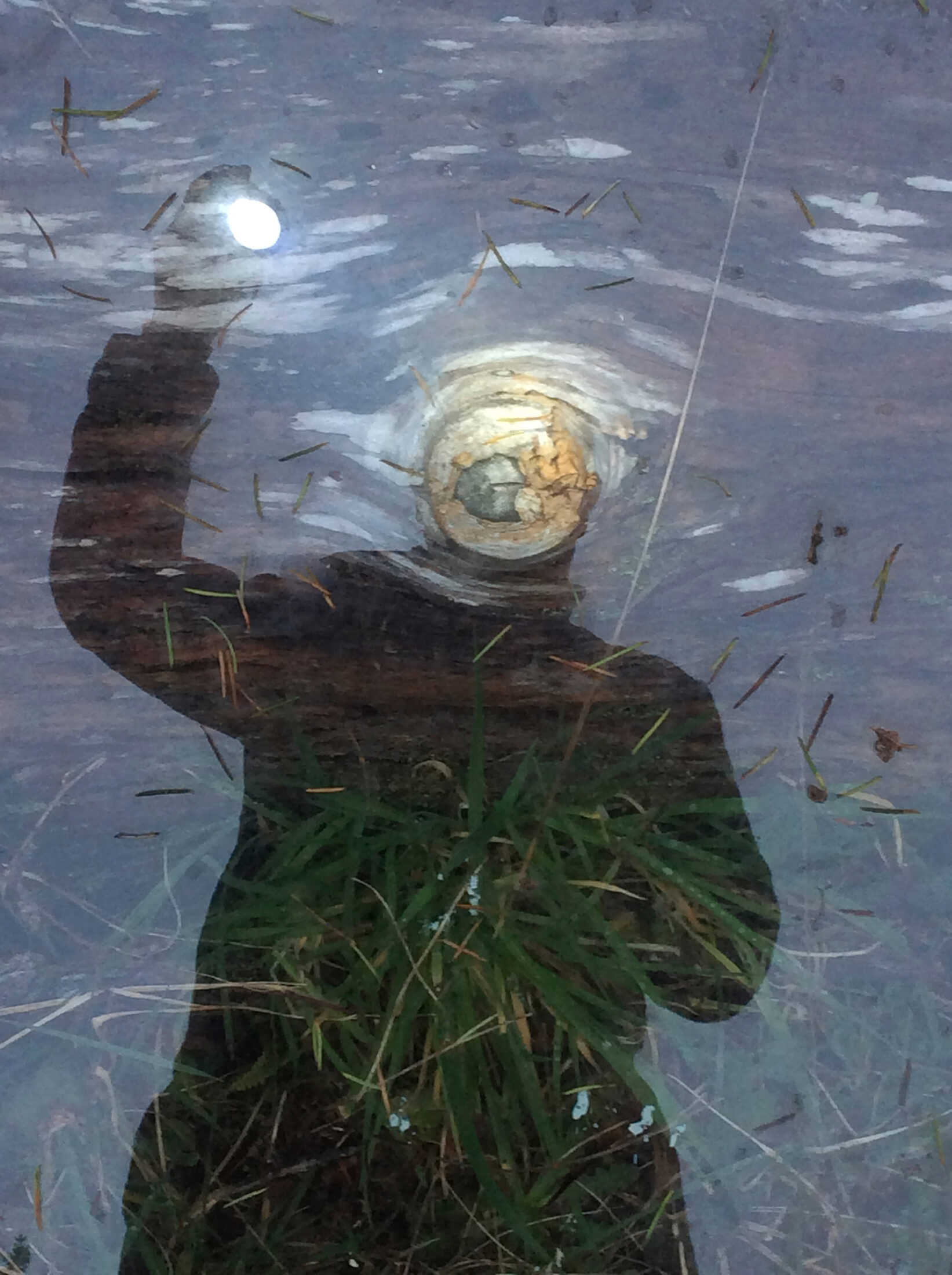
So, what to do, then, with poetry? The problem of poetry. I was naïve thinking the problem of poetry was that it stands in the way of everything I attempt. Poetry is a problem because it stands in the way of everything power attempts. Even with its blurry, distorted expressions and meanings, poetry remains a problem because it counters everything power is trying to render in our world. The thousand-dollar phone attempts to produce the perfect photo, even in environments less than ideal for photo capture. A disposable camera on the other hand simply takes the photo and asks that I be okay with what it renders. In its attempt to do nothing but take a photo, a disposable camera still captures the essence and beauty of any given moment. It’s a beauty because it’s a moment attached to an experience.
Can I say that poets are the disposable cameras of the world? Poets take photos of our world and some end up blurry or distorted. However, the distortion is a gesture of a world fully lived. Poets are the problem then because poets are entirely too credulous. We believe that moments in our lives ought to be rendered. It’s an instinct that lives in most human beings and one of our most ancient acts. It’s where all beauty comes from.
So as I continued to walk up Zion Canyon Boulevard in Springdale, Utah, I put my thousand-dollar phone back in my pocket and decided to instead just walk. I only listened to the music of the town: people talking, cars whirring by, and a small river singing a tune that might be the perfect translation of time. The air was calm as I felt my feet grow tired. I packed the wrong shoe for Utah. Everyone around me was wearing hiking shoes or some other appropriate footwear. My shoes made clacks as they struck the concrete and each step felt more laborious than the last. As I neared the lodge on the north end of town, the town began to quiet. There were less people, less buildings, and less lights. The cliffsides began to inch closer to me. Soon, all I heard was the sound of my boots and the sound of the small river, each moving in organic rhythm, in some ancient song.
The poem was resting there in the sounds of my body and the sounds of the small river. I couldn’t find it because I had been attempting to do something else entirely that distracted me from the poem, the sounds, the beauty. I aligned my body with the water and followed the sounds all the way back to my room at the lodge. I opened my notebook and wrote a few things down about the sounds. I ate a cold turkey sandwich, drank water, and listened to the river through an opening in my window. I stayed with the song because that’s just what poets ought to do. We never do it for ourselves. Quite the opposite. We tend to song for everyone else. They need to hear this music. They need to feel this fluidity. It’s my only responsibility as a poet to let my poems attempt nothing and just do what they do. To come like rain. To make song in a canyon night. Blurry. Distorted. Beautiful.
IF CRANE
a gold moon beneath the black water laps at the surface
white cranes carry on their backs hope for another storm
dim clouds as tall as tomorrow sit mean over sand dunes
collapse on collapse—somewhere, the faint rain colors
another wildfire burning through the last juniper trees
it will be summer in no time
somewhere in a cornfield
I am bent like a waterbird
studying the way the moon
can be mistaken for a hole in the sky
IF COLLAPSE
an arid moon beneath low water hung at the shore
cranes carry on their backs collapsed storm after storm
thin clouds fracked of tomorrow at the mercy of sand
collapse on collapse on lapse—the absence of rain colors
another wildfire burning through the memory of juniper
it will be winter in no time
somewhere in a dune field
I am hunched over like a comma
studying the way a landfill
can be mistaken for a sky
“If Crane” and “If Collapse” from Horses, by Jake Skeets. Copyright © 2026 by Jake Skeets. Permission granted by the author.