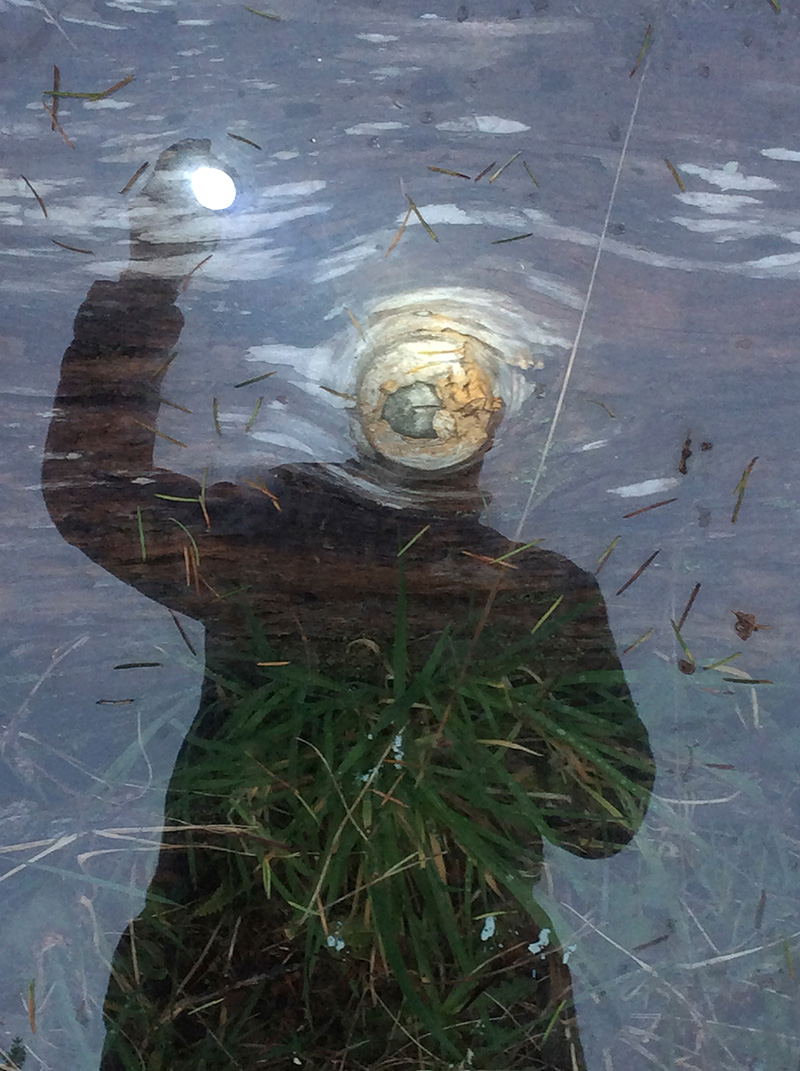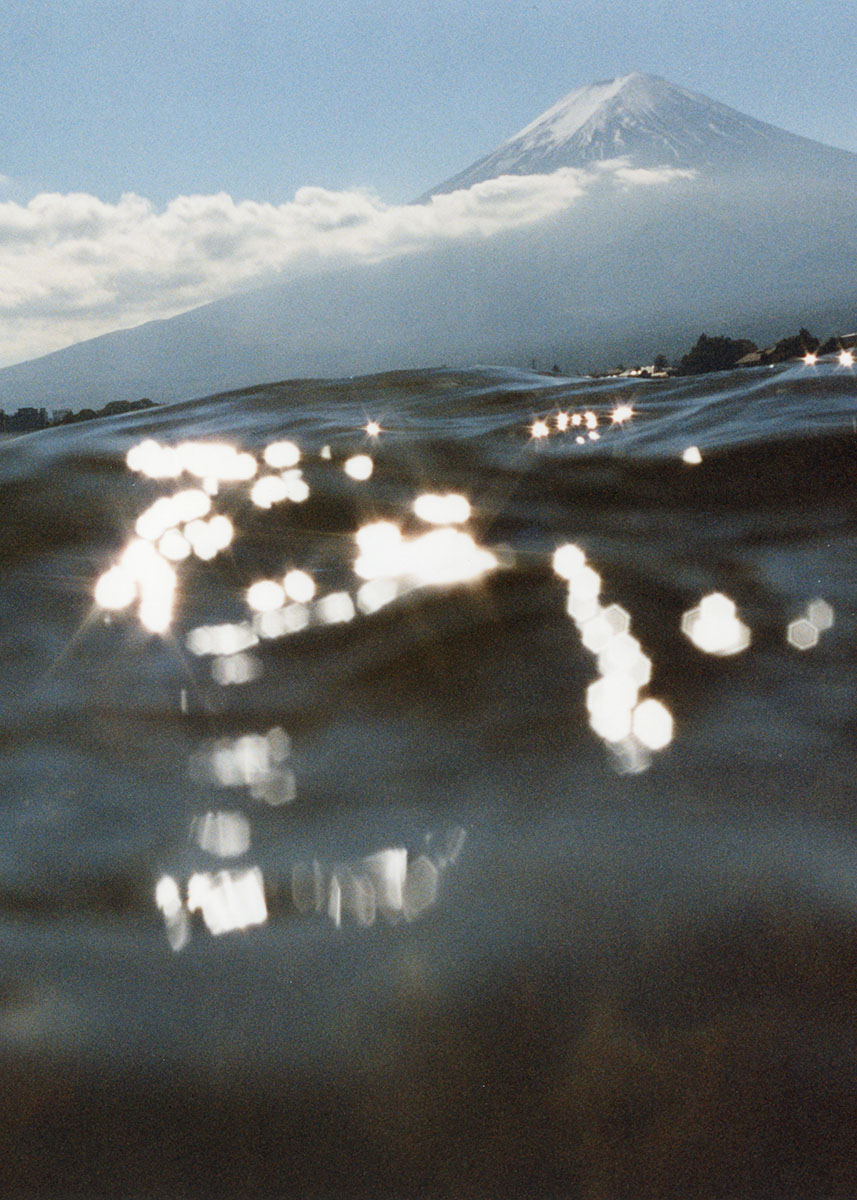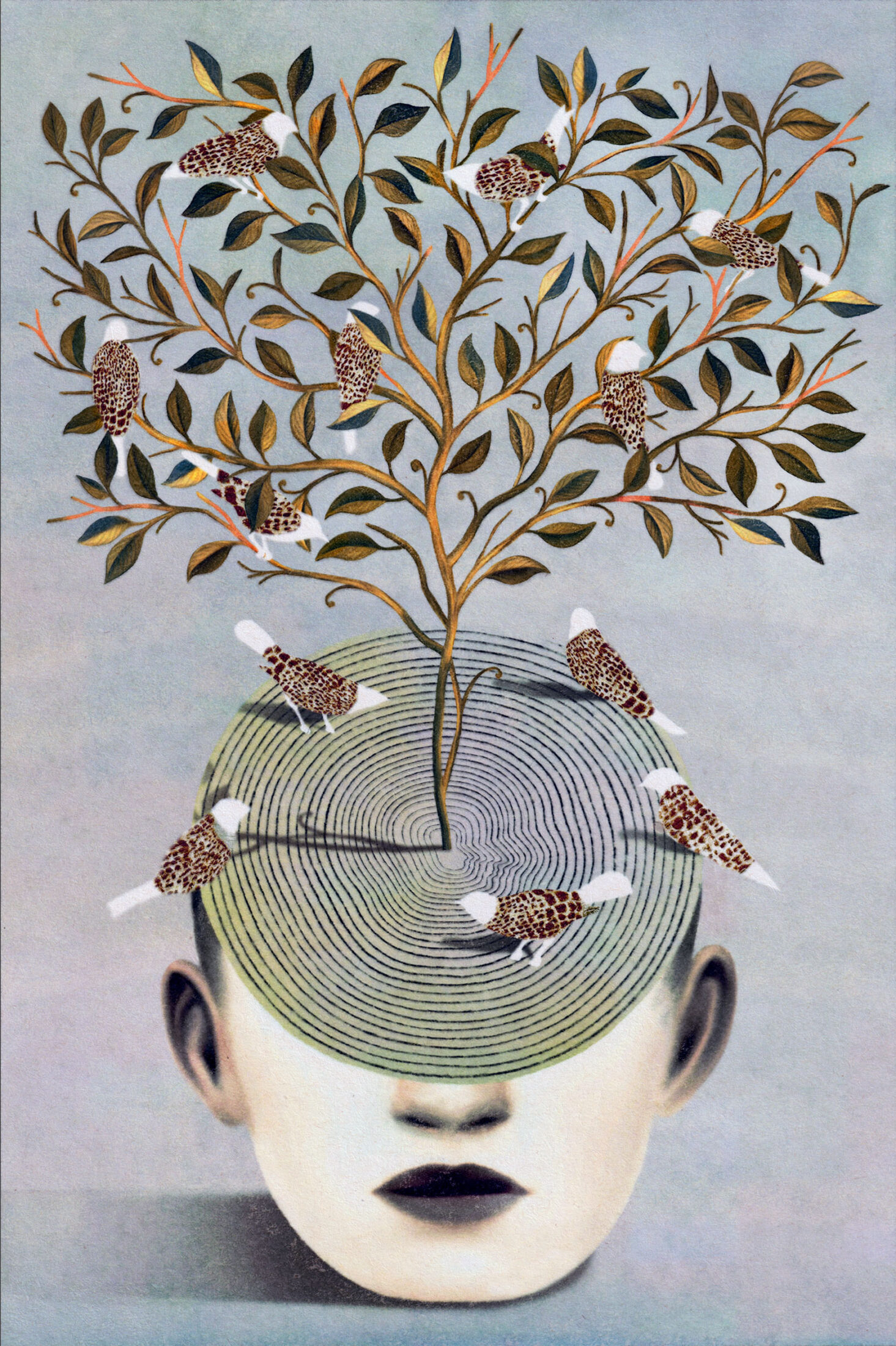
Illustration by Aldo Jarillo
AI & Spiritual Life
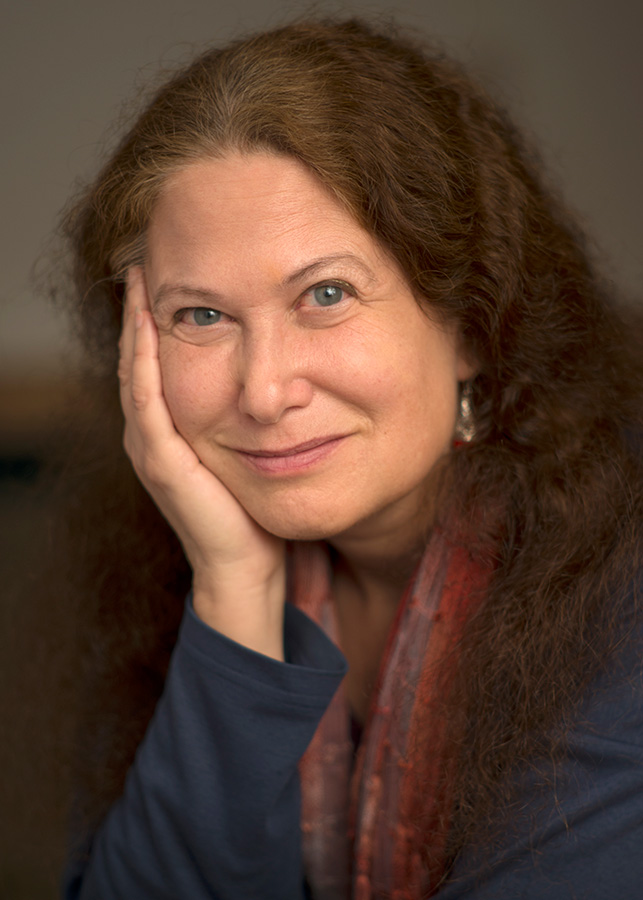
Llewellyn Vaughan-Lee is a Sufi teacher who has specialized in dreamwork and Jungian psychology. He is the author of numerous books on Sufism and spiritual responsibility in our present time of transition, including For Love of the Real and Seasons of the Sacred, and editor of the anthology Spiritual Ecology: The Cry of the Earth. His most recent book is Words from the Water’s Edge.
Aldo Jarillo is an illustrator and visual artist from Mexico City whose work has appeared in The New York Times, The New Yorker, The Atlantic, The Wall Street Journal, The Guardian, Harper’s Magazine, Noema Magazine, as well as in the Latin American publications Sexto Piso and Anagrama. In 2022, he was recognized at the International Illustration Biennial of Ukraine. His solo exhibitions include Cartografía de lo íntimo in Mexico City and Y, sin embargo, se mueve in Bogotá at ARTBO.
Author and Sufi teacher Llewellyn Vaughan-Lee cautions against stumbling into a future where artificial intelligence only further distances us from what we can feel with our senses and our soul.
Recently I was invited to be part of a gathering bringing together philosophers, ethicists, contemplative teachers, and Indigenous leaders with AI evaluation experts, to help steer AI models towards wisdom, compassion, and human flourishing. I was grateful for the invitation, although I kindly declined, as it made me consider whether artificial intelligence and spiritual life can really intersect, or if their primary orientations are too divergent.
Today a growing number of people are using AI for spiritual guidance, and there are even AI spiritual guru avatars, providing personalized on-demand meditations, counsel, and self-initiation or spiritual blessings. The question we need to ask is, do AI and spiritual growth really have common ground, or is this another illusion distracting us from inner life and real change?
AI works by learning patterns from vast amounts of data, largely sourced from the internet, to make predictions or generate content. It belongs to the mental/informational plane of consciousness and comes from an accumulation of past thoughts/ideas/images/patterns, to which it can give us access. It can organize these thoughts, rearrange them, and appear to give us insight, but it always comes from the past.
Spiritual life, however, is about going beyond the mind and its constant stream of thoughts, either into a state of pure awareness, the now, or into the divine love that can be experienced through the heart. It returns us from the ego’s illusory sense of a separate self to the unity of true nature. The spiritual path can even take us beyond, into the primal emptiness that underlies creation, the Absence experienced through an empty mind, or love’s infinite ocean in which our individual self and all thoughts dissolve.
Spiritual life offers us the direct experience of stillness, emptiness, love, rather than the constant chatter of the mind and its distractions. And through this inner experience we become open to change, real change that comes from within, from a higher dimension, rather than the accumulated information of the mind and the conditioned patterns of the ego. Real change only comes from within, and from a spiritual perspective this means from the Divine, the Self, soul, or atman—the eternal dimension of our being. Meditation, stilling the mind, watching the breath, or focus on the heart give us access to this inner dimension. In contrast, AI belongs to the past, to an accumulation of past thoughts, images, and ideas, and as such is a distraction from real change and the inner work required.
AI may be described as “faster than the human brain,” but this comes from a limited understanding of our human potential and our ability to access the higher mind. The higher mind is the consciousness of the Self, which functions on the plane of unity and is therefore much quicker than the rational mind, which functions on the plane of duality (the separation of subject and object). Referred to as bodhichitta, or “awakened mind” in Buddhism, the higher mind recognizes the inherent unity and interconnections in all things and is not limited by the constrictions of past and future. Essentially it functions outside of time.
In Sufism this awakened mind is described as the consciousness of the heart, which is the locus of our divine nature. The heart both sees and knows the truth inherent in all things, the unity of being to which we belong, and the patterns of transformation which are part of our true nature. Through the consciousness of the heart we are able to access our divine Self, and live from this center of our being, guided from within.
The question then is, how much is AI a distraction in our world today? We live in a time of deep uncertainty, cultural and ecological crisis. What may be most needed is not more technology, but more love, care, and responsibility—for one another and for the Earth. These qualities are central to spiritual life, yet they sit uneasily alongside technologies that require vast amounts of energy and water and expanding data centers. And while the hype around AI says that it will bring transformational change, reshaping our world, it does not introduce a new quality of consciousness, which is what is vitally needed at this time. In this sense it is a distraction from the need for real change, the change that will help bring our civilization back into balance with the natural world that sustains us. It promises a technological future, while anyone who has seen through the cracks in our present civilization knows that technology cannot save us, but rather is at the root of much of the polycrisis that confronts us.
AI reflects a civilization that is increasingly disconnected from its inner life, without the roots that are needed to nourish or sustain us. There are few signs that AI is leading us back to what is simple, essential, and deeply human. To state it simply: AI has neither heart nor soul—qualities that belong to the essence of our human nature, and give true meaning and purpose to life.
For thousands of years we walked in two worlds: the outer physical world of the senses and the inner world, experienced in dreams and visions. In the land where I live, Coyote is the primary creator god for the Coast Miwok people, as well as a trickster god. O-let’-te, Coyote-man, formed the Earth and made people out of feathers or twigs. Seen and unseen were woven together in such stories and myths, with symbols and sacred images forming a bridge between the two, linking the soul and the senses. Through these symbols the numinous inner world flowed into the outer, giving daily life a depth of meaning as we lived as part of the great tapestry of the sacred. And then centuries ago in the West we began the story of separation, until science convinced us that only the physical, tangible world was real, and the inner worlds faded from our collective consciousness. Without our noticing, the outer world became more and more barren, without sacred meaning. It lost its numinosity, and instead became a resource to be exploited, a commodity to sustain our civilization.
Is this how we are to stumble into the future? First, we lost connection to the soul and world soul, the anima mundi, the spiritual intelligence within nature. And now our screens seem more important than our senses, information encoded in ones and zeros rather than through touch, taste, sound, sight, and smell. As a result, for example, many relationships have lost the primary quality of touch and have instead become distorted by the algorithms of social media, creating an imitation of intimacy that results in alienation rather than the simple human bonding we need, the lived companionship that really nourishes us.
Yet we appear so entranced by this technology, addicted to its constant stream of images and endless information, that we do not seem to care what is happening, what world we are creating. Is this the “brave new world” that we want to leave to our children and grandchildren? Is its environment of growing distortion and deceit really our collective destiny?
There is another story waiting to be born, one that comes from the depths of the soul and the world soul, that speaks of oneness and an interconnectedness that belongs to the natural world, rather than computers. This is a story that is part of our DNA, the unity of being to which we all belong. A story in the way trees speak to each other through fungal networks, how birds migrate along ancient patterns. It is visible in a murmuration of starlings, the spiral of a sunflower and a galaxy. It is present in the music of creation if we are able to be silent and listen. But it needs our attention if we are to hear this story and weave it back into our human experience, to recognize the real nature of the ground under our feet.
We need to return our awareness to the living Earth, what I have called “a deep ecology of consciousness,” so that we can create a sustainable future seven generations or more. AI by its very nature can only recreate past patterns and thus encourages us to overidentify with a way of thinking that has become globally self-destructive. AI may enable us to gather information, but it cannot help us to make the changes that are so desperately needed. In fact, it may seduce us into avoiding looking deeper, while the vast sums of money and attention being poured into its development could be much better spent on the social and environmental polycrisis that confronts us. If we can stop distancing ourselves from what we can see and touch, feel with our senses and soul, we may recognize the living oneness which is our heritage, and help birth its story back into our everyday life.
Rather than focusing on our screens there is a vital need to turn from the mind to the heart, from the ego to the soul or Self. And through this inner change we can learn to be of service in the outer world. This is a real quality of our divine nature, the compassion and selfless service of bodhichitta, also known as the servanthood of the Sufi; and a contribution we each can make if we take the radical step back to what is natural and true, to what resonates with our senses and our soul. As Thich Nhat Hanh beautifully said, “Real change will only happen when we fall in love with the planet.” No machine can do that for us. That work remains deeply, quietly human.