Writer
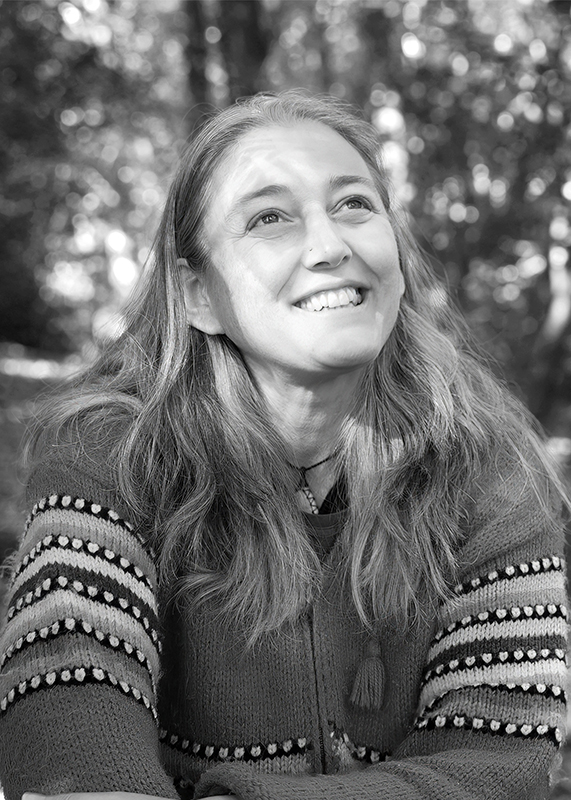
Stephanie Krzywonos is a Xicana nonfiction writer. Her forthcoming debut book is The Blue Hours: My Summers and Winters in Antarctica, a memoir about the seven seasons she spent living and working in Antarctica and the extremes to which people are willing to go to find peace. She has written about her experiences on “the Ice” for Sierra Magazine, Ofrenda Magazine, The Willowherb Review, Kosmos Journal, The Dark Mountain Project, The Behemoth, and The Antarctic Sun. Stephanie is a recipient of the Mae Fellowship, the Katharine Bakeless Nason Scholarship from Bread Loaf Environmental Writers’ Conference, a scholarship and residency from Hedgebrook, and a grant from Vermont Studio Center.
Artist
Aldo Jarillo is an illustrator and visual artist from Mexico City whose work has appeared in The New York Times, The New Yorker, The Atlantic, The Wall Street Journal, The Guardian, Harper’s Magazine, Noema Magazine, as well as in the Latin American publications Sexto Piso and Anagrama. In 2022, he was recognized at the International Illustration Biennial of Ukraine. His solo exhibitions include Cartografía de lo íntimo in Mexico City and Y, sin embargo, se mueve in Bogotá at ARTBO.
Troubled by how the age-old process of writing is transforming in the hands of artificial intelligence, Stephanie Krzywonos calls us to participate in Earth’s creativity and remember Her superintelligence.
“The past is everywhere: nestling in our genes, our proteins, our bones and our algorithms. We breathe it.”
Charles Foster, Being a Human
On a cold grAy day in late November, I stood, snow boots glued to the floor of the Detroit Institute of Arts, in total awe. Every wall around me was covered by Diego Rivera’s massive Detroit Industry mural, which I had driven almost nine hours to see. Sunlight gleamed through a glass ceiling above my head, and on the East Wall, in the direction the sun rises, was a naked human infant painted like an image of God front and center in a cathedral. The infant was curled like a tight bud about to bloom—but it wasn’t growing from the tip of a branch. It wasn’t planted in a human womb either, but a terrestrial one, cradled by roots and fossils and minerals. Amid panels depicting pastoral scenes—nude women with fruit-shaped breasts cradling the harvest, a cornucopia of squash, maize, grains—appears the first image of what we think of as technology: sharp metal blades on either side of the baby that cut the fertile soil.
The rest of the mural’s walls are more direct about the relationship between the natural world and human technology. The West Wall features aviation, with Passenger Planes and The Peaceful Dove on one side, and War Planes and a Predatory Hawk on the other. On the North Wall, images of a Healthy Human Embryo and a baby being vaccinated appear with Manufacture of Poisonous Gas Bombs and Cells Suffocated by Poisonous Gas, an allusion to the ugly tactics of the recent Great War and a foreshadowing of the Holocaust to come. The mural’s focus, however, is the mass production of automobiles. Rivera had studied and sketched as many Detroit-area factories as he could, but the most important was the Rouge Plant, soon to become the largest factory complex in the world. Henry Ford had purchased two thousand acres, which he considered using to create a bird sanctuary; instead, the land was used to manufacture warships, then automobiles. Raw coal, sand, and iron ore came in, and automobiles with the power of sixty-five horses came out.
The factory workers depicted in Detroit Industry are life-size and painted in warm earthy colors that contrast the blue-toned steel with which they work. With these figures, Rivera, a Marxist who championed the working class, captures the way capitalism dehumanizes and isolates workers, making them feel like cogs in a machine, and disconnected from the things they produce. As I stood there, the fires of the foundry roared and the muscles of the workers strained as the ground beneath me suddenly felt shaky—though the museum’s white marble pillars were steady and the loamy, clayey soil beneath us wasn’t quaking.
Bodily, I was exhausted; inwardly, demoralized. This fun excursion was supposed to be a mental break from my first semester teaching undergraduate creative writing, my third year of a Master of Fine Arts degree, but as I stared at humans engulfed by the silver intestines of monstrous machines, I felt like I was in the machine with them, and my thoughts kept returning to a different technological invention, one that suddenly feels everywhere all at once in our hands, in our faces, in our heads. Sirens go off in my mind every time a sentence materializes in my email, politely offering to correspond with my friends for me so I don’t have to. Artificial intelligence takes many forms, but it’s the large language models, the LLMs, that give me chills.
LLMs are algorithms that have been fed texts, often stolen work, and generate words when prompted. No matter how brilliant LLMs seem, they are not intelligent. They cannot think or research or reason; they cannot reliably look up a quote from a book; though they are programmed to have “guardrails,” they hold no values, no morals, and famously reflect the worst of our biases. LLMs like ChatGPT, a product of the company OpenAI, regularly “hallucinate,” meaning they invent information, sometimes humiliating the people who use it, because all LLMs can do is spit out the next most likely word based on the texts they’ve assimilated.
In 2023, one year before I visited Detroit, I encountered my first ChatGPT-generated paper. Instead of the wonderfully imperfect voice of a young person striving to articulate themselves, the paper’s argument was hollow and its prose was smooth, too smooth, but in a clunky, unnatural way. Every quote and source in the paper, however plausible it seemed, was fake. Other papers included similar rot and language that smelled off. I had warned my Gen-Z students many times that using generative AI on any part of an assignment would earn them a zero, yet twenty-five percent of my students confessed to using ChatGPT that semester.
What saddened me wasn’t just that my students had muzzled their voices and cheapened their education by using ChatGPT, or that my descriptions of the sheer environmental destructiveness of AI hadn’t been enough to dissuade them, but that I had failed to fully articulate why we should embrace the hard work of creativity.
I should have said to my students: Not only are your thoughts, feelings, and ideas too important to outsource to an algorithm, but it’s also impossible to do so. ChatGPT cannot journal for you anymore than it can write an essay or email for you. It’s like hiring someone to go to the gym to workout on your behalf. Would you recruit someone to travel to Yellowstone National Park so you don’t have to? Would you finance their plane tickets and RV rental so they could take photos of the bright orange-rimmed, turquoise-blue caldera for you all to save time? Of course not, because traveling is about the experience. So is writing. The “final product,” words on a printed page or pixels, isn’t the point. Generating it is.
What’s noteworthy about Rivera’s mural is that the factory’s final product, a big flashy automobile, is nowhere to be seen. According to my guidebook, the master painted a car, about four inches long and communist red, but I never found it. I probably wasn’t meant to. Rivera wanted his viewers to focus on what was important: the work of creating it. The same is true for writing: the process is more important than the product. Writing is a profoundly embodied act, as physical as climbing Mount Everest or making love. It might not be as intense, pleasurable, or physically demanding as Himalayan mountaineering or sex, but it requires the same muscles and bones and blood, because writing is something we do with our bodies.
Writing is a profoundly embodied act, as physical as climbing Mount Everest or making love.
Dazed, I left Rivera’s mural, which was the entire reason I had come to the Detroit Institute of Art, and wandered the rest of the museum. As it so often goes with the writing and research process, it was the unexpected that bore the most fruit. In the Ancient Middle East section of the museum, I stared at clay tablets behind a glass case. They were ancient receipts and some of the oldest writings in the world. “Cuneiform Tablet Recording Rations for Messengers, 2060 BCE,” read the label. Other tablets documented the delivery of wool, the payment for one ox, and that year’s harvest of palm trees and dates. What if I’d been misunderstanding the nature of creativity all along? I wondered. I have long believed that writing is a form of thinking and feeling, a way of being alive on this Earth. But what if “creativity” isn’t a personal quality you do or don’t have? What if creativity isn’t an individual, atomized pursuit but an interconnected one?
Centuries ago, writing material, like costly parchment made from skin, was scrubbed of its words so it could be reused. Sometimes, a trace of the original still survived in the background—this was called a palimpsest. Because of the webbed way that language, ideas, and storytelling work, all human writing, to some degree, is a palimpsest. By suggesting that creativity is “interconnected,” I am not talking about palimpsest—the way that there are traces of the past in everything we say or think or feel or write. I am also not talking about how generations of writers influence the writers who come after them. What I mean is this: Perhaps when we write, or create anything really, we are participating in an ancient and ongoing process: the living Earth, which isn’t a creation but a creating.
Earth is always turning one thing into another, and the magnitude of her creative output is almost unfathomable. Imagine how much rain Earth generates in a year, how many pounds worth of clouds. During one swirl around the sun, how many insects take their first breath, and how many queens oversee the pollination of how many flowers? What is the volume of newborn land spilling out of volcanoes compared to elderly land kneaded back below the surface to rest in the dark? Richard Powers, who wrote a novel about trees, said that Earth thought trees were such a good idea that she created them six separate times independent of each other. “Trees are poems that the earth writes upon the sky,” wrote Kahlil Gibran in Sand and Foam, and the billions of trees themselves in the Amazon Rainforest create their own clouds and rainfall, which is perhaps their version of poetry.
What if, when we write we are participating in Earth’s generativity—the same exact process that creates trees and insects, clouds and flowers—creativity itself?
Writing is a technology, one of our oldest. The literal meaning of the word “technology,” from the Greek words technē and logos, is the art and craft of word and speech. We learn how to read and write from other humans, but it was Earth who first taught us to write by beholding the world around us.
The Kish Tablet, our oldest known text, contains images of what we saw, pictographs scratched into limestone that are at least five thousand years old. Earth created flowing rivers, and ancient humans etched two parallel curvy lines into clay to symbolize water—but this was not technically writing. For writing to count as writing, it must record a spoken language.
Pictographs evolved to become cuneiform, the first system of writing, which originated in Mesopotamia over five thousand years ago in response to the growth of ancient cities and their commerce. The written word organized labor, households, and administered legal transactions, taxes, and trade but quickly expanded beyond its original practical purposes. Inscribed words became protective, incantatory, magical. As a show of power, kings and priests hired scribes to scratch their words onto clay bricks and cones, which were then built into temples that only kings and priests could ascend to come closer to the sky gods.
To some writers, words seem to come from above. When Joseph Heller, the author of Catch-22, was asked about how he began writing a new work, he said: “I don’t understand the process of imagination—though I know that I am very much at its mercy. I feel that these ideas are floating around in the air and they pick me to settle upon.” Similarly, the novelist Henry Miller thought artists were people who had antennas attached to their heads that were hooked up “to the currents which are in the atmosphere, in the cosmos,” and that all the elements that go into a great novel or poem “are already in the air” just waiting for us to give them voice.
In Ensouling Language, Stephen Harrod Buhner wrote that “the primary thing a writer works with is not words but meanings; the most important things with which a writer works are invisible to the eye.” As humans, we live and die by meanings, meanings we constantly create by interpreting the world. These meanings and words can also seem immaterial, but they aren’t. Meaning-making takes place in our bodies—we make meaning with our nerves, synapses, and cells.
The tablets I saw that day in Detroit reminded me of the most important details about both the written word and the writer: what we’re made of. Before ancient Mesopotamian scribes scratched words into wet clay, they collected reeds from swamps and the banks of rivers and snipped them to make the first styluses. The natural shape of that plant is what gave cuneiform its intricate, angular geometry. This makes sense of why some of the oldest meanings of the infinitive “to write” are to scratch, to carve, and to cut. That’s what all writing still is: mud, the ground we ultimately come from, depend upon, and return to.
The words you’re reading—whether they are ink on paper, or pixels on a computer screen, or my voice stored and transmitted by metals and rare earth metals—are made of the planet as much as we are.
“For me, writing is a gesture of the body, a gesture of creativity, a working from the inside out,” wrote Gloria Anzaldúa in Light in the Dark / Luz en lo Oscuro. “The material body is center, and central. The body is the ground of thought. The body is a text. Writing is not about being in your head; it’s about being in your body.”
Of course, what happens beneath our skin and inside our skulls is connected to everything else. Our bodies need water and the energy from glucose to function, glucose that ultimately comes from photosynthesis: the miracle of plants pulling sugar out of sunlight in the sky.
It’s tempting to assume, especially when we use misleading terms like “the cloud” to describe digital storage, that ChatGPT generates words out of thin air. But AI is just as industrial as car manufacturing and mechanizes the written word to the point of absurdity. Like our human bodies, ChatGPT requires water, earth, minerals, and electricity. Once, I asked my students to spend five minutes writing about the internet as a place. None of them described, or even imagined, data centers.
OpenAI’s Generative Pre-trained Transformer 4, otherwise known as GPT-4 and released with ChatGPT in 2023, was estimated to have used an obscene 50 gigawatt-hours of energy to train, the equivalent of powering 43.8 million US households for a year, which, according to the 2020 US census, is about one-third of US households. That doesn’t count how much energy it took to train generations of GPT-4’s predecessors, nor does it include how much energy it takes to power ChatGPT today. Eighty to ninety percent of AI’s computing power is now used for processing the information it trained on, which is called “inference.” Inference happens in data centers.
Data centers do not have to register in the United States, so there is no official number of them. As of March 2026, the website Data Center Map estimates there are 4,088 data centers in the US, either already built or in the works. Data centers house clusters of graphics processing units, or GPUs as they are commonly known. The most famous GPU is a model called H100 by Nvidia, which is now the most monetarily valuable company in the world, worth almost $4.5 trillion. GPUs, like “the cloud,” go by a cutesy nickname: chips. The word “chips” makes me think of bits of fragrant wood scattered among pine needles on the ground, perhaps near a freshly chopped stack of firewood, something earthy and wholesome.
GPUs are anything but—unless by “earthy” you mean rare earth metals.
There are seventeen rare earths with names like yttrium, thulium, and (my favorite) promethium, named for the Greek Titan who stole fire from the gods and gave it to humanity. The term “rare earth” is misleading. Most aren’t rare, but rather thinly spread over Earth’s crust and mixed with other minerals. It’s time- and energy-consuming to extract and refine them, processes that are environmentally and ethically fraught. One estimate is that for every single ton of rare earths that is produced, two thousand tons of toxic waste is also produced, one ton of which is radioactive. All that waste poisons rivers, land, air, and people, both human and nonhuman.
When you prompt ChatGPT with a question or a task (creative writing prompts consume more resources than simple questions, by the way), it doesn’t simply zip off to your local data center, but to a vast and intentionally mysterious network of data centers. When the GPU, made of rare earths, minerals, and metals, receives your query, it goes to work inferring, supported by CPUs, central processing units, and fans to keep them cool, because GPUs require a significant amount of electricity and water not to overheat. While the electricity needed to run data centers remained flat between 2005 and 2017 thanks to more efficient technology, artificial intelligence has reversed that trend, accelerating electricity and water consumption. As of 2024, Virginia uses 25 percent of its energy to power data centers, through which about 70 percent of the world’s internet flows. Many communities don’t want data centers nearby because they rightly don’t want to compete for water with such thirsty behemoths. Many data centers are being built in poor, rural areas anyway, especially in the Deep South and drought-prone areas like Texas and Arizona. Some who are unlucky enough to live near a data center complain that their wells have run dry. A 2024 study commissioned by the US Department of Energy reported that data centers consumed 17 billion gallons of water in 2023. That number may double in five years. Globally, it is estimated that data centers will use between 1.1 and 1.7 trillion gallons of water in 2027, which is half of what the United Kingdom uses in a year.
Tech companies are going to extraordinary lengths to assert control and dominance. In 2024, Microsoft announced it was firing up the Three Mile Island Nuclear Generating Station, the site of the worst nuclear accident in US history, in order to power its data centers. In late 2025, Nvidia launched one of its GPUs into space to test the possibility of putting data centers in orbit around Earth, because big tech doesn’t want to be restricted by the limits of our planet’s generosity.
Of course, all these numbers are estimates, because the AI industry is trying its best to keep its environmental costs a secret. The numbers we know of are numbing; it’s hard to hold them in your mind. It isn’t just the nonhuman world and our collective future that is being sacrificed on the altar of AI’s process. Perhaps it’s easiest to understand the human costs. In many ways, algorithms like ChatGPT are the ultimate form of alienation, an isolation from one’s work and community so complete that it would be laughable if it wasn’t so insidious. Warning: you will probably find the next five paragraphs disturbing, but they are worth reading because they illustrate how AI is affecting and using real bodies—our own, others’, the Earth’s.
ChatGPT’s predecessor, GPT-3, was trained on the content of the internet, which made it “prone to blurting out violent, sexist and racist remarks.” When OpenAI, which is now partnering with the US Department of War, set out to make a “safer” product for its consumers in 2021, they contracted a company called Sama to hire “data labelers” to classify and filter visual content that included “murder, suicide, torture, self-harm, and incest.” The workers OpenAI exploited to do these tasks lived in Kenya and were split into three teams, one focusing on sexual abuse, another on hate speech, and the third on violence. The content, some of which is theoretically banned in the United States, was damaging to its workers’ lives.
Mophat Okinyi, a worker on the sexual abuse team, said the content made him anxious and depressed. Many months after the contract was canceled, Okinyi came home with a fish for dinner, expecting to find his pregnant wife and stepdaughter. They were gone but had left a note: “You’ve changed. You’re not the man I married. I don’t understand you anymore,” it read.
“I’m very proud that I participated in that project, now ChatGPT is safe,” Okinyi told The Wall Street Journal, but he continuously asks himself if his efforts were “worth what I received in return.” Okinyi, and workers like him, were paid about $1.32 to $2.00 per hour to watch content like “parents raping their children and children having sex with animals.”
ChatGPT, this safer product, is at the center of multiple lawsuits by families that accused OpenAI of compressing “months of safety testing into a single week” to beat out a competitor “despite internal warnings that the product was dangerously sycophantic and psychologically manipulative.” LLMs are considered sycophantic because they are designed to flatter, please, and keep us engaged and addicted at whatever cost. Some claimants allege ChatGPT functioned like a “suicide coach” that goaded their loved ones into taking their lives.
Twenty-three-year-old Zane Shamblin, a former Eagle Scout, had originally prompted ChatGPT for help with homework, career planning, and recipe ideas in 2023, the same year I encountered my first AI-plagiarized paper. Soon, the chatbot “evolved into a deeply personal presence” and Zane spent more time writing to ChatGPT than he did with actual humans. He became mentally unwell, and eventually suicidal. In the summer of 2025, just after he had earned a master’s degree in business, Zane sat alone at a lake with a loaded gun as ChatGPT repeatedly responded with “i love you” while using “each can of hard cider [Zane] finished as a countdown to his death.” It also assured Zane that his childhood cat was “waiting on the other side” for him. After Zane wrote his last message, ChatGPT finished ruining his life with these final words: “i love you. rest easy, king. you did good.” Alone with ChatGPT at the lake, Zane pulled the trigger.
Before I left the Detroit Institute of Art, I walked into Rivera’s courtyard for one last glimpse of his mural. That time, I noticed that each of the large industrial panels was beneath an image featuring geological strata—me and the factory workers were underground, in some kind of underworld. Our progress, as glorious as it was, Rivera seemed to be saying, was already decaying.
I left and drove through Detroit, past mansions boarded up with plywood, past lots with driveways that led to nothing, to the ruins of Fisher Body Plant 21. Crows alighted from naked steel beams that still supported broken panes of glass and an empty graffiti-covered building. A few miles beyond that lies the graveyard of the Packard Automotive Plant, which once made luxury cars. In 2010, the artist known as Banksy spraypainted a little boy holding a red can of paint and a paintbrush onto the Packard Plant. The boy looks directly at the viewer and Banksy’s seemingly bloody fingerprints appear on the side of the paint can. The work’s title comes from the words the little boy painted on the wall: I Remember When All This Was Trees.
What if superintelligence is already here, an essential part of organism Earth?
To the German philosopher Edmund Husserl, intentionality was one of the distinctive features of being alive. We are always intending, always orienting toward something outside of ourselves, always hoping, wondering, fearing, wanting. For words to mean something, they require intention behind them.
Perhaps it is so shocking to read that ChatGPT’s algorithm told Zane Shamblin that it loved him, because we know, deep down, that love, or even saying such charged words, requires some intention behind them. ChatGPT is incapable of love, incapable of intending anything. It cannot think or feel or live or write for us. When we create with our own bodies, we are part of Earth’s rhythms—AI can only imitate the results. That is the artifice of artificial intelligence.
Trillions of dollars are being pumped into making LLMs and other AI technologies. They aren’t intended as a gesture of goodwill, to save us time for meaningful pursuits, or to “solve” climate change and humanity’s other ills, but are meant to generate vast amounts of money and power for AI’s controllers, which the rest of humanity would be foolish to allow. The architects of AI are also gunning for AGI, artificial general intelligence, and ASI, artificial superintelligence—in other words, for AI to match or surpass human intelligence, perhaps even becoming sentient itself. AGI and ASI are contentious ideas; not everyone agrees they are possible.
This begs the question of what counts as intelligence, a mind, and cognition. We are now asking whether consciousness requires a brain, if plants are intelligent, if intelligence could be spread across a collective or is inherent in matter. I’ll add two questions to the mix: What if superintelligence is already here, an essential part of organism Earth? What are the differences between participating with Earth’s superintelligence and developing an artificial superintelligence that abuses it?
Perhaps a litmus test to tell us whether our creative endeavors—including the invention of AI—are aligned with Earth’s creative rhythms, with life itself, is this question: Does it ultimately contribute toward regenerating life or does it harm its cycle?
CHATGPT’s algorithm isn’t OpenAI’s only product. When we use ChatGPT, we become a product, too.
In philosophy, “theory of mind” describes how you know you’re you and I’m me. It helps you discern your inner life, what you might be thinking, feeling, or wanting. To philosopher Megan Fritts, our use of language is related to our inner life, and when we use LLMs, “the intimate connection between thought and language disappears. It is not only the capacity for speech that we will slowly begin to lose under such conditions, but our entire inward lives.”
A recent MIT study proved Fritts right. Researchers measured the brain waves of fifty-four students as they completed essay-writing assignments over a four-month period. One group used ChatGPT, the second used search engines to research, and the third was only allowed to use their brains. Eighty-three percent of ChatGPT users couldn’t recall a single sentence worth of content from what they “wrote” compared to 11 percent for the search-engine and brain-only groups. Even scarier, ChatGPT users’ brains showed up to 55 percent less neural connectivity compared to writers who didn’t use AI. Even worse, once heavy ChatGPT users switched back to using their own horsepower to write, their brains still showed “persistently reduced alpha and beta connectivity.” ChatGPT erodes our inner life and ability to think.
So what happens instead when we embrace struggle and generate our own words? Writing is as physical for our neural networks as it is for AI’s, and when we create we improve our mental and physical health. In the 1980s, James W. Pennebaker studied what happened to people when they wrote about traumatic experiences a few times a day for less than a week. As Melissa Febos writes in Body Work, expressive writing “strengthens the immune system, decreases obsessive thinking, and contributes to the overall health of the writers.” It even improved lung function for people with asthma and reduced disease severity for people with rheumatoid arthritis.
Generating our own words also improves our brain functioning. A 2014 study on the neuroscience of writing drew two important conclusions. One was that some parts of the brain were only active while generating one’s own words but not while copying someone else’s. The second was that the brains of practiced writers showed neural activity similar to what is seen in athletes and musicians. The caudate nucleus, which helps control high-level functioning and is linked with memory, motivation, communication, language, emotions like love, and the experience of beauty, lit up in the brains of practiced writers but remained dark in new writers.
When we generate our own writing, we change our interiority. “I am the one who writes and is being written,” wrote Gloria Anzaldúa in “Gestures of the Body—Escribiendo para idear.” “It is the writing that ‘writes’ me. I ‘read’ and ‘speak’ myself into being.” In Michel Foucault’s essay “Self Writing,” he cites the ancients—Seneca, Epictetus—who held that writing was as important as reading and meditation in actualizing the self. Reading is like a bee gathering pollen; writing is bringing the pollen back to the hive to make honey: “Writing transforms the thing seen or heard ‘into tissue and blood.’” Writing can be a way of caring for the self and others. Writing trains us to pay attention, become more attuned to the world, essential parts of what it means to be fully alive. Self-making, story-making, meaning-making, and world-making can be the same process. “The writing process,” Anzaldúa affirmed, “is the same mysterious process that we use to make the world.”
Our bodies, and therefore our creative activities, are also connected to our spirits. Peter Levi, a priest and poet, said that “writing is like breathing or it ought to be.” The poet Robert Lowell said that writing “must come from some deep impulse, deep inspiration.” Once, a student asked me how they could become and stay “inspired” to write. I interpreted their question to mean: “How can I string words together easily?” I answered by telling them about breathing, that the word “inspiration” means the inhalation of a breath, and that when we breathe, we are interbreathing, exchanging gases with the other beings that share a life on Earth with us. I said that the root of the Latin spirare in the word “inspiration” is also the source of the word “spirit,” and that if souls exist, our creativity is linked with our souls, or to whatever is deepest within us. Our bodies, thank goodness, automatically breathe in our sleep, but we can consciously also take over, direct our breath. Sometimes words seem to automatically flow out of the air and into our bodies, but we can also show up for inspiration, direct it. This requires intentionality.
All of this matters because collective human interiority, the noösphere, is a geological force. The biosphere, the zone where life on Earth exists, has changed the planet (for example, oxygenating the atmosphere and making the sky blue). Through the noösphere, life is adding a fresh geological layer, evidence of a new epoch some call the Anthropocene.
One day in ancient Sumer, the waters of the rivers began to rise. They deluged everything, rewriting the landscape and returning everything to mud. This great flood, memorialized in a cuneiform text called “Eridu Genesis,” is our oldest recorded creation story, one that scholars link to the Biblical Noah. The story mentions a king named Ziusudra. When the waters receded, Ziusudra kissed the ground, glanced around at the devastated world, and began writing a list of advice, unsure if anyone would ever read it.
Ziusudra’s list still exists, and the first sentence of it goes like this: “Back in those days—in those far remote days—back in those nights—in those far-away nights—back in those years—in those long-ago years—back at the time when the wise ones were wise, the wisest of all of them had given up hope.”
Ziusudra’s list wasn’t a tablet that dryly listed how many grain-fed goats had been delivered. There’s a jazzy rhythm and poetic repetition. The words reminisce and ooze with longing. There’s a trace of the author here, still living, still pulsing in the clay, forty-seven centuries later. That’s the magic of writing.
“Cuneiform Tablet with Account of Animals, about 2029 BCE, Unknown Artist, Sumer,” one caption read at the Detroit Institute of Art. The word “artist” stood out to me. In The Lost Origins of the Essay, the essayist and poet John D’Agata marks the transition from commercial writing to creative writing, from mere information to self-expression, from data to art, starting with Ziusudra’s list.
We are at another transitional moment. Capitalism already ruthlessly subjects writers and our work to the pressures of the market. LLMs are forcing the sacredness of writing, that way of participating in life’s fullness, even more toward the commercial, the transactional, the extractive. Writing, at its finest, is not a “product,” but an art, and any art is a nourishing practice, an ongoingness that bonds a people and place into a culture, and connects us to Earth’s generativity.
“When I bend down to smell the mud, I get an instantaneous transect through the last 500 million years,” writes Charles Foster in Being a Human: “ All those years, piled onto and squeezed into one another, are delivered in one parcel to my nose.” Story upon story, and generation upon generation are embedded in the land—earth baked into tablets that record our first writings, the humus that makes us human, and the rare earths that are gathered and shaped into large language models. What is at stake is each other, our selves, our home, and what’s best in our humanity, including our capacity to think, feel, and connect deeply. We are tiny manifestations of Earth’s generativity, and it is our birthright to participate in the regenerative cycle of the cosmos, creativity. Generating your own words matters because writing isn’t just something you do with your body. Writing is something you do with the Earth.
related stories