Terry Tempest Williams is the author of numerous books, including the classic in environmental literature, Refuge: An Unnatural History of Family and Place; Finding Beauty in a Broken World; The Hour of Land: A Personal Topography of America’s National Parks; and Erosion: Essays of Undoing. Her latest book is The Glorians: Visitations from the Holy Ordinary. She is the recipient of a Lannan Literary Fellowship and a John Simon Guggenheim Fellowship, and is currently the Writer-in-Residence at Harvard Divinity School. Terry divides her time between Cambridge, Massachusetts, and Castle Valley, Utah.
Photographer
Christina Seely is a visual artist and photographer whose multifaceted work maps our increasingly tenuous relationship to the non-human living world. Her work is held in many public and private collections and has been exhibited internationally, including at the Anchorage Museum in Alaska, Kurt Haus Wein in Austria, The New York Public Library, and the Museum of Contemporary Photography in Chicago. Christina is a 2014 Smithsonian Artist Research Fellow, a 2023 Guggenheim Fellow, and a 2024-25 US/UK Fulbright Scholar.
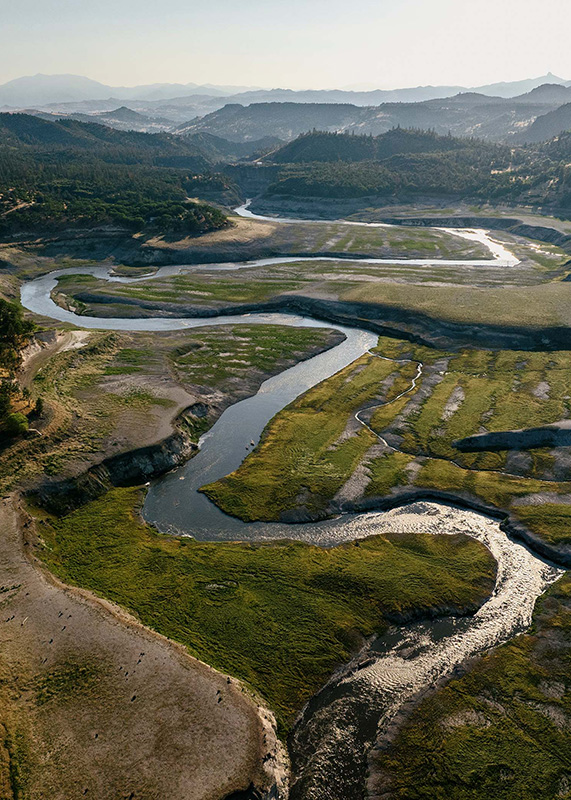
Bringing us into her love affair with the receding Great Salt Lake, Terry Tempest Williams embraces a fearless interspecies intimacy and summons us to be present with the losses in this landscape.
“Be a hollow bone,” Regina Lopez-Whiteskunk says as we look out toward Sleeping Ute Mountain on Nuche ancestral lands near her home in Towaoc, Colorado. “We can be a vessel that things move through.”
Standing inside this era of uncertainty, where climate collapse is converging with real threats to our democracy—regardless of one’s politics—we are in a season of change. Regina and I are both friends and neighbors in the Interior West. We have long devoted ourselves to the care of wild lands and wild lives, and the human communities that support land health, recognizing environmental justice is justice for all species, not just our own.
When seeking solace, I find my peace at home with the landscapes and people I live among in the hard times, especially in the hard times.
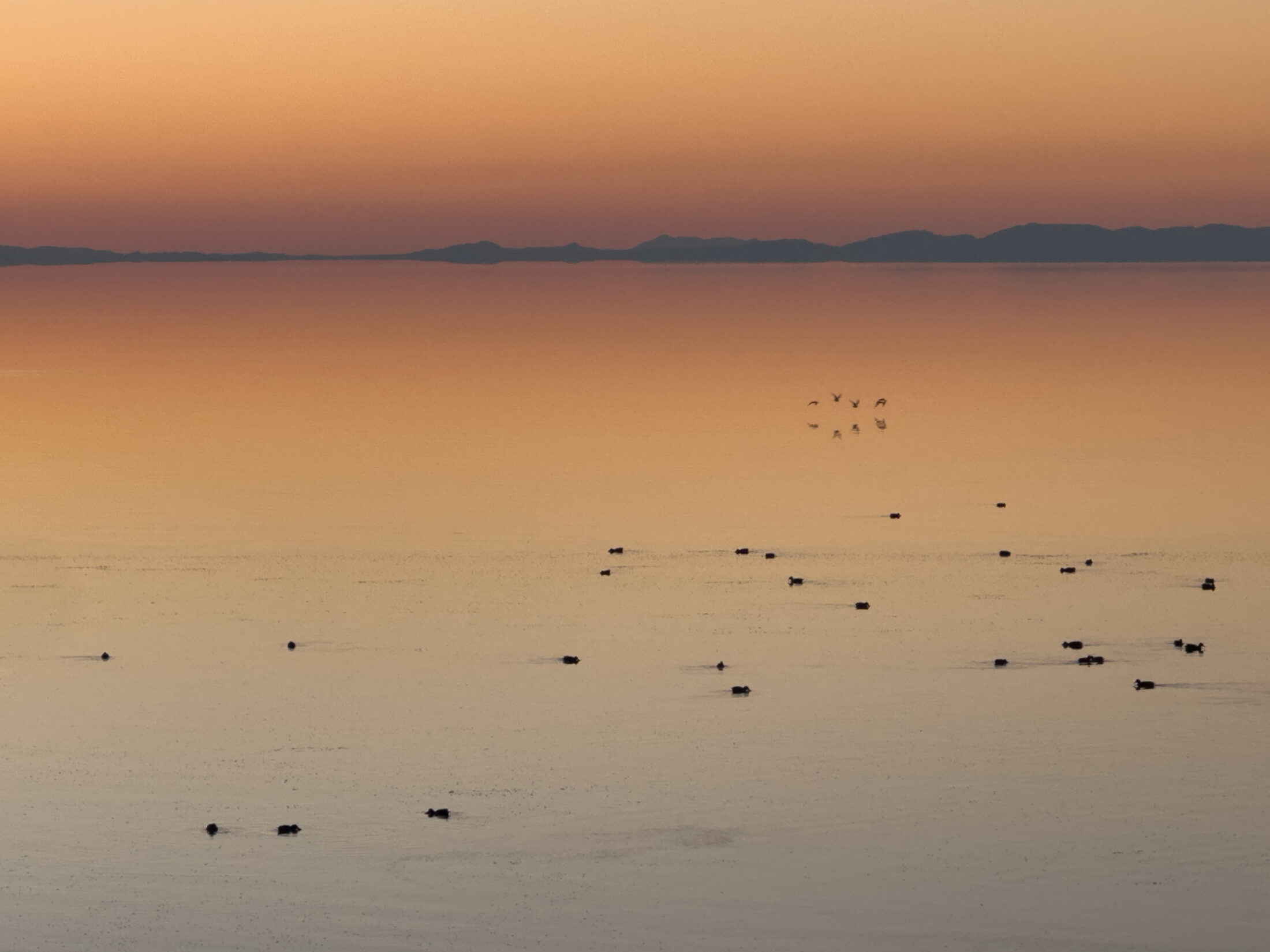
Be a hollow bone enters my mind in the season of winter at Great Salt Lake, where the palette on Antelope Island is not primary colors, but muted hues of salt-stained rocks and white alkaline flats, and a retreating saline lake whose color is a chameleon mirroring the sky from indigo blue to platinum to pink.
Walking the shores of this inland sea, I find a small bone bleached white—a hollow bone, a bird bone—bring it to my lips and blow. The sound is a haunting; once alive in the body of a bird in flight, it is now one chittering note.
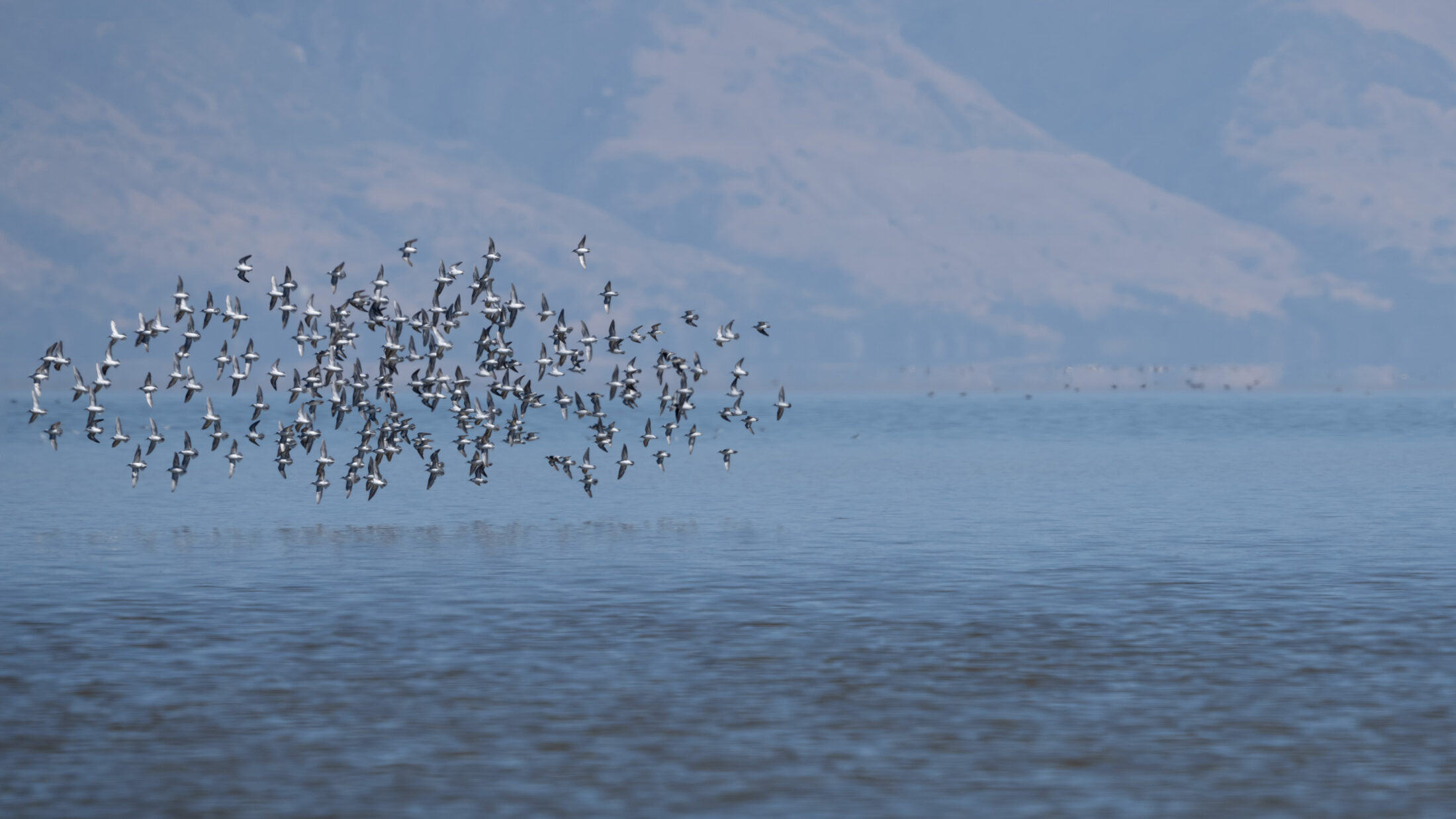
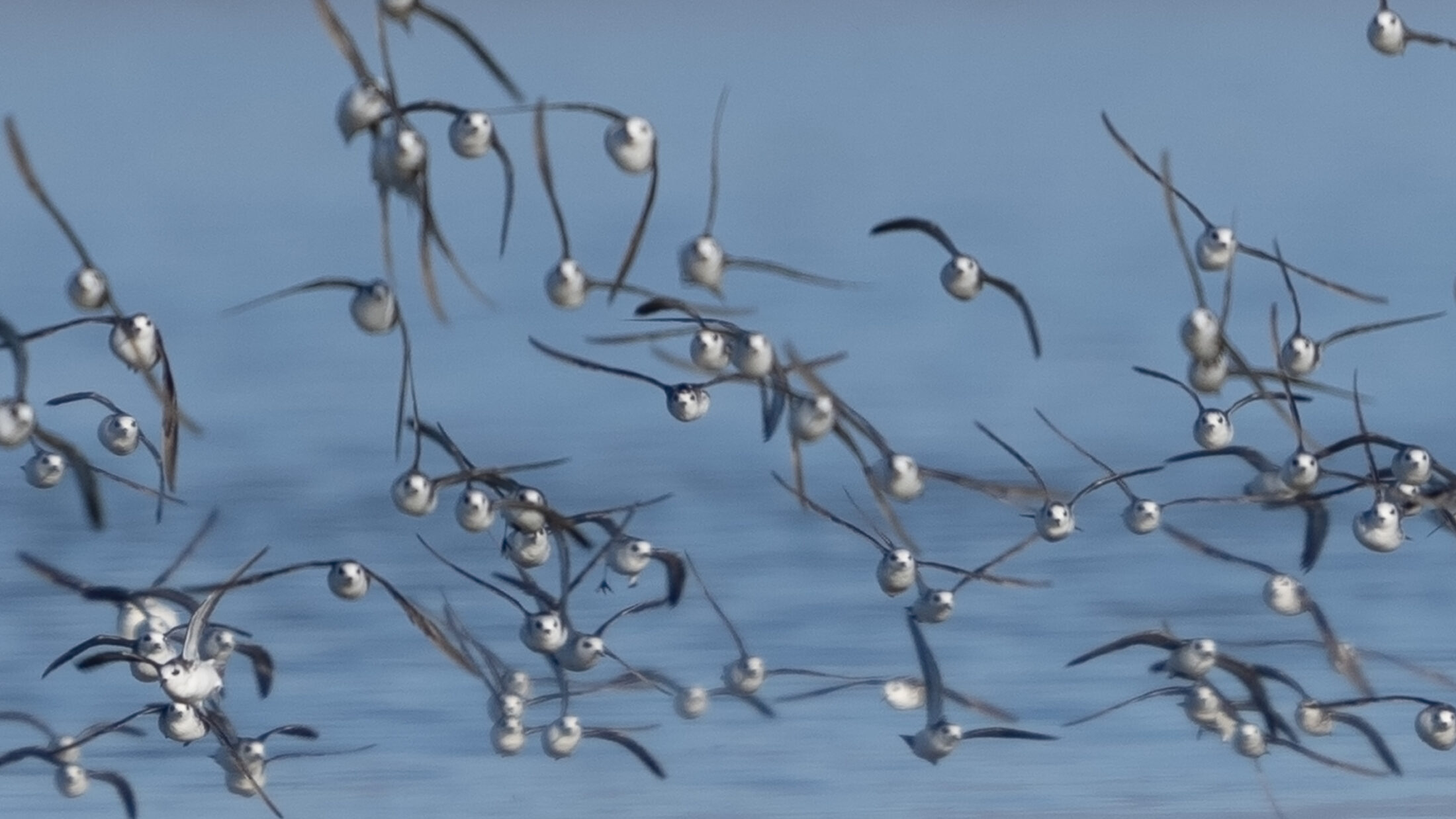
My guess is this bone belonged to a grebe or a phalarope, eared grebe or red-necked or Wilson’s phalarope, to be precise, seasonal birds who arrive in late fall at Great Salt Lake in the thousands, hundreds of thousands, to feed and rest before venturing south to Mexico and South America.
Flocks of grebes are arriving now, migrating at night. Constellations of phalaropes have largely left, winging their way to Argentina for warmer weather. These are threatened species whose sole diets of brine shrimp and brine flies are declining as Great Salt Lake declines to historic lows, with salinity rates rising, deadly to the shrimp and fly populations. There is no separation between a healthy grebe and phalarope population and a healthy human population along the Wasatch Front. All of our lives are threatened by a shrinking Great Salt Lake.
It is a perilous time for the Great Salt Lake ecosystem. Forrest Cuch, a Ute elder, spoke at a recent rally in front of the Utah State Capital. He spoke of how his ancestors depended on this ecosystem for deer and ducks to eat; for the adjacent stands of cottonwood, aspen, and willows to shelter and warm them; and for salt to cure meat. Salt was also used in ceremony. Facing west toward this imperiled water body, he said: “We must protect our Mother Lake—our sacred Mother Lake to whom we all belong.” Forrest invited over a thousand citizens at the rally to face Great Salt Lake with him as we chanted together, “Our Sacred Mother Lake,” “Our Sacred Mother Lake,” “Our Sacred Mother Lake,” “Our Sacred Mother Lake,” toward the horizon, now a line of quicksilver in the last light of day.
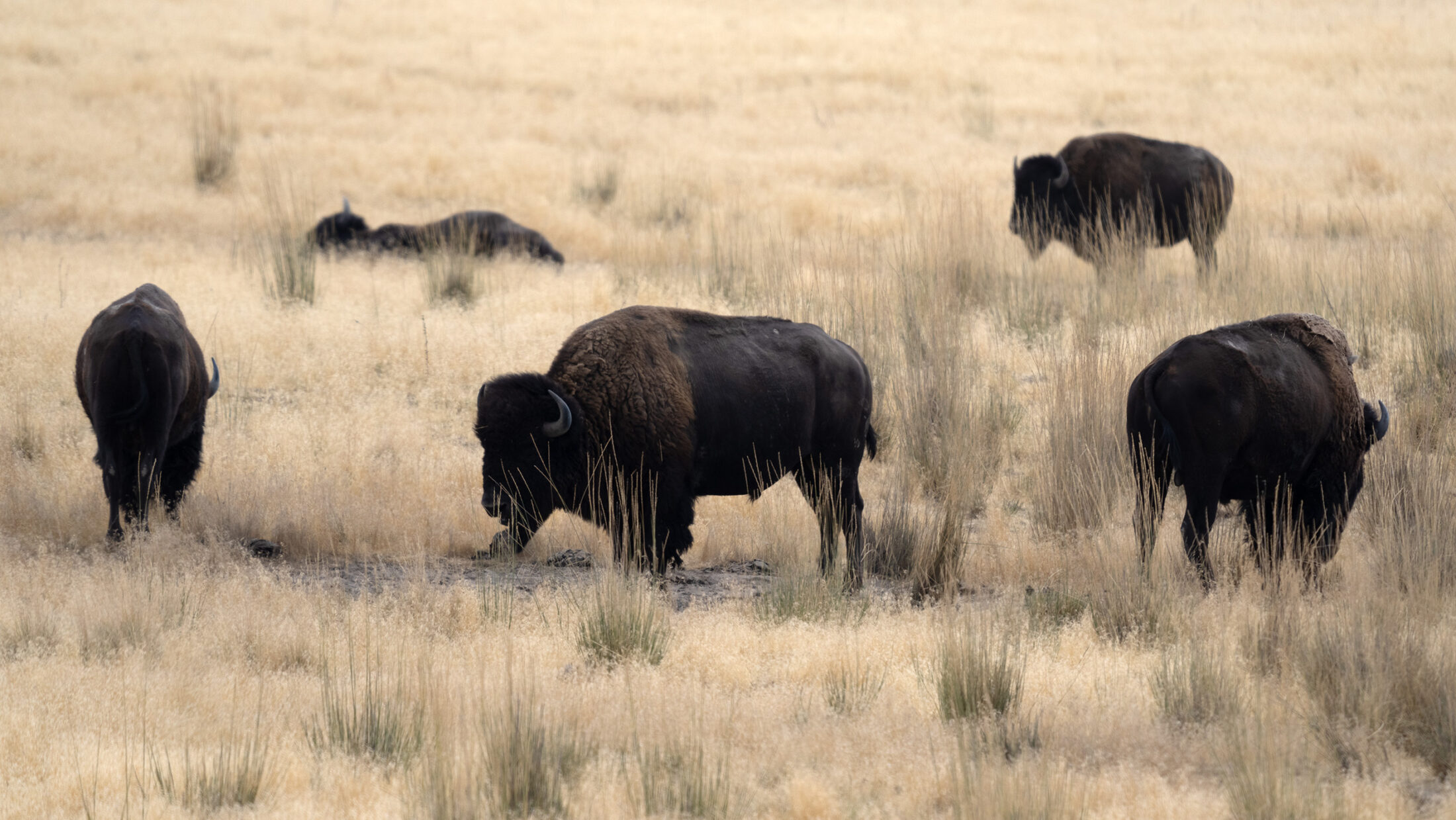
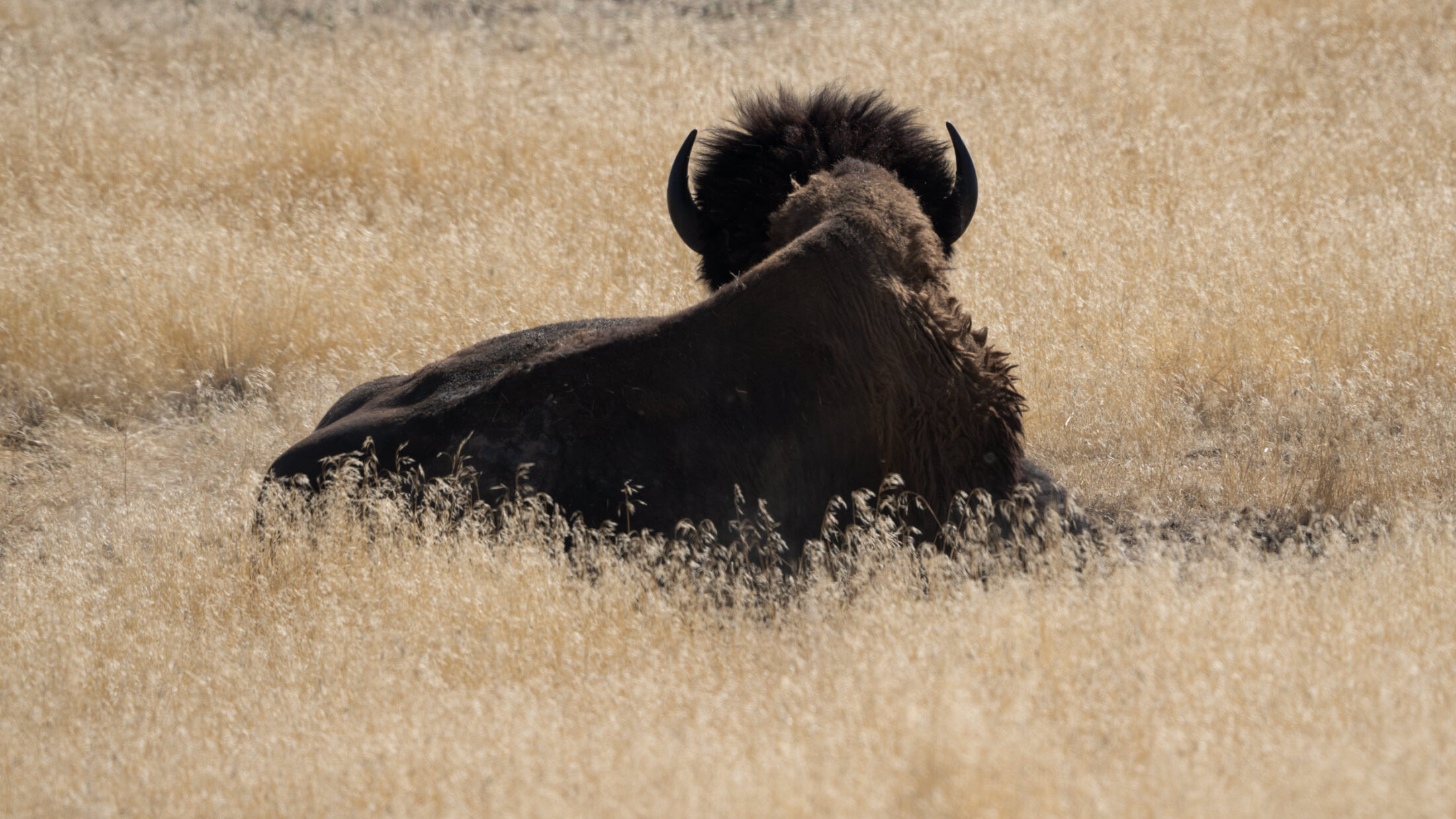
We can be a vessel that things move through. This landscape of gentle grasses covering the rolling hills all the way up the flanks of Antelope Island’s steep and rocky ridge, where Frary Peak presides twenty-five hundred feet above the lake, is restful. What appear to be black boulders dotting the blonde fields are bison breathing. They are the descendants of the plains bison, once numbering sixty million, who thundered through the prairies prior to the colonization of America.
The poet Eliza R. Snow, plural wife of the Mormon prophet Joseph Smith and, after his death, a plural wife of prophet and colonizer Brigham Young, wrote in her palm-size leather journal in sepia ink while crossing the plains from Omaha, Nebraska, to the Great Salt Lake Valley, “June 30, 1847: … This is truly the land of the buffalo—They are in sight all the time an almost imnuberable herd and then came over the bluff—about to cross our camp—on their path to the river—our hunters met them and they changed their course much to our gratification.” A few pages later: “Nothing remarkable except the multiplying of buffalo pattys which [is] bad from the bluff to the river. Saw buffalo and wolves.” She goes on to write, “Capt. G brought me a buffalo skull on which was written by the Pioneers, ‘All well, feed bad.’ Was only 300 miles from SLC,” dated May 9.
A small herd of twelve bison (four males, four females, and four calves) were introduced on Antelope Island in 1893 by private landowners who brought them by train to Utah and ferried them across Great Salt Lake by boat. The herd is now “owned” by the state of Utah. In 2025, there are roughly seven hundred bison roaming free on the forty-two square miles of Antelope Island State Park, now a peninsula because of the retreating saline waters.
Scientists tell us this particular herd is among the wildest genetic population remaining on the continent, as they were originally culled from the historic bison herds not yet marbled with the genes of cattle, so common in bison today. The wild bison on Antelope Island must hold in their DNA an ancestral memory and verisimilitude of their coexistence with Indigenous communities across much of North America. Do the bison also hold the memory of the genocide inflicted upon them? White settlers’ dreams of western expansion were predicated on the deliberate wholesale slaughter of bison to “clear the land of Indians,” knowing that if they killed all the buffalo, Native communities would be starved not only of their primary food source, but their cultures, which evolved alongside the buffalo, as well. The bison and the Plains Indian cultures were one.
Over 5.4 million bison were murdered by white men in three years. Colonizers had the power and intention to kill both buffalo and Indians, leaving mountains of bison bones and skulls as a monument to genocide. Two genocides.
The pathology of patriarchy leaves all of us scathed.
Over a century and a quarter later, bison are bringing us back to our own wild nature, our own gentle standing of authentic power and resiliency and how we evolve over time. In Utah’s Great Basin, they are now the guardians of a retreating inland sea. Both are remnants of a much grander past, both testaments to their seasons of change.
Just as this bison herd is a remnant population of the Great Plains bison that numbered in the tens of millions across the prairies, Great Salt Lake is a remnant of a vast body of water known as Lake Bonneville that existed from thirty thousand to thirteen thousand years ago in the late-Pleistocene and contained Bonneville cutthroat trout. At its peak, Lake Bonneville’s liquid hand spread twenty thousand square miles across northwestern Utah into Idaho and Nevada with a depth of over nine hundred feet and containing twenty-one different species of fish. In 2024, Great Salt Lake barely covers a thousand square miles, with a depth of twenty-five feet, averaging eleven feet deep. No fish are found in Great Salt Lake due to its salinity, but a remnant fish from Lake Bonneville, the Bonneville trout, thought to be extinct in the early twentieth century due to overfishing, loss of habitat, and toxic waters, is now making a comeback in Utah’s rivers and streams after six tiny populations were discovered in the 1970s.
Again, seasons of change bring transformation—be it to a body of great weight like the American bison thriving in the desert; or to that of Great Salt Lake in another iteration that held other bodies of small hidden fish, once feared extinct then found in secret streams by wishful anglers who never stopped believing they were still here. These embodied stories of endurance, strength, and resiliency, instead of despair and demise, become our vessels of hope.
The depth of a bison’s gaze reflecting the landscape that surrounds them has become a marker for how I wish to see and be seen by my own loves and losses. Bison deepen my heart. I bow to bison whenever I am in their presence. It is my private embrace throughout the seasons: in the bucolic spring their sweet red babies are living proof of love; in summer, they roam and tarry in green mansions; in autumn, they snort and shine; they are boulders immovable in the blizzards of the Northern Rockies, breaking trail through the snow when the clouds clear.
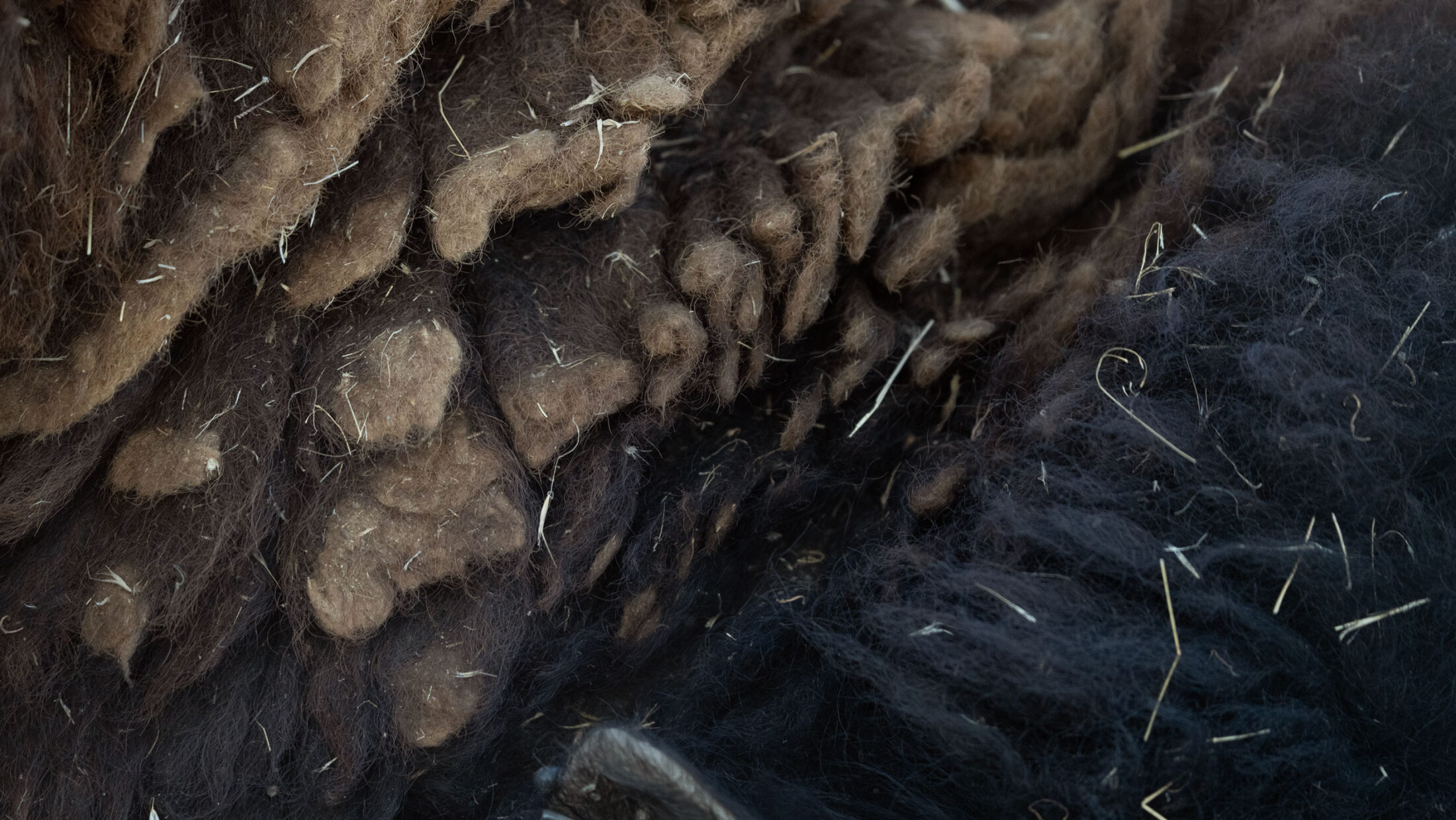
The bodies of bison are a landscape unto themselves. This is what they gave to me, my own body becoming animal in relationship to other animal bodies. My erotic education began as a girl who wanted to be a bison. I stood at the edge of large herds of what we then called buffalo in Wyoming. These massive brown-on-black bodies with steam rising from the heat of their own hearts, beating in the chill of October mornings among the dew-drenched grasses, thrilled me. We were witnesses to their pleasure while they wallowed in the mud on their backs with their legs flailing before the sky. Upright, the curve of their shining horns on their massive heads created a crown of nobility, followed by the iconic hump on their shoulders, so thick with soft, curly hair, I wished to sink my fingers into their coats even as a child. My brother Steve and I settled for the found pieces of bison hair snatched by the fingers of sage.
The bison’s muscularity is sculpted and accentuated by the narrowing of their hips down to their haunches. It is a shining topography against the monotony of the prairie. The swishing of tails and the sound of wind weaving grasses into a tapestry can hardly be differentiated.
In rutting season, the snorting among them quickened as they sparred and fought for their territories with blood-red eyes. A single bull circling a group of females mounted each of them within view. This is how I learned about sex. Their arousal became my own.
This is not bestiality, but a pansexual bonding of earthly bodies in an awakened state.
With age, my passion only intensified. My uncle gave me a buffalo hide from one he shot in Utah’s Henry Mountains not far from where we live. I spent most of my adolescence wrapped in this buffalo robe holding my fantasies close, both human and wild. Informed by the pleasure of my own body, I saw myself lying next to a bison, any one of them, wet and ready. If we are gender-fluid, can we not be species-fluid, as well?
If our human connectedness to all beings and our evolving capacity to love who we wish and how we wish to be loved—beyond gender, race, and religion—why can’t we extend our love and compassion forward in the name of an interspecies connectivity and telepathy toward all the many beings with whom we share this planet?
Our human exceptionalism has destroyed countless populations of species and peoples on this free-floating planet. We continue to pursue this relentless path of destruction in the places we know by name in our forever wars, abroad and at home. With our aggressive arrogance and ignorance, we place ourselves first, draped in greed and entitlement, as the world burns and floods within an ever-worsening climate. And at the same time, we are also trying to find some semblance of reconstruction, restoration, and adaptation to change by imagining a different way of being.
Honoring interspecies connectedness, the steady stillness of bison, the agility of flight among phalaropes and grebes who understand the necessity of return, allows us to acknowledge and celebrate our innate feelings of a cellular, cosmic love that pulses and throbs and awakens intimacy for all life. Our shared affection given freely and received openly from all the beings we live among is a deep, evolutionary genealogy that branches out in all directions.
Bison are formidable beings, it is best to keep one’s distance, but I continue to witness and dream of them in rapturous moments of mutual recognition.
Both the lake and the bison herd are survivors within an ongoing narrative of change, what has disappeared in the past and what could disappear in our future by our repeated seasons of desire for more water, for more land, for more profit, for the taking—of everything. Both the lake and the bison are bodies of imperceptible stillness, except when provoked by storms or helicopters herding the animals into pens for annual health checks, or to be sold or slaughtered.
Let us learn how to migrate in the dark and return home to where we belong for nourishment. And let us move as one organism when we are called into a moment of flock consciousness.
I remember last year being on the edge of Great Salt Lake on Antelope Island with a group of Harvard Divinity School students sitting in a circle around a fire with one of our local political leaders who’d been put in charge of the fate of this saline lake.
A student asked him about the recent petition sent to the U.S. Fish & Wildlife Service to place Wilson’s phalarope on the Endangered Species list as a threatened species due to the decline of water in Great Salt Lake. He said, no species had been saved by this Act and began to pontificate his point of view to the students. Suddenly, a great thundering filled the air and the ground began to shake. We stood up to locate the commotion, when we saw hundreds of bison in a stampede running in our direction.
“I stand corrected,” the public policy czar of Great Salt Lake humbly said, aware of the irony before us.
Be the hollow bone—We can be a vessel that things move through, says Regina Lopez-Whiteskunk.
The bison know. The native grasses they wander through know. The phalaropes and grebes know. The brine shrimp and brine flies know. The Bonneville cutthroat know. And Great Salt Lake is trying to show us, repeatedly, change can move through us.
Let us not squander our time when the opportunity to transform ourselves is upon us. Let us know when to be still and when to stampede when false statements and lies are delivered as truths. Let us learn how to migrate in the dark and return home to where we belong for nourishment. And let us move as one organism when we are called into a moment of flock consciousness.
Last night, I dreamed of one bison who was approaching a crosswalk, white stripes painted across the asphalt road. The bison sat in repose and refused the directive when the sign on the other side of the road said walk.
When I awoke, I wondered what it meant.
I want to remain feral like the bison on Antelope Island with a genetic tie to the wild. I want to heed the actions of Great Salt Lake and retreat as she is instructing us to do until the truth of her absence brings us into a deeper understanding of her presence—
I write these words during the Black Moon, as an invitation to go inward and be still as bison breathing among boulders—until a stampede is warranted—and we make our motions on the ground match the flocks of twelve million migrating birds above, their hollow bones buoyant and mirrored in the clarity of our sacred Mother Lake.
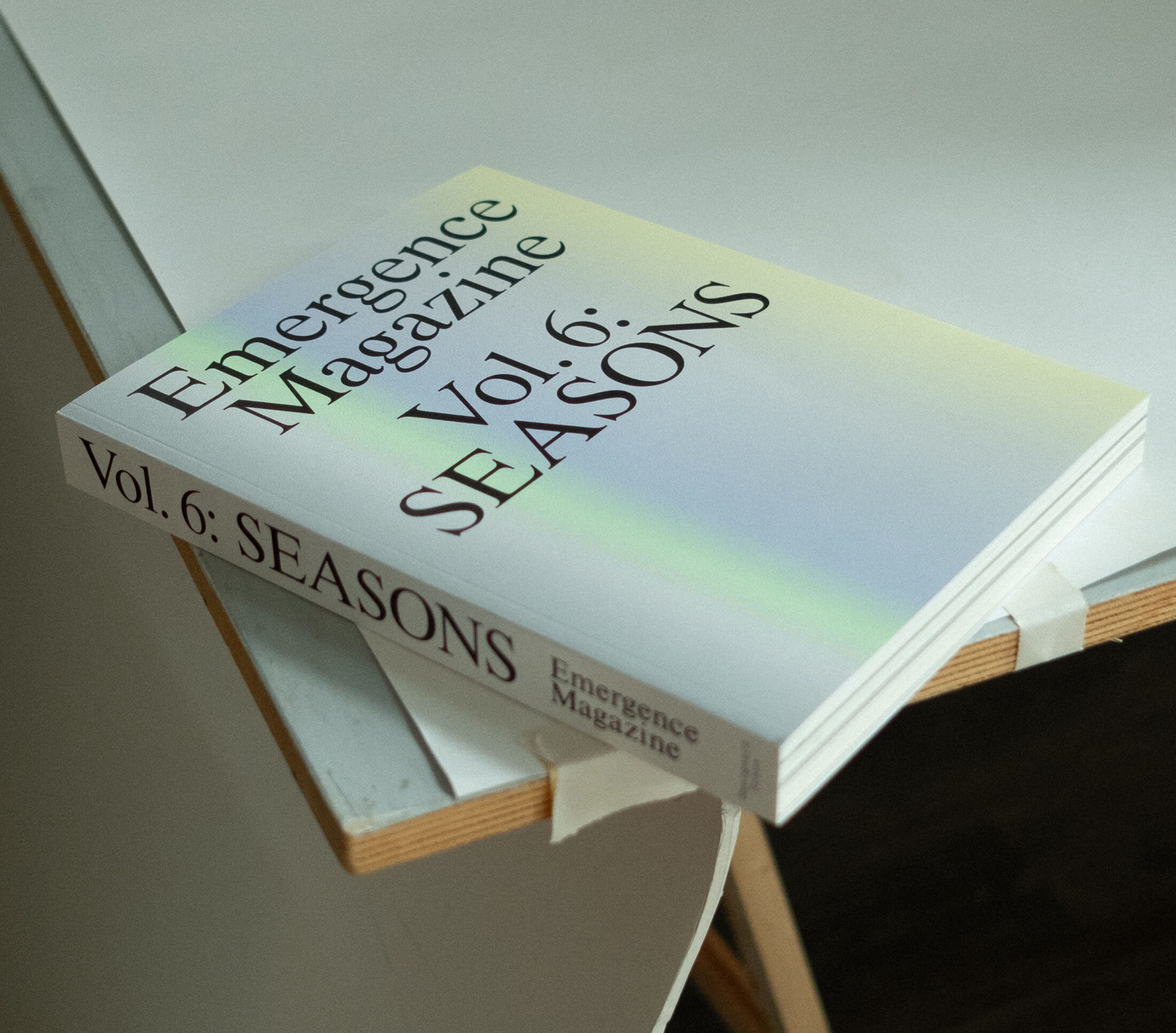
Reflecting a world where snow no longer arrives, annual migrations fall out of time, yet first blossoms still burst, Seasons, our sixth print edition, moves through three themes: requiem, invitation, and celebration—each a contemplation on the paradoxical ways the seasons now beckon us into intimate relationship.
Sign up to receive our newsletter each Sunday morning! We are an ad and subscription-free magazine committed to sharing stories crafted with care. Join us as we explore the threads connecting ecology, culture, and spirituality.