David George Haskell is a writer, biologist, and adjunct professor at Emory University in Atlanta. His books include The Songs of Trees, winner of the 2020 Iris Book Award and the 2018 John Burroughs Medal; The Forest Unseen, winner of the National Academies’ Best Book Award, finalist for the Pulitzer Prize in nonfiction, winner of the 2013 Reed Environmental Writing Award, and winner of the 2012 National Outdoor Book Award for Natural History Literature; Sounds Wild and Broken, a finalist for the Pulitzer Prize; and his most recent book, How Flowers Made Our World. Haskell’s classes have received national attention for the innovative ways they combine action in the community with contemplative practice. His teaching has been profiled in USA Today, and recognized by the Carnegie and CASE Foundations and The Oxford American.
Biologist David George Haskell turns to the deep-time evolutions and tangled histories of wildflowers that grow around his home in Atlanta, Georgia, to learn how we might find a deeper sense of belonging in the places we live.
TO KNOW THE SEASONS, look to plants. Wildflowers, especially, are excellent teachers. Their extravagant displays catch our attention. Their small, delicate bodies are beautifully, frighteningly permeable to the changing pulses of the world.
Plants feel seasonal changes in light, moisture, and heat like few other living beings. Plant cells feed on sunshine. Water wraps every root and coats the spongy interior of leaves. The body temperatures of plants fluctuate with those of their surroundings. This openness makes plants the primary interpreters of the seasons. The word “seasons” carries this knowledge in its origins. Descended from the Latin serere, meaning “to sow,” the word changed from verb to noun and came to mean not only the act of sowing crops, but the right time to sow.
Today, the seasons are convulsed by change. The “right time” feels terrifyingly destabilized. If plants teach us about the seasons, what are they telling us now?
Snorklewort
FOUR HUNDRED MILLION years ago, bubbles of magma pushed up through the Earth’s crust in what are now the outskirts of Atlanta, Georgia. As the softer rocks around them eroded, the hard magma bubbles remained. From a distance they now look like giant whales surfacing, their bare, smooth skin gleaming against a dark sea of oak and pine forest.
On a spring morning, we climb a whale’s back. The place is called Arabia Mountain, a name coined by quarry workers who compared the summer heat to the most sun-blasted place they could imagine. On a summer afternoon, the shadeless stone can reach 140 degrees Fahrenheit, too hot to touch. The sterilizing power of the sun keeps the whale’s skin stony smooth and almost free of plant life. Yet, a few plants not only persist, but make this oven their only home.
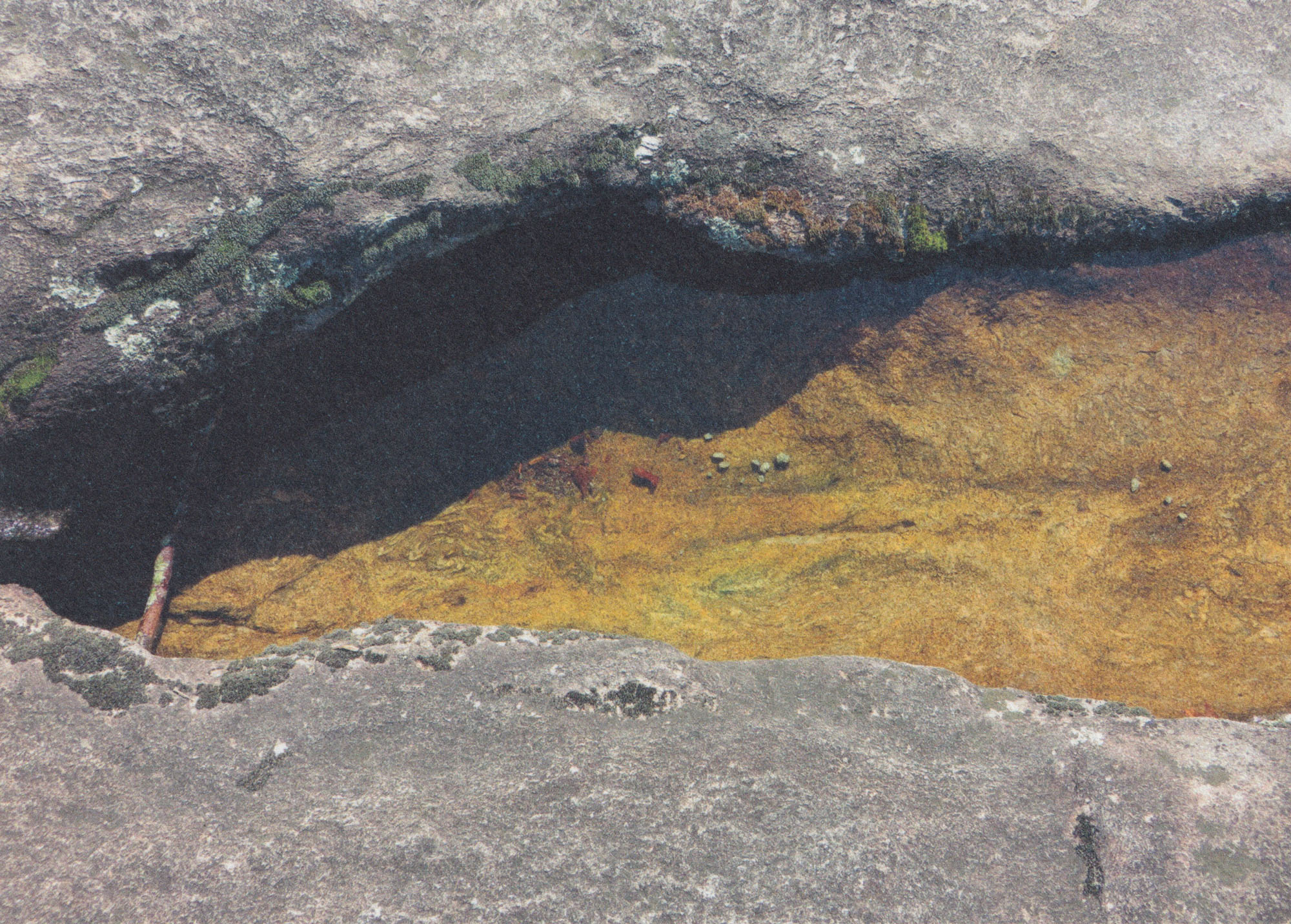
In pockmarks on the whale’s back, rain accumulates in puddles. These depressions were etched into the rock by millennia of slightly acidic rainfall. Most puddles drain or evaporate within days, but a few hold water throughout the winter and spring.
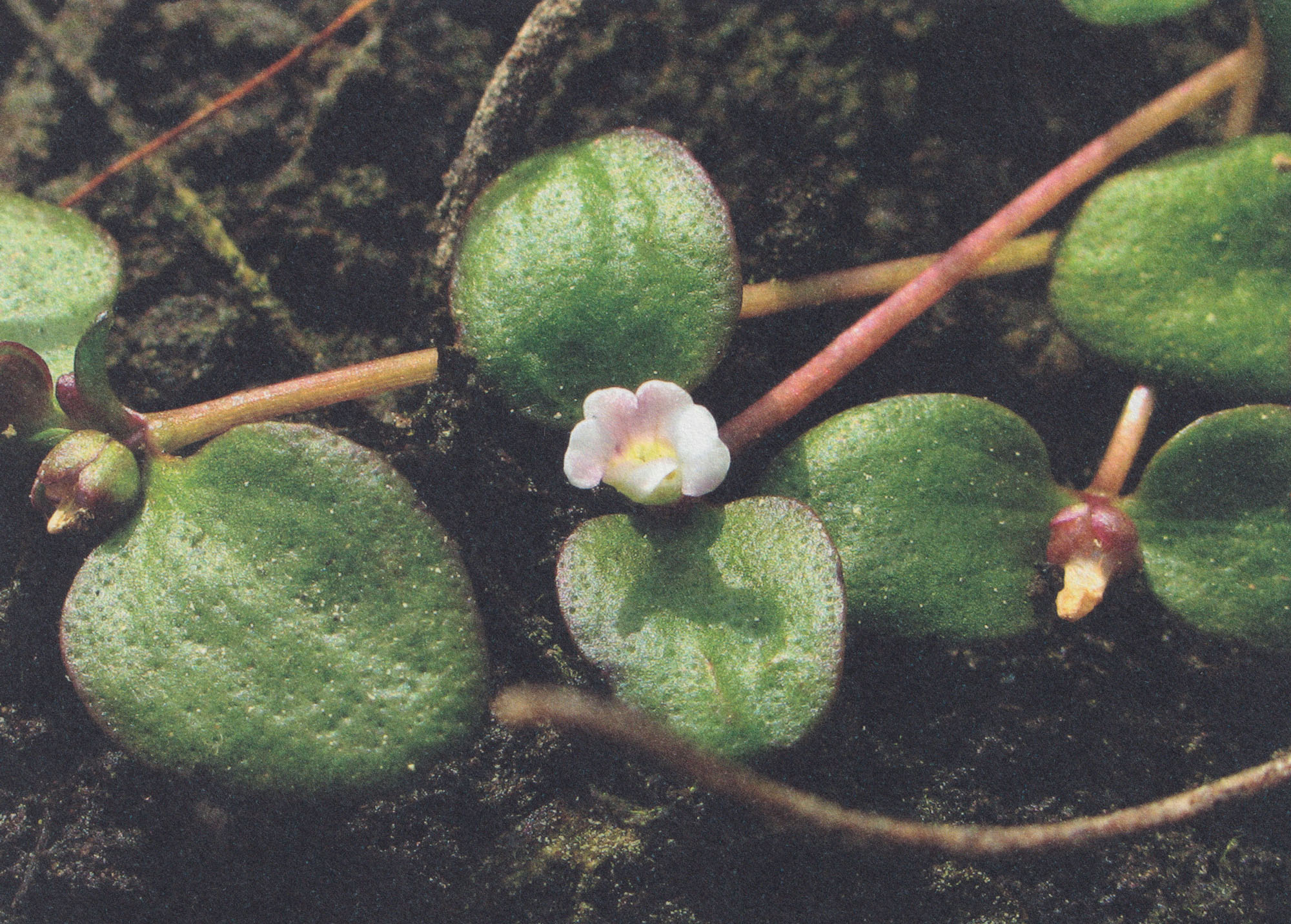
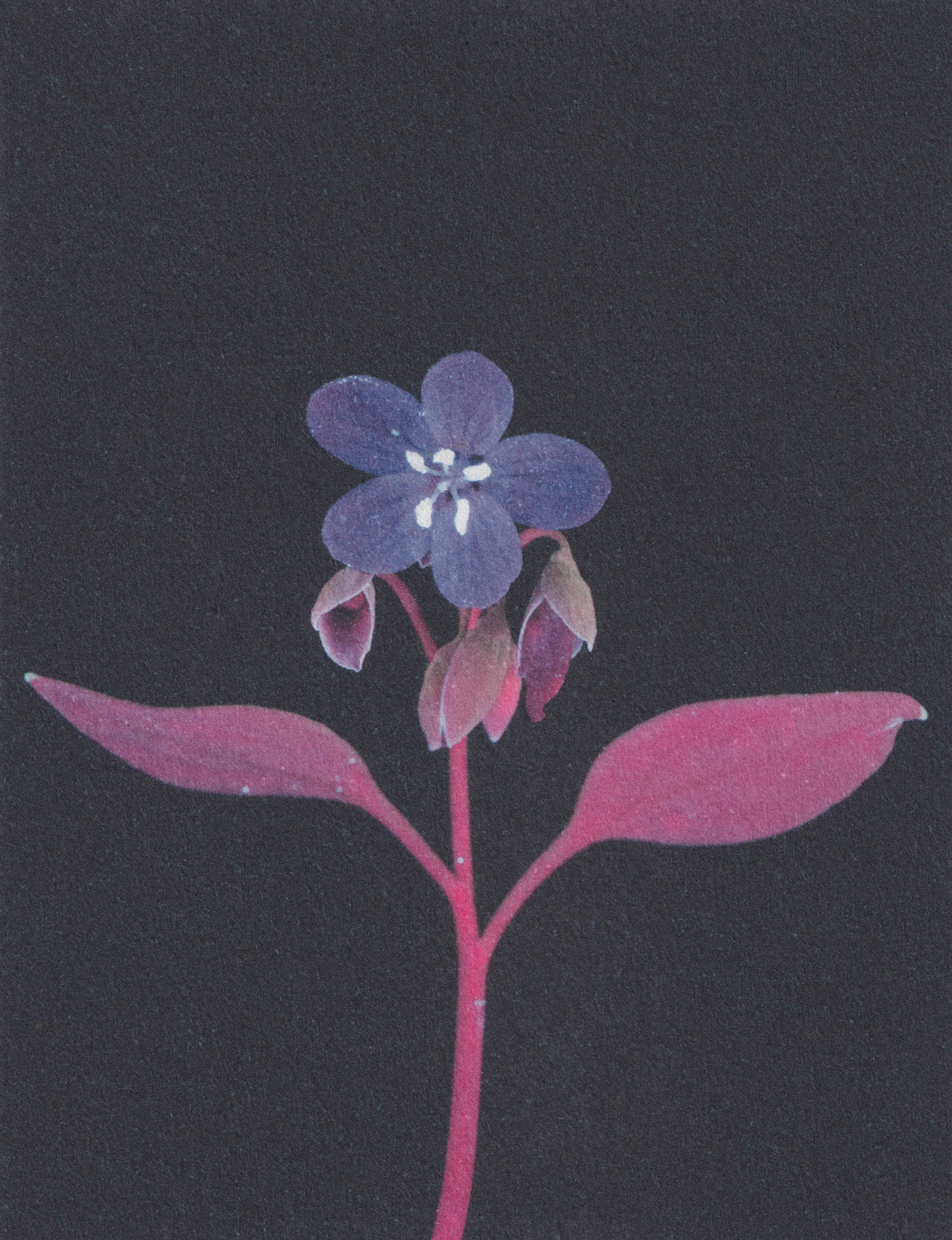
I lie down and peer through my hand lens: Paired oval leaves float on the water’s surface, each leaf only as big as a small lentil. At the center of some of these pairs grows a white flower about half the size of a peppercorn. A thread tethers the floating leaves to a rosette of spiky leaves rooted at the bottom of the puddle. The soil at the bottom is thin, just a couple of millimeters of coarse sand and oozy muck. This is snorklewort, a plant that lives on the edge of impossibility.
Ephemeral pools in rocks are snorklewort’s only home. The species lives on about three dozen rock outcrops in Georgia, Alabama, and South Carolina. Winter rain fills the pools and causes snorklewort seeds to germinate. The young plant grows into a submerged rosette, like a minuscule tuft of grass.
Rain and weak sunlight on warmer days sustain the growing rosettes through the early winter. As the days lengthen, the rosette grows its “snorkel,” a thread leading to a bud on the water’s surface. From the bud grow leaves and flower. The snorkel looks like a hose connecting a diver to the boat, but it carries no air and instead anchors the floating leaves, stopping breezes from washing them ashore. The flower is so small that my unaided eyes have trouble seeing it. On warmer days, tiny insects visit the blooms.
As spring progresses, the puddles dry faster in the ever-stronger sun, leaving a thin layer of damp, muddy sand. The flower matures to a tiny green fruit that encloses the seed, and the floating leaves lie prostrate in the muck. By early summer, the whole plant shrivels away. Mature seeds caught in the sand at the bottom of the depressions are snorklewort’s only connection to the future. They wait all summer and autumn, surviving the heat by sending their embryos into deep sleep, a dried-up suspended animation. When summer rainstorms refill the puddles to overflowing, the seeds are not fooled into germinating. Emergence anytime before the cold rains of winter would mean certain death.
Gratiola amphiantha / Allan Cressler
Granite pool on Arabia Mountain / Allan Cressler
No one has studied how snorklewort seedlings know when to burst out of their seedcoats and greet what they hope is a welcoming puddle. But, we know from other plant species that seeds have lucid dreams during their slumbers. Cells at the tip of the sleeping embryo keep up hormonal conversations among themselves that track temperature, moisture, and the passage of time. Eventually the chemical whispers jolt the rest of the embryo: wake up, let’s go, the world awaits!
Genes shape the seasonal chatter among plant cells. Every species has a different conversation underway in its seeds, each attuned to its home. The seasons live within, scribed into genes and physiology. Every species carries the pulse of home inside.
Snorklewort walks a fine line. If the pools dry out too fast, they cannot make floating leaves and flowers. If the pools hold too much soil, other plants like grasses and pine seedlings take over. If the pools contain too much dissolved minerals, algae grow profusely and smother the snorklewort. Yet, across millennia, snorklewort has yearly reseeded itself. In years when the rains are meager and pools do not fill, the rosettes grow backup flowers. These never open and instead self-fertilize and make inbred offspring. Not ideal, but essential insurance. Safeguards against swings in rainfall and heat caused by climate chaos will be harder to find.
Snorklewort is not the only flower on the whale’s stony back. Elf orpine blazes its white flowers by the thousands from depressions that gather damp sand. Like snorklewort, these grasshopper-high elves germinate in winter, bloom in spring, and wait out summer as seeds. Where a little more soil has accumulated, in stony cracks or deeper pits, wooly ragwort and blue toadflax add to the springtime bloom, usually by sprouting from roots stuffed with food carried over from the plants’ germination and growth in the previous year. In autumn, Porter’s sunflowers, which overwinter as seeds, turn the same soil-filled patches bright yellow, tens of thousands of flowers all emerging at once. What do plants do when life gets hard? Strew the world with floral beauty.
The plants at Arabia Mountain offer an extreme demonstration of a general truth. The seasons are polyrhythms. Although the seasons have their physical origins in the tilt of the revolving Earth, life has built millions of variations on this basic Newtonian beat. There are many ways to make a home in the seasons. Snorklewort and elf orpine have found one, tuned to winter rains. Ragwort and toadflax another, growing in one year and flowering the next. Porter’s sunflower yet another, a burst of autumn flowering fed by summer growth. These different rhythms are created by the inner conversations that animate and modulate the timing of flowers, seeds, leaves, and roots. The seasons live inside every plant as green discourse.
Columbine
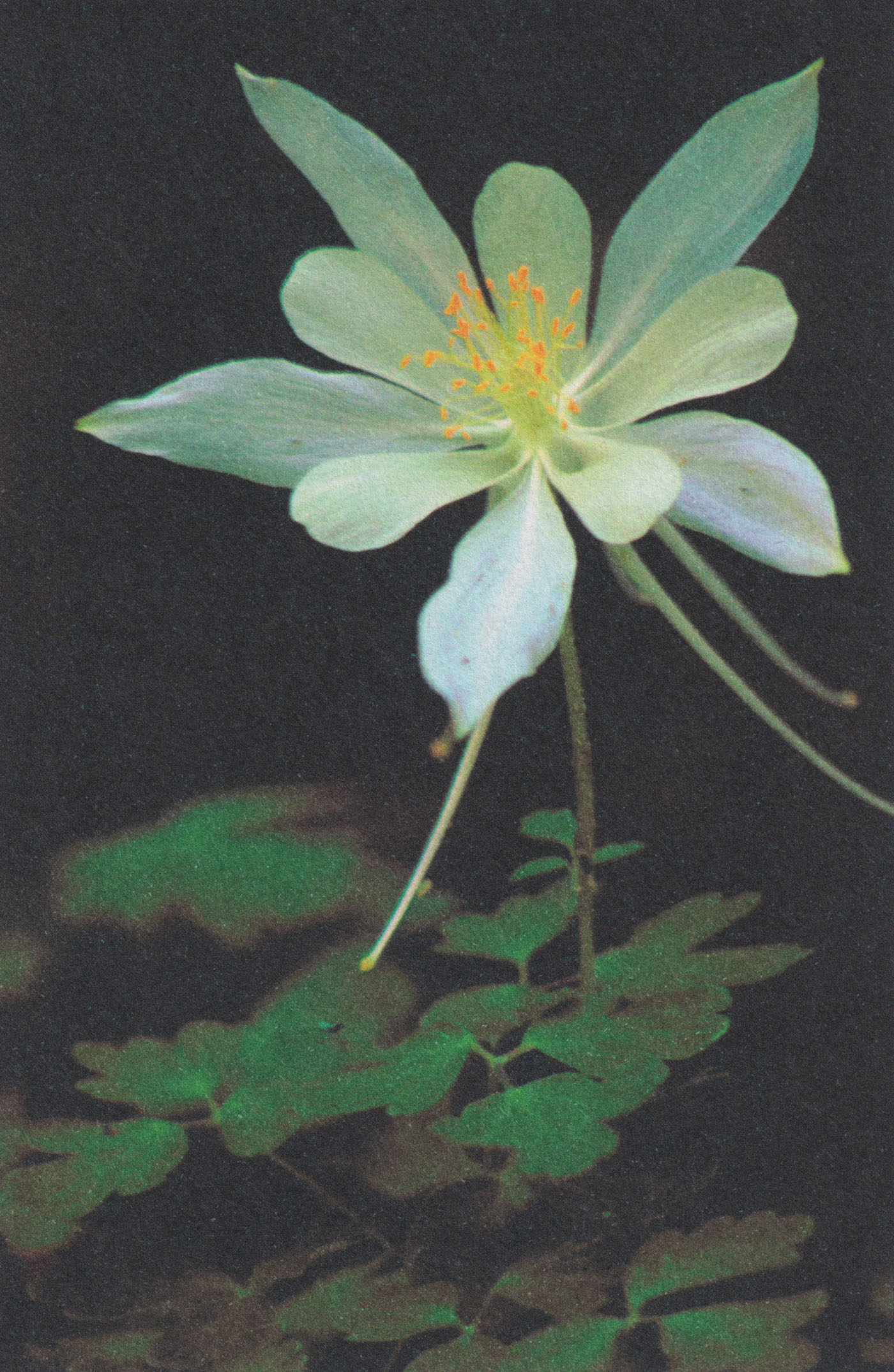
Aquilegia coerulea
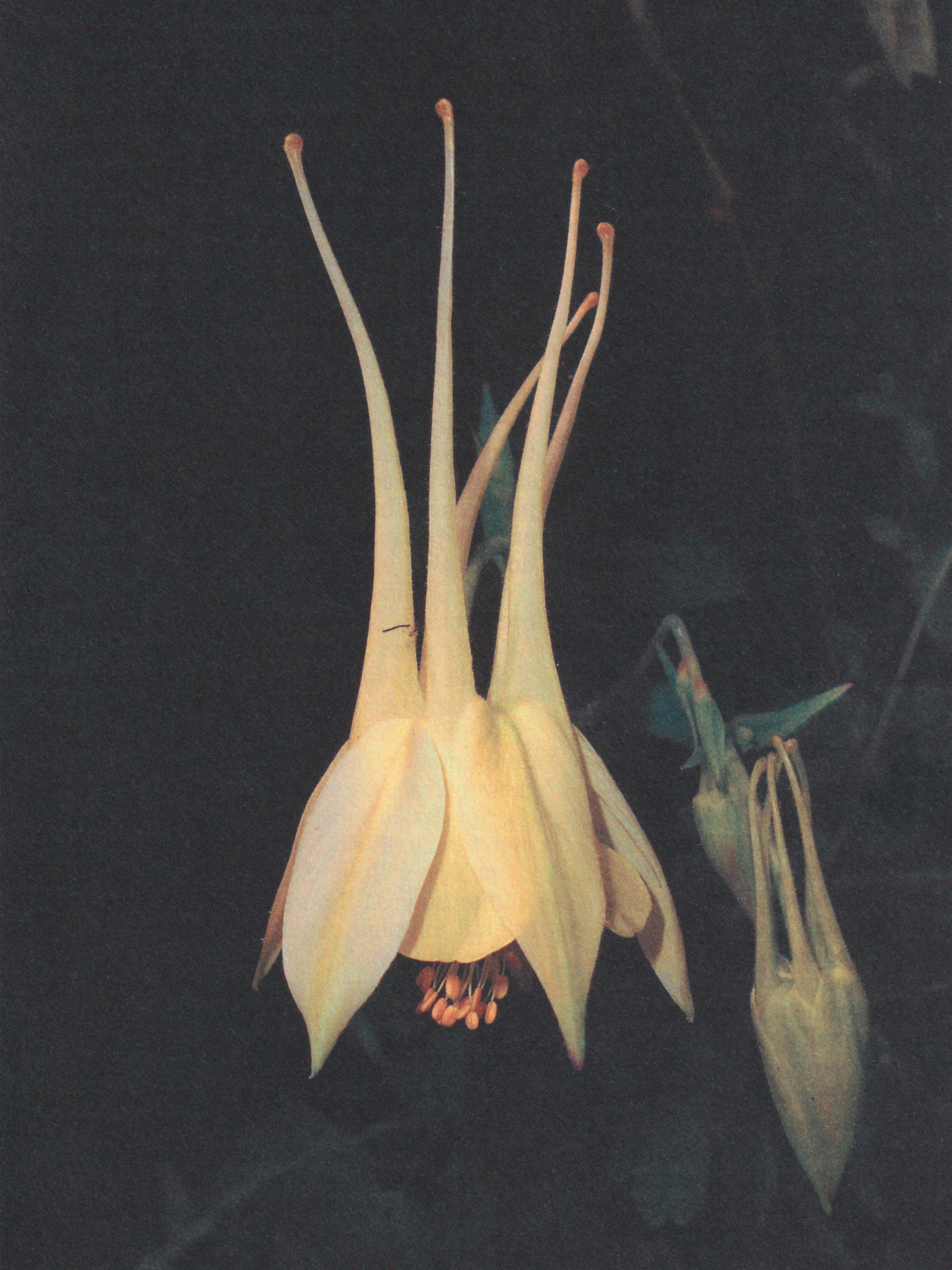
ABOUT THREE OR FOUR million years ago, seeds from Asian columbine flowers somehow made it to North America. The tiny glossy black seeds might have drifted across the oceans on woody debris washed out from land. Or, perhaps, the travelers came in the gut of a bird or in the fur of a mammal. Once arrived, the seeds prospered and, eventually, their offspring founded a dynasty of some of America’s most gorgeous and diverse flowers.
The columbines’ success was built on their flexible relationships with the seasonal rhythms and body shapes of their pollinators. For flowers, the seasons are not just made by changing light and moisture, they are created by reciprocal relationships with animals. The freshly arrived flowers had stumbled into new animal seasons.
In Asia, bees were the partners of columbine flowers, a relationship that dates back at least seven million years and continues to the present day. In those ancient days, the ancestors of columbines evolved a key innovation: the nectar spur. They turned each of five petals into a tube leading to a drop of nectar. These spurs were ringed by another five petals that served as colored advertising banners. Bees loved it. They dipped their tongues into the spurs and drank the sweet reward. A happy bee is a loyal bee. The flowers’ generosity ensured that the bees focused their attention on columbines.
To further entice the bees, ancestral columbines colored their petals blue and purple, the bees’ favorite colors. They kept their nectar spurs short and curved to allow easy access by bee tongues. Next to the spurs, the flowers added bee landing platforms. The flowers came into bloom when the bees were active, especially at the height of summer. Columbine flowers became mirrors of bees. Evolution sculpted the columbines to fit the sensory preferences, body shapes, and seasonal timings of their pollinators. In reciprocity, bees and flowers thrived.
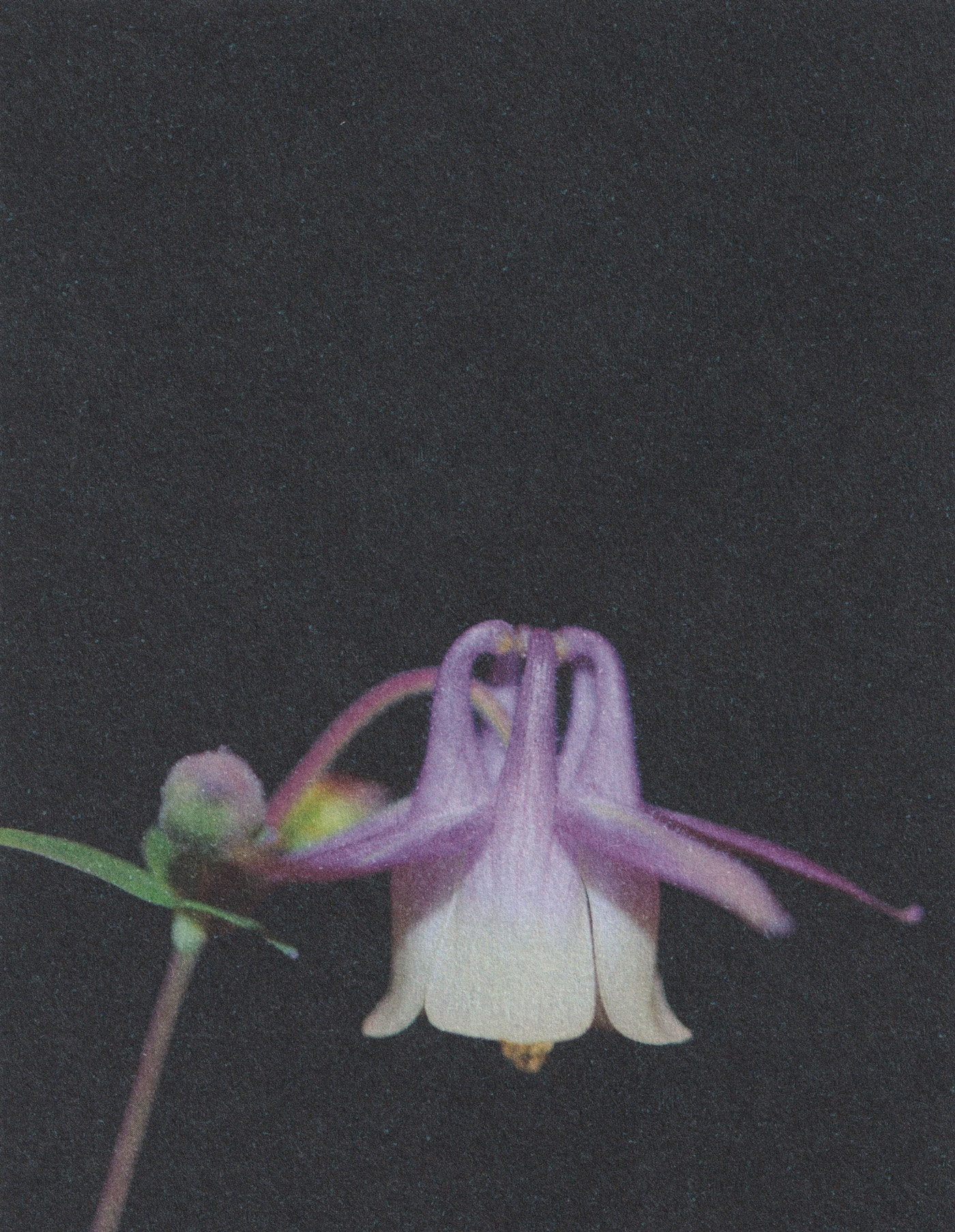
Aquilegia brevistyla / Molly Edwards
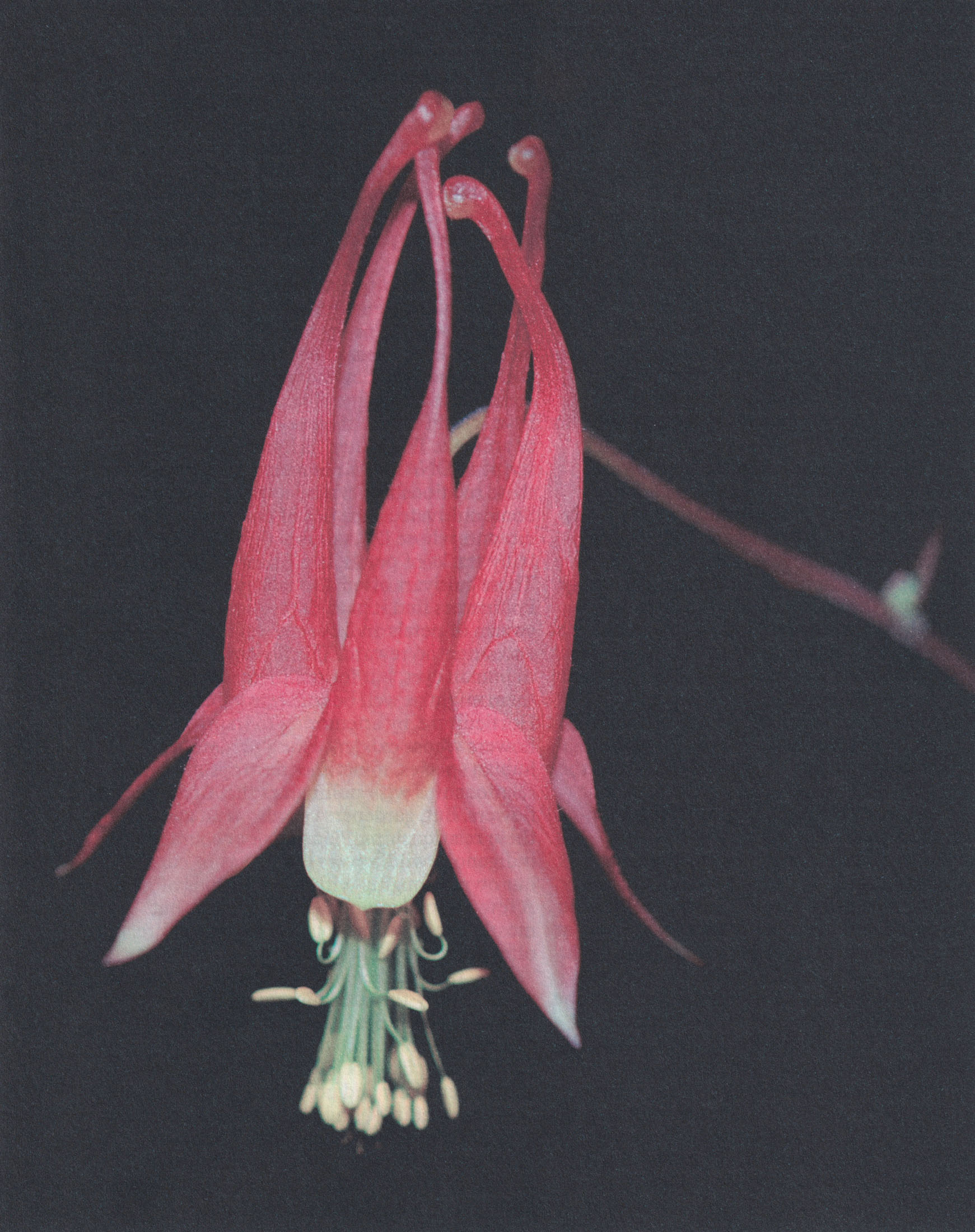
Aquilegia canadensis / Molly Edwards
What do plants do when life gets hard? Strew the world with floral beauty.
Columbine flowers found that American bees were ready to take up the work of their Asian cousins. The columbines spread out over much of the North American continent. As the plants expanded their range, they were visited by strange new pollinators, creatures entirely unlike any the plants’ ancestors had encountered. These oddities hovered in front of the flowers on thrumming wings and dipped their needle-like beaks into the columbines’ nectar spurs. Columbines, meet hummingbirds! Hummingbirds, found only in the Americas, offered columbines new possibilities for partnership.
Thanks to genetic variability within columbines, a few plants discovered that, although bees are nice, hummingbirds can be better. Genetic mutations in some of these plants turned columbine flowers from blue to red. Because hummingbird eyes are attracted to anything red, these new hues drew more pollinating birds. As they adapted to hummingbirds, the columbines lost their aromas, and petal landing pads for bees shrunk. The flowers also straightened and lengthened their nectar spurs to better accommodate hummingbird beaks.
In eastern North America, red columbines shifted their flowering season to match the seasonal migration of the hummingbirds. In Atlanta, for example, the flowers come into bloom exactly when springtime waves of migrating ruby-throated hummingbirds pass through, the birds thrilling in sugar hits that will power their perilous northbound journeys. Farther north, where the wave of migrants is more modest and spread out, the red columbine waits to bloom until all the hummingbirds have settled on their breeding territories.
North American columbines remade themselves in the image of hummingbirds, an impressive innovation. But they were not done with genetic exploration. The longer nectar spurs of the hummingbird-pollinated columbines also attracted the attentions of hawkmoths. These large moths have proboscises many times longer than their bodies, making hummingbird beaks look puny. Another pollinator, another opportunity for evolution to get creative.
Using the hummingbird-lengthened spurs as starting points, columbines evolved even longer spurs. These eventually got so long that they now look like tresses flowing back from the blooms of species such as the golden and longspur columbines. To further encourage hawkmoths, the flowers tipped their faces toward the sky instead of hanging them down as they do for bees and hummingbirds. They also regained the floral aromas that had been useless for attracting hummingbirds. The petals changed from red to white, yellow, or sometimes blue, colors that hawkmoths love. Hawkmoths fly mostly at night and at dawn and dusk, so the flowers are nectar-filled and aromatic even at night and when the light is dim. They bloom when the hawkmoths are most active: mid-summer in the mountains and early spring in the deserts and along the coasts. Unlike other hawkmoth specialist flowers, such as some wild tobaccos, columbines do not open exclusively at night, perhaps to keep their options open with bumblebees and hummingbirds.
Hawkmoths also live in Asia and Europe, but no columbine there evolved superlong nectar spurs. Only in North America, where the hummingbirds served as an evolutionary stepping stone, did these long spurs appear. Sometimes one innovation leads to another.
Not all American columbines evolved to work with hummingbirds and hawkmoths. A few, like smallflower columbine in western Canada, stuck to the tried-and-true ancestral habit of working with bees and kept their short, often curved spurs and blue colors. A few, in one population of the Rocky Mountain columbine, have even lost their spurs. This makes the flowers less attractive to pollinators but is a good defense against excessive herbivory by deer and aphids. Today, twenty-five species and subspecies of columbines bloom all over North America, from the boreal forest, western coasts, desert southwest, to the forests of the east. Each columbine species has its own spur length and shape, color, and blooming time, matched to the preferences of pollinating and flower-eating animals.
For flowers, the seasons are made and marked by relationships with animal partners. These relationships involve timing but are also mediated by the match between the plants and their animals’ bodies and senses. The genes that control the colors and shapes of flowers, then, have within them a memory or understanding of animals. The “other” is living inside, in the script of DNA. When humans get involved, these relationships can be severed or befuddled. Some cultivated varieties of columbine are mutants whose DNA causes the flowers to grow frilly stacks of petals, like Elizabethan ruffs. These cultivars often also lack nectar spurs. Pollinators find it hard to reach through the swarm of petals and, even when they do, often encounter no reward. The flowers are pleasing to human eyes, but for pollinators, many of them might as well be concrete garden gnomes. Horticulture, by attempting to improve on flowers whose existence long predates the human species, sometimes destroys the very relationships with pollinators that first built the flowers. But, gardeners can also tend and sustain these relationships. Planting or encouraging indigenous wildflowers is one way of cultivating our own belonging within the seasons of home. A few colorful gnomes are surely fine, but mostly our gardens should sustain local life, not offer empty promises.
I watch from my window in Atlanta as the first ruby-throated hummingbirds of the spring dip their beaks into red columbine blooms. The birds zip to the flowers, approaching from below. They hold themselves almost vertically and poke their beaks into the bell-like openings, finding a perfect fit between beak and the flowers’ long petal spurs. I see hummingbird tongues flashing and throats pumping. The swollen tips on each petal are full of nectar. Their heads dusted with pollen, the hummingbirds move from bloom to bloom. When night falls and the birds continue their migration north, they will be powered by columbine sugar, a gift from long-ago Asian immigrants who made new homes in the many seasons of the Americas. When the hummingbirds return in the autumn, their ranks swelled with the young birds hatched this summer, other flowers will emerge right as the birds pass through. Jewelweed and cardinal flower will proffer red and orange flowers and long nectar spurs, another season made from relationship.
Daffodil
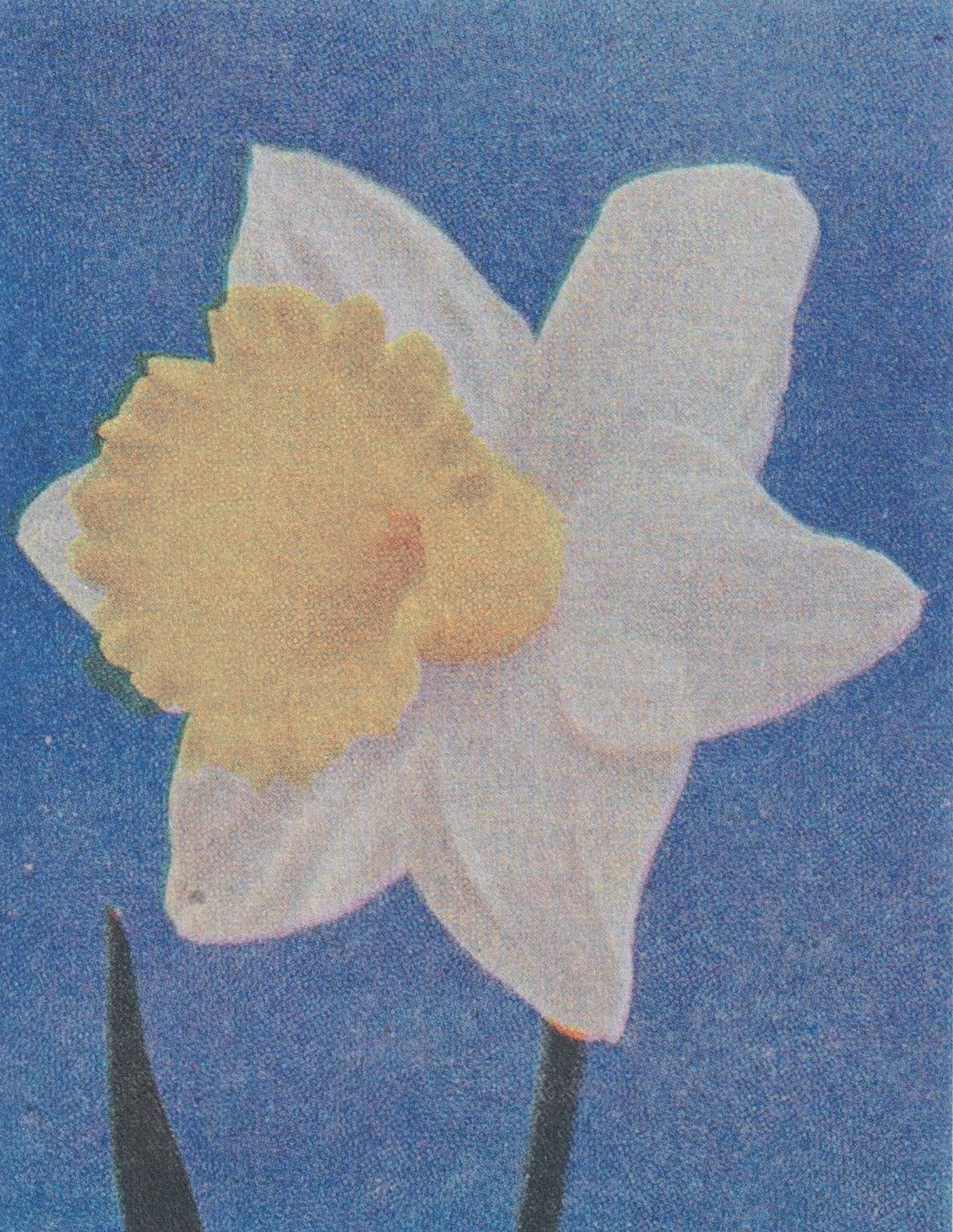
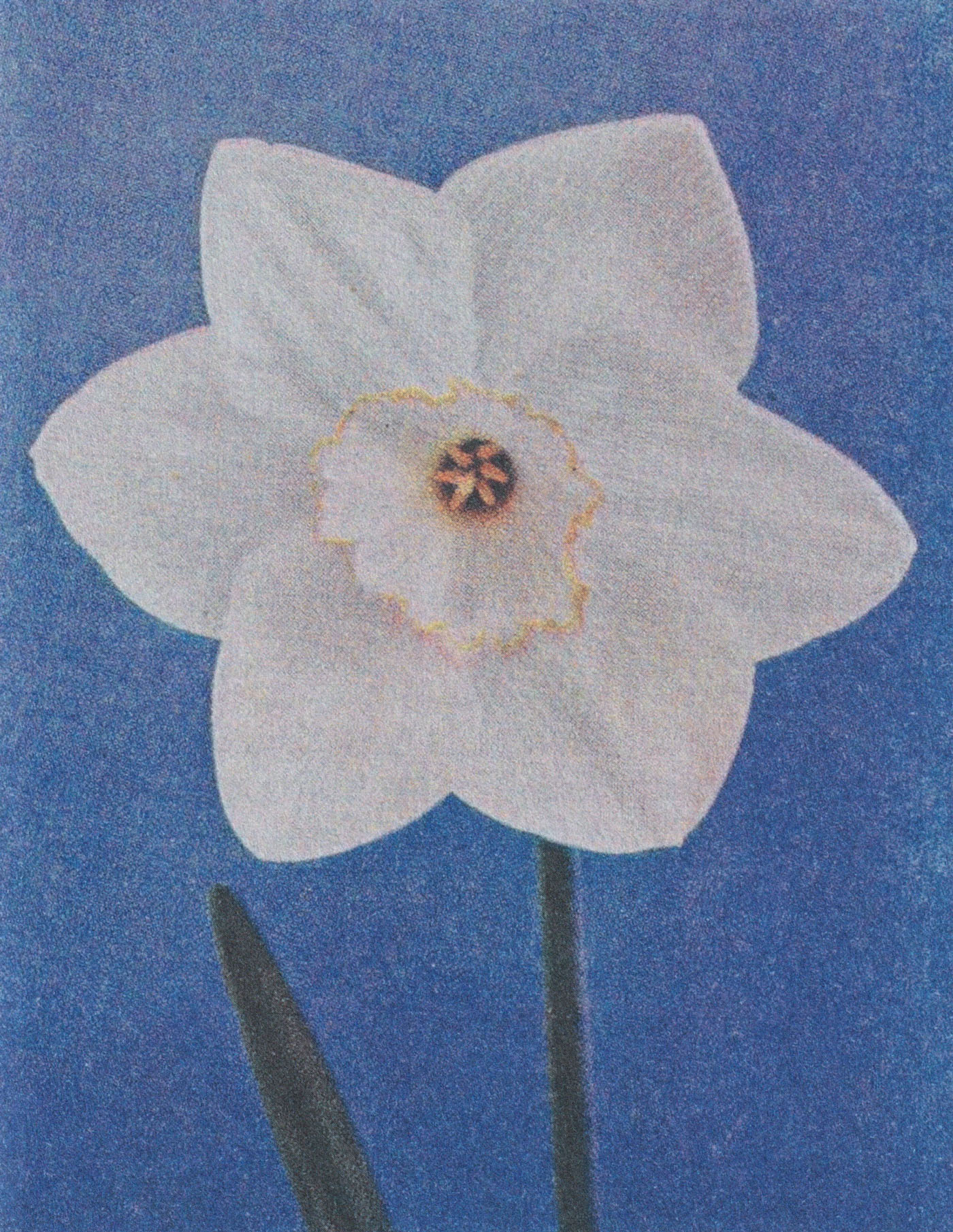
DAFFODILS ARE SO WIDELY grown and used as symbols of springtime that they can seem caricatures of themselves. Yet, here they are, in lawns and woodland edges all over the temperate world, golden trumpeters in fussy collars, heralding the lengthening days. They have ancestral homes, growing wild in European, North African, and East Asian meadows, and they are especially diverse and abundant on the Iberian Peninsula. But, four hundred years of horticulture and colonialism have bred thousands of new varieties and carried them far beyond Europe. To their age-old connections with insect pollinators, daffodils added a new animal relationship, as signifiers of springtime in some human imaginations.
In Atlanta gardens, daffodils are among the very first blooms of the year. They daub sunny pigment over the otherwise muted color palette of early spring in yards and woodland fragments. No indigenous wildflower gives such a bold display. Harbinger-of-spring and liverleaf flowers sprout here in the New Year, but their creamy-purple blooms are tiny. Daffodils are more assertive, demanding attention. Not until Carolina jessamine vines deck themselves in yellow blooms in late spring can any indigenous flower compete for ebullience.
In North America, daffodils were among the plants brought by early European colonists. By the 1700s, vendors offered dozens of varieties for planting in gardens and meadows. This enthusiasm for plants from Europe was fed by nostalgia among settlers for the old seasonal rhythms of homes they had left behind. Individually and through the collective efforts of “acclimatization” societies, Europeans transported bulbs and seeds across the oceans to “recreate” familiar seasons. Even as they tried to remake seasons in colonized land in the botanical image of their former homes, colonists also shipped newfound green wonders back to Europe. Today, some of the oldest and largest trees in Paris and London are American—black locust and California redwood—and American goldenrod blooms all over Europe in the late summer. Botanically, colonialism is a mix of yearning for the old country and a fetish for sending exotica home. In many modern gardens, the seasons are now marked by blooms from many continents. With a global “palette” of seasonal flower rhythms to choose from, designers can create gardens where some plants are always in bloom.
European love of daffodils, now transplanted to other continents, is grounded in medicine as well as aesthetics. The fat bulbs and juicy leaves of daffodils are steeped in poison. Like many soft-tissued wildflowers with no woody defenses, daffodils deploy an impressive chemical arsenal. Over one hundred different alkaloids have been found by scientists in daffodil flesh, and most of these chemicals can sicken animals. As an added precaution, daffodils lace their leaves and bulbs with spiky crystals of oxalate. Bite into daffodil and you get a mouthful of poison and needles. In low doses, though, poisons can be healing. From antiquity, daffodil extracts have treated tumors and nervous system disorders, and one alkaloid extract is used in a modern drug to treat dementia.
Once arrived in the Americas, the daffodil found itself well prepared. A plant that can fend off the abundant and diverse voles and other tunneling rodents of Europe can thrive in American woodlands. Even hungry deer leave the foliage alone. Daffodils’ persistence is evident not only in manicured landscapes, but also in less intensively managed places like woodlands. In eastern North America, haloes of daffodils growing in the middle of the woods reveal the sites of long-decayed homesteads abandoned a century or more ago. Nothing obvious remains except daffodils and perhaps some yucca, with forest regrowing all around. Planted by human hands into cultivated soil, these plants now persist and spread on their own. Botanists call them “naturalized,” but the human desire to see the flowers of our homelands, however misguided and founded on colonialism, is surely also natural, part of our own wild nature. Indeed, the desire reveals that, for all our technologies and mobility, we still have a deep yearning to see and smell the blooms of home.
As is true for so many transcontinental transplants, daffodils are out of synch with local ecological rhythms. Their pigmented horns blare but summon few pollinators. In Atlanta, I see a scant few queen bumblebees, newly emerged from their winter dens, clamber into daffodil blooms. Eurasian honeybees, too, will sometimes ferry daffodil pollen. But daffodils lack the hum of miner and other bees that gather around indigenous blooms like spring beauty flowers and blueberries. Unlike columbines, these newly arrived flowers have yet to co-evolve with local animals and find their place.
As humans moved them around the world, daffodils took on new symbolic roles. The Daffodil Project, based in Atlanta, aims to plant 1.5 million daffodils worldwide, one for every child murdered by Nazis and their collaborators. The yellow, starlike faces of the flowers echo the color and form of the badges that Nazis forced Jews to wear. Now, blooming flowers reclaim the hateful symbol and turn it into an expression of remembrance and hope for the future.
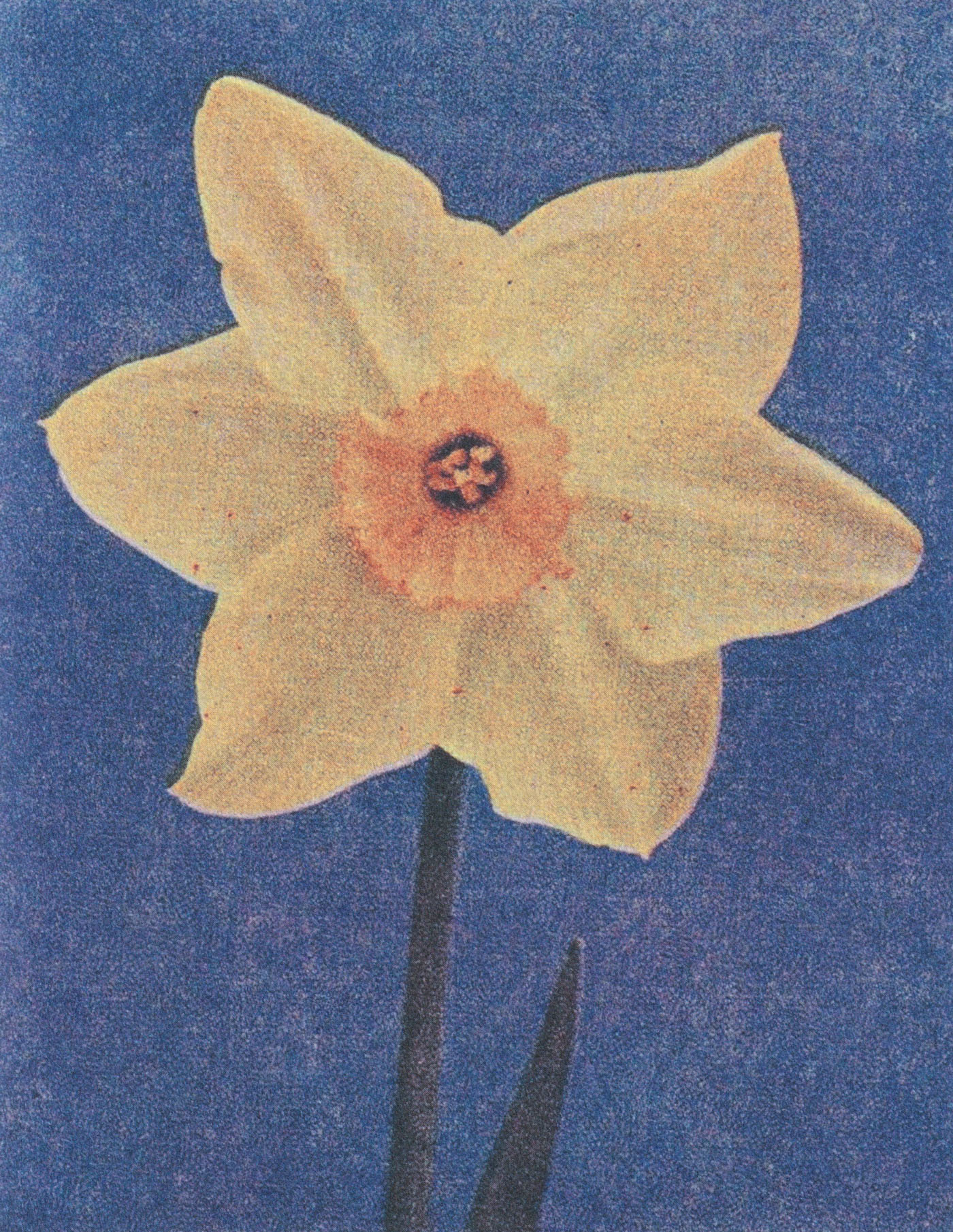
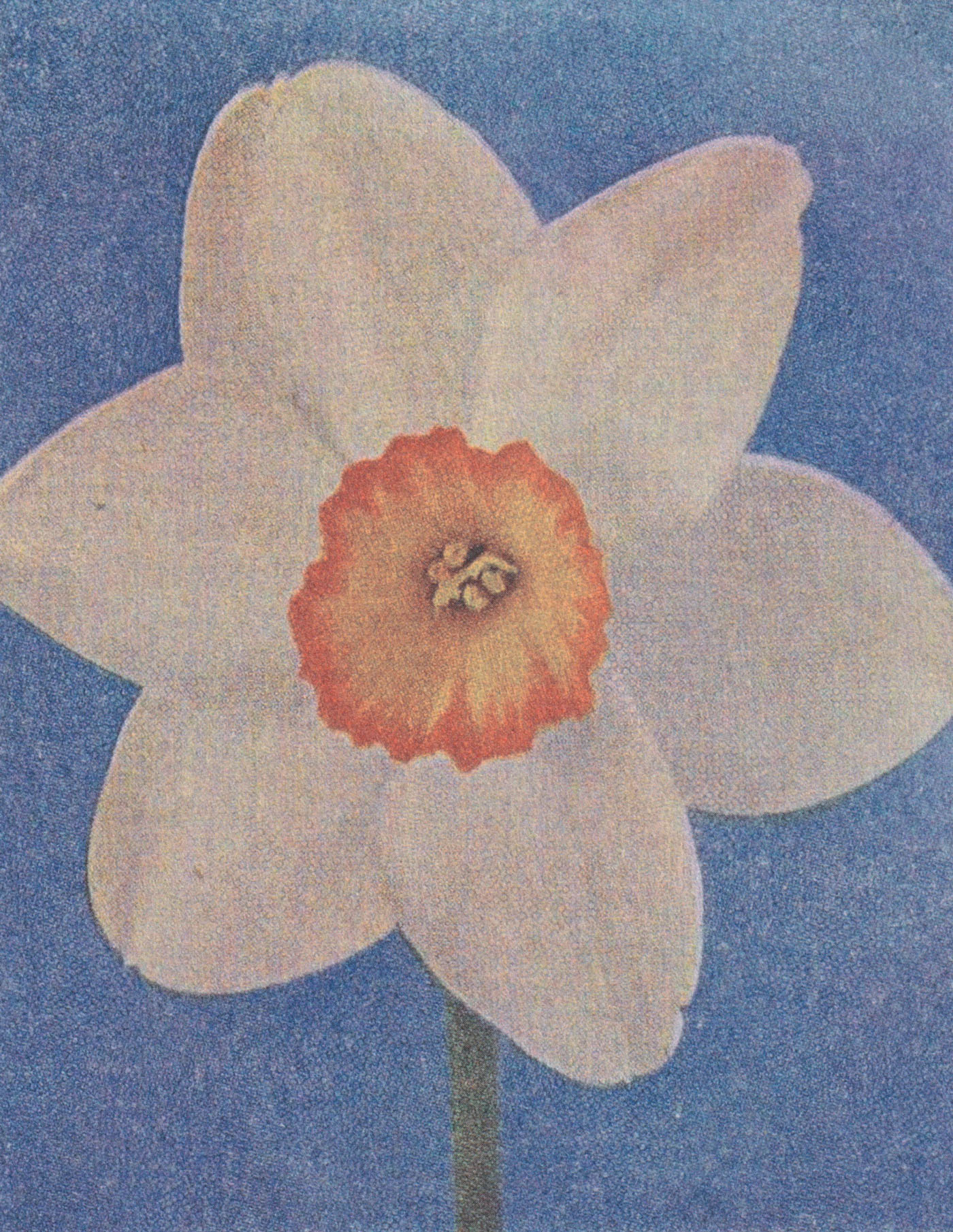
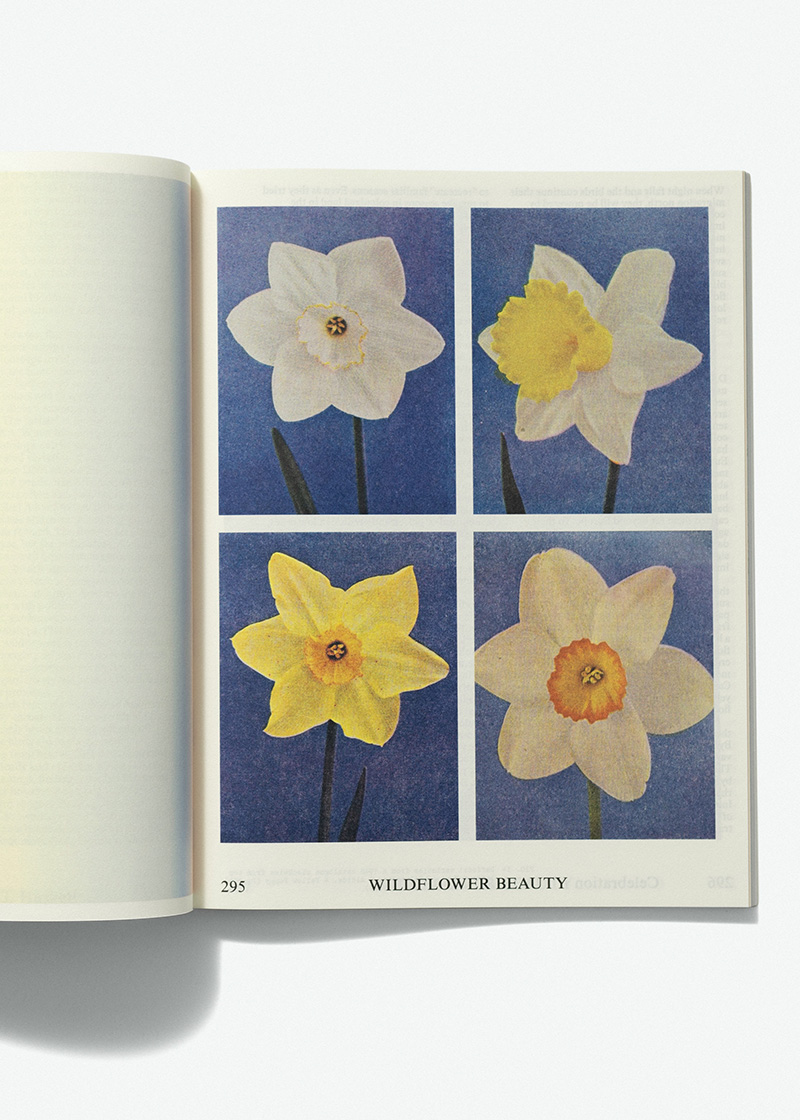
Daffodil varieties from a 1946 catalogue:
Yellow Poppy (above), Alcida, Silvanite, Hera.
In other places, daffodils are intertwined with the colonization of human imagination. Jamaica Kincaid recounts being forced, as a child in school in Antigua, to learn Wordsworth’s I Wandered Lonely as a Cloud, a poem that features a “host of golden daffodils.” She was repulsed by the poem’s disconnection from her home, where daffodils do not grow. The “fluttering and dancing” daffodils represented the “tyrannical order of a people, the British people, in my child’s life.” The curriculum forced British ideas of floral seasons onto the imaginations of children in colonized lands. In the name of canonical literature, daffodils became tools to ignore or denigrate local seasons, plants, and people.
Kincaid later flipped the narrative, refusing to let colonial curricula define for her either springtime or her relationship to poetry. She engaged with daffodils and Wordsworth on her own terms, planting ten thousand daffodil bulbs in her garden in Vermont. “Sometimes,” she told Hayoung E. Ahn in an interview for The Harvard Crimson, “I have friends come over and we have a daffodil party, and we recite Wordsworth and drink champagne.”
As we move flowers around the world, we reshape not only the colors of seasonal blooms, but the very idea of springtime. Inherent in this process is power over human imagination. Who gets to choose which springtime blooms are quintessential? In colonized lands, how do we respond to the cultural and ecological narratives of the seasons that we inherit?
Kincaid’s champagne toast restores her agency, refuses to blame the plants or Wordsworth, yet grows from a full acknowledgment that colonial literature and horticulture can unroot us from home. As was true in Antigua, daffodils never grew in Vermont until immigrants imported their bulbs. Her work also, I think, offers questions and invitations. How do we celebrate the cycles of the seasons when our homes and cultures are complex and often troubled weaves of immigrant and indigenous? How do seasonal blooms orient us toward or away from home? What stories of seasonality and floral belonging are we offering to others, especially young people seeking their way? A meadow of questions blooms every spring.
When I ask my North American students to name a local spring wildflower, most tell me daffodil. In the Anthropocene, it’s not just the seasons that are changing, but what we imagine the seasons to be. To notice and celebrate flowers, and to seek out their stories, to toast them, is to reorient ourselves to the seasons in all their beauty and brokenness.
Spring Beauty
Claytonia umbellata / Thomas Stoughton
Claytonia virginica / Helen Lowe Metzman
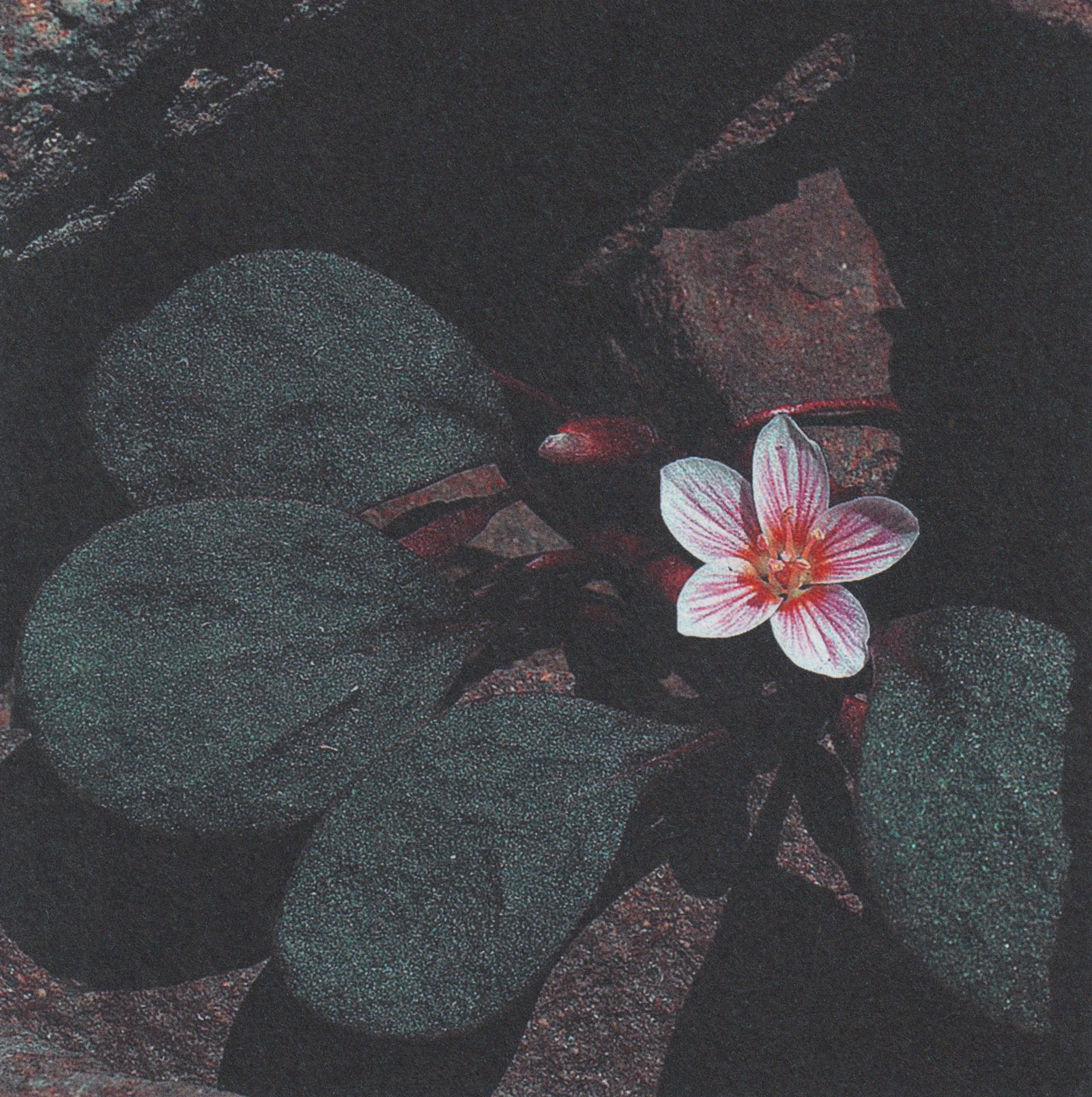
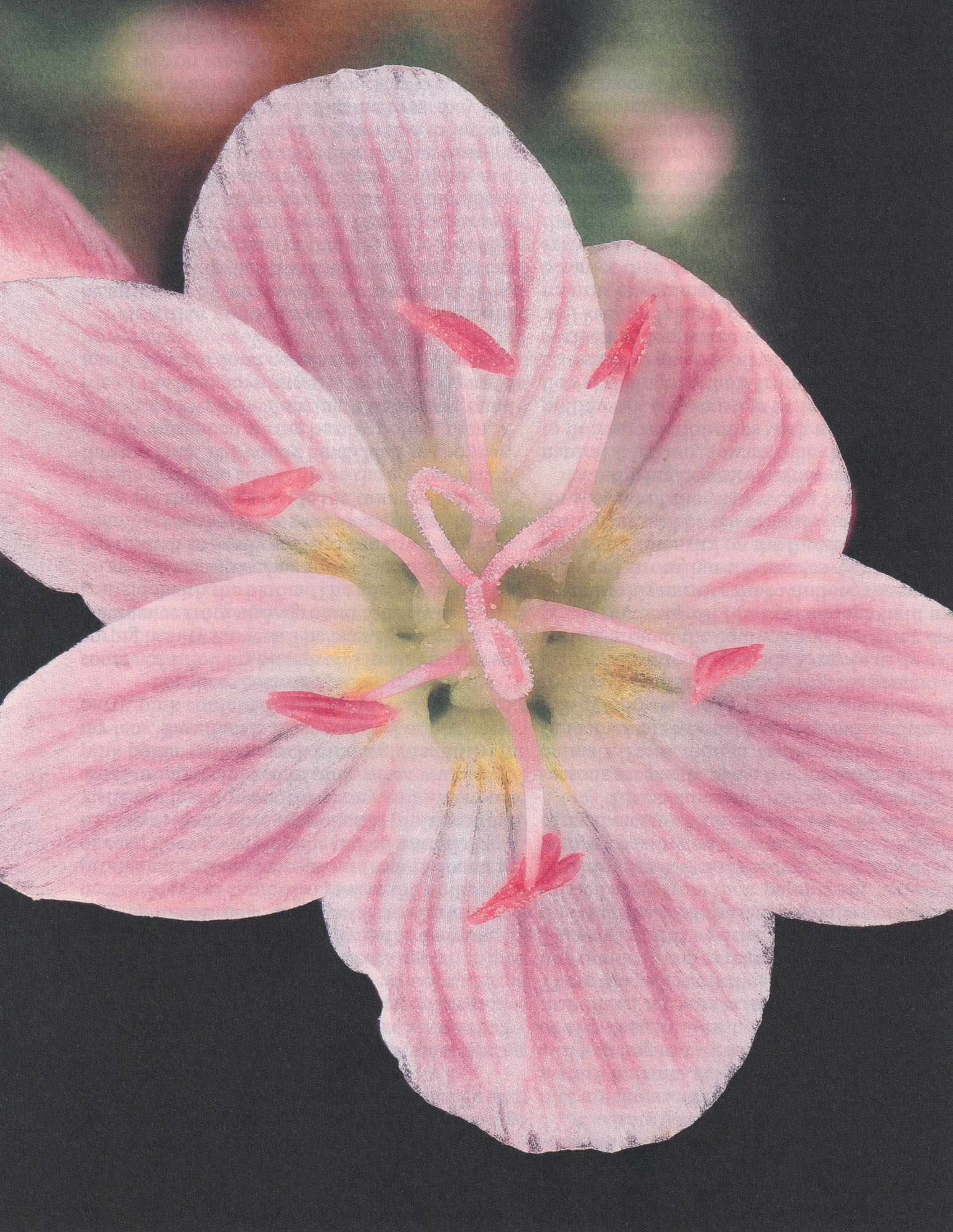
FROM A DISTANCE, the flowers look like the aftermath of a late spring snow squall, thousands of big snowflakes strewn across the leaf litter of the forest. Seen close up, each bloom is a porcelain teacup glazed with pink piping. These are the flowers of Claytonia caroliniana, a spring wildflower so extravagantly gorgeous that its common name is spring beauty. The flowers are not just pretty, but generous. They are fonts of nectar at a time when many other wildflowers in the forests of eastern North America—liverleaf, rue anemone, bloodroot—offer only meager pollen and no sugar. On a warm day, pollinators swarm spring beauty flowers.
A springtime ritual of mine is to lie down next to a patch of spring beauty flowers and peer at them through my hand lens. The first thing I notice is the white gloss of the petals, almost silvery when seen close up. This polished ivory is striped with pink from the top to the bottom of each petal. Any insect winging past sees radiating pink lines. Bees and other pollinators have good memories, recalling for weeks the appearance and aromas of rewarding flowers, so they know what nectar riches lie at the confluence of these guidelines.
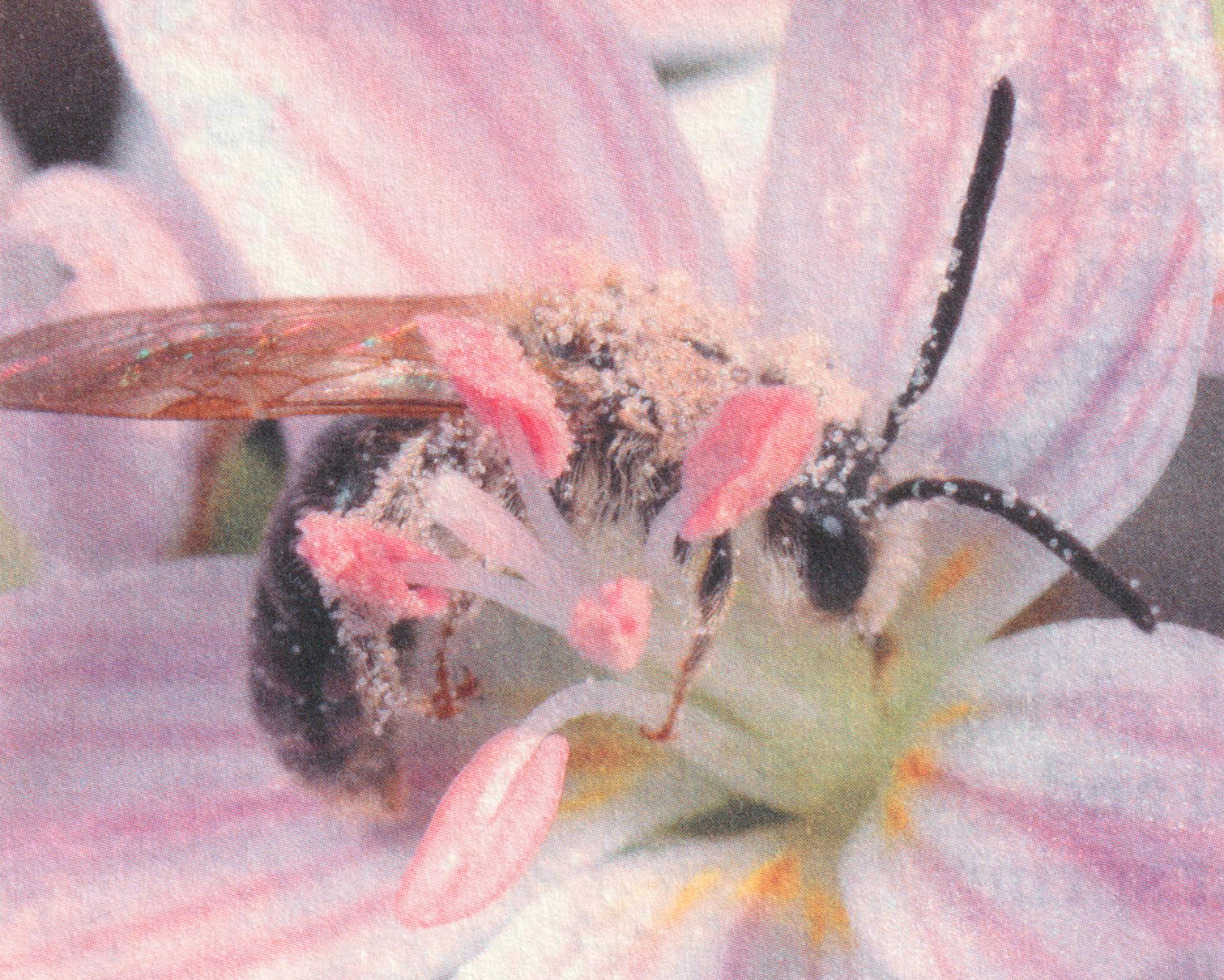
As I watch, most of the visitors to spring beauty flowers are small black bees with a fuzz of white hair on their faces, thorax, and legs. These are all members of a single species, the spring beauty miner bee. The bees move frenetically but systematically in the flowers, circling inside the bowl of petals to sup at nectar. Many of them also paw at the pollen-producing anthers that sprout from the center of each flower, swiping the pollen onto their hind legs. Spring beauty pollen is pink, so after visiting a few flowers, the ebony and silver bees are thoroughly dusted in pink, often with large pink pollen balls on each hind leg. Magnified in my lens, the effect is like a carnival or birthday party, pink confetti feting the arrival of spring.
For these bees, the pollen party is the source of life. This bee species feeds entirely on spring beauty flowers. The bees time their emergence from underground tunnels to coincide with the bloom. The adult bees feast on spring beauty nectar and pollen. Female bees dig tunnels in sandy soil and provision egg chambers with nectar-sweetened pollen balls. They lay their eggs inside the tunnels, then female and male adults die as the spring beauty flowers fade. The young hatch later in the year, eat the entombed spring beauty pollen, then pupate and wait until spring. The aboveground life of the bees amounts to a month each year, at most. All their food comes from spring beauty flowers.
Claytonia virginica / Charley Eiseman
For all our technologies and mobility, we still have a deep yearning to see and smell the blooms of home.
Other pollinators also feast at the spring beauties but have more diverse tastes. Bee flies, bee-mimicking flies that look like flying feather dusters, in particular, love to dip their pole-like proboscises into the flowers. They, too, get dusted in pink, although their long, inflexible proboscis means that the dusting is slight compared to the bees. Bee flies feed on many other flowers, so their fate is not tied to just a single plant species. But, like the bees, they have a narrow window to complete their lifecycles. They rely on the springtime burst of wildflowers to get nectar and pollen to fuel their mating and egg-laying. Female bee flies lay their eggs in the nests of other pollinators, spring-flying bees and wasps. Once hatched, the young flies are horrible guests and eat the hosts’ young. This parasitic breeding method only works if the bee flies are synchronized with the seasonal cycles of their victims.
Ants take over when the bees and bee flies are done and the spring beauty flowers mature to fruits. A tiny fatty attachment on every spring beauty seed attracts the attentions of ever-hungry ants. Lofting the seed in their mandibles, the ants carry it back to their nest. There, they slice off the juicy lure and carry the unwounded seed to their colony’s compost heap. That soft duff is a perfect place to germinate. In this way, the seeds of many wildflowers are carried away from their parents and are sown in nutritious soil. Other seeds are eaten by deer who, by passing seeds intact in their droppings, carry them much farther than do the ants.
Like columbines, the spring beauty’s seasons are partly made from relationships with animals. Trees, though, lay down the fundamental seasonal beat. For most of the year, it is gloomy on the forest floor. As soon as the tree leaves unfurl in late spring, the ground below falls into deep shade. Only in early spring, around the equinox and just after, do the plants on the forest floor get enough light to feast. In this narrow time window, the sun is high and strong but the tree leaves are not yet out. Light intensity on the forest floor in springtime can be ten or more times what it is for the rest of the year.
Spring beauties have learned, through natural selection, how to time their emergence to fit their relationships with trees and pollinators. In just a few springtime weeks, they flower then grow their fruit and seeds. They also stuff as much food as they can into corms, swollen underground stems. These provisions will keep the plants going through the long lean months of summer, autumn, and winter. Spring beauties then drop their leaves as summer arrives, waiting underground for the arrival of the next year’s spring. Other species in the eastern forests do the same. A few, like trillium and liverleaf, keep their leaves through the summer, feeding on the occasional burst of sunshine when a sunfleck hits them, but others, like harbinger-of-spring and rue anemone, are aboveground for just a few weeks. We call them “ephemeral wildflowers,” although their underground stems and roots may be as old as the trees around them.
These seasonal rhythms are now getting desynchronized by climate chaos. Trees are leafing out weeks earlier than they did a century ago, especially beech and red maple trees. The trend toward earlier tree leaf-out dates has accelerated in the last thirty years. These changes partly close the precious window of sunlight for spring wildflowers. Because shade arrives early, the wildflowers get hungrier, meaning that they grow more slowly, invest less in seeds, and struggle to store up food for the rest of the year. At its most extreme, earlier tree shade can nearly halve light-feeding opportunities for wildflowers on the forest floor.
Wildflowers are sliding their emergence dates earlier, too, but not as fast as the trees. Snow cover and cold constrain them. Only when the soil warms enough can the wildflowers grow. The divergence between trees and spring wildflowers seems to be expanding, but only in some regions. In the southeast of the United States, trees are surging into springtime and wildflowers are lagging. In the colder north, the trees are also edging earlier, but at half the rate of warmer regions. In Asia and Europe, spring wildflowers are keeping pace and even outstripping trees in their shift to earlier emergence. If these trends continue, the season of woodland wildflowers will shrink in parts of North America but expand in Asia and Europe.
Claytonia caroliniana / Byron Meade
In many areas, bees and other pollinators are, so far, keeping up with the shifting seasonality of spring wildflowers. Because most of these pollinators overwinter in the soil, they experience similar temperatures as wildflower roots and buried buds. For both insects and wildflowers, soil temperature is a major trigger for spring emergence, whereas for trees air temperature, especially daytime temperature, is more important. In most years, pollinators and wildflowers stay in synchrony. But, very early warm spells or early snowmelt can cause flowers to open long before pollinators emerge, leaving bees and other insects with scant food for the next generation. In the future, mismatch between the timing of pollinator and wildflower emergence may become a more severe problem.
These interlocking rhythms of wildflowers, trees, and insects are mediated by genetic pacemakers in each species. Evolution has scrawled wisdom about the best time to emerge into the script of genes that shape the physiology of cells. Fortunately, genes evolve. New synchronies can develop. At the end of the last Ice Age, for example, most of the trees and wildflowers that now live all over eastern North America lived piled together in refugia in the Deep South, away from glaciers and chilly weather. In the last ten thousand years, they have spread across the continent, interconnecting their seasonalities as they move.
But genetic nimbleness is not guaranteed. Evolution works best when populations are large and freely mixing, giving natural selection plenty of raw material and scope for experimentation. Today, most spring wildflowers and their pollinators live in disconnected small populations, assailed by habitat loss. Even when forests persist or have regrown, their soil is often impoverished, as are their wildflower and pollinator populations. Introduced species get in the way of adaptability as plants from other continents smother the growth of indigenous wildflower species and fire ants eat seeds without dispersing them. Herbicides and pesticides are so widely used that they come down in the rain and blow in dust from fields, weakening plants and insects. In imposing these changes, we suppress the creative potential of the living Earth, making it harder for the inherent flexibility of evolution to express itself.
Yet, the carnival goes on. Not just in woodlands, but even in wilder, unsprayed lawns, spring beauties and their pollinators continue the celebratory feast of sugars and sex. Witnessing this springtime exuberance teaches us to give space to others—to use fewer poisons, to find better ways of living in relation to forests and other habitats, to burn less fossil fuel—so that the seasonal rhythms can not only continue but find their new pulses.
I lie down and peer through my hand lens not just to see a colorful spring party, but to taste the nectar of reality. Pink-dusted bees ply generous wildflowers. Here is part of the antidote to algorithm-shaped lies. Celebrating wildflowers is not an anesthetic—attentiveness reveals loss as well as beauty—but a grounding in the world as it is. Because flowers so entrance our senses, they offer memorable lessons, reorienting us back to the living Earth.
What will we tell future generations about our time? Imagine telling our descendants, students, and neighbors about our experiences of wildflowers. How the blooms opened. How we felt and acted as we witnessed the bloom. What the bees did. This will be worth knowing. To have something true to tell the future, let’s pay attention to flowers today.
Reflecting a world where snow no longer arrives, annual migrations fall out of time, yet first blossoms still burst, Seasons, our sixth print edition, moves through three themes: requiem, invitation, and celebration—each a contemplation on the paradoxical ways the seasons now beckon us into intimate relationship.
Sign up to receive our newsletter each Sunday morning! We are an ad and subscription-free magazine committed to sharing stories crafted with care. Join us as we explore the threads connecting ecology, culture, and spirituality.