Josh Jackson is a writer, photographer, and leading voice for overlooked public lands in the American west. Through his Forgotten Lands Project, he offers immersive storytelling, keynote talks, and visual narratives to inspire appreciation and engagement with our least understood, least protected, and largely unknown landscapes. Josh’s work has appeared in The Guardian, The Los Angeles Times, High Country News, Adventure Journal, Modern Huntsman, Backcountry Journal, and numerous podcasts exploring nature, science, and conservation. His first book, The Enduring Wild: A Journey into California’s Public Lands, winner of the Golden Poppy Award, is both a love letter to these landscapes and a meditation on belonging and reciprocity.
Jeremy Seifert is an award-winning film director, cinematographer, and editor whose documentaries have premiered at Sundance, Berlinale, Hot Docs, Tribeca, and AFI DOCS. His feature films include The Devil We Know, co-directed with Stephanie Soechtig; and the award-winning documentaries GMO OMG and DIVE! Living Off America’s Waste. His short documentary for Emergence, The Church Forests of Ethiopia, premiered on New York Times Op-Docs. Jeremy is a frequent contributor to Emergence Magazine.
Josh Jackson traces the Indigenous memories of seasonal abundance and colonial massacre carried by a threatened grove of Rocky Mountain juniper trees in Nevada’s Spring Valley.
They lead me first to the water. Before the grove, before the stories, a spring.
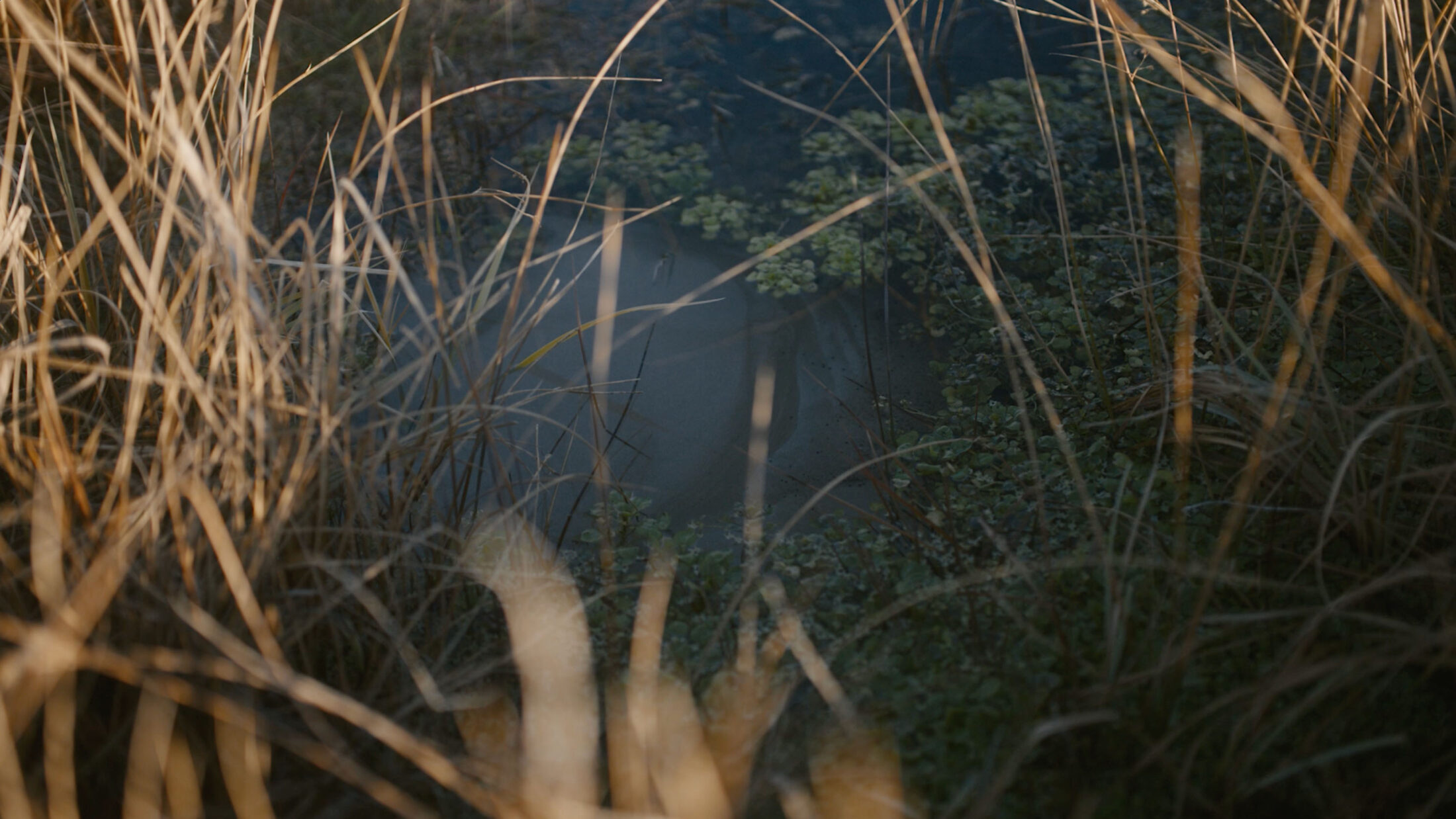
I crouch beside it. The shallow pool is unassuming, only a few feet across and bordered by bulrushes and grasses. The water is clear enough to reveal a bug gliding among the roots of watercress. On the sandy bottom, a near-perfect circle slowly comes into view: the spring vent. Groundwater rises into the pool as pulses gather and spread, sending out shallow ripples. I trail my fingers through the cold water until I feel its gentle vibration.
As fresh water laps over the spring’s edge, another pulse is already rising beneath the sand. The overflow slips into narrow channels that thread through the wetland before disappearing back into the valley floor. Yet the pool never seems to deepen or empty. It simply renews itself, over and over. Watching each pulse of water rise is like witnessing the earth exhale.
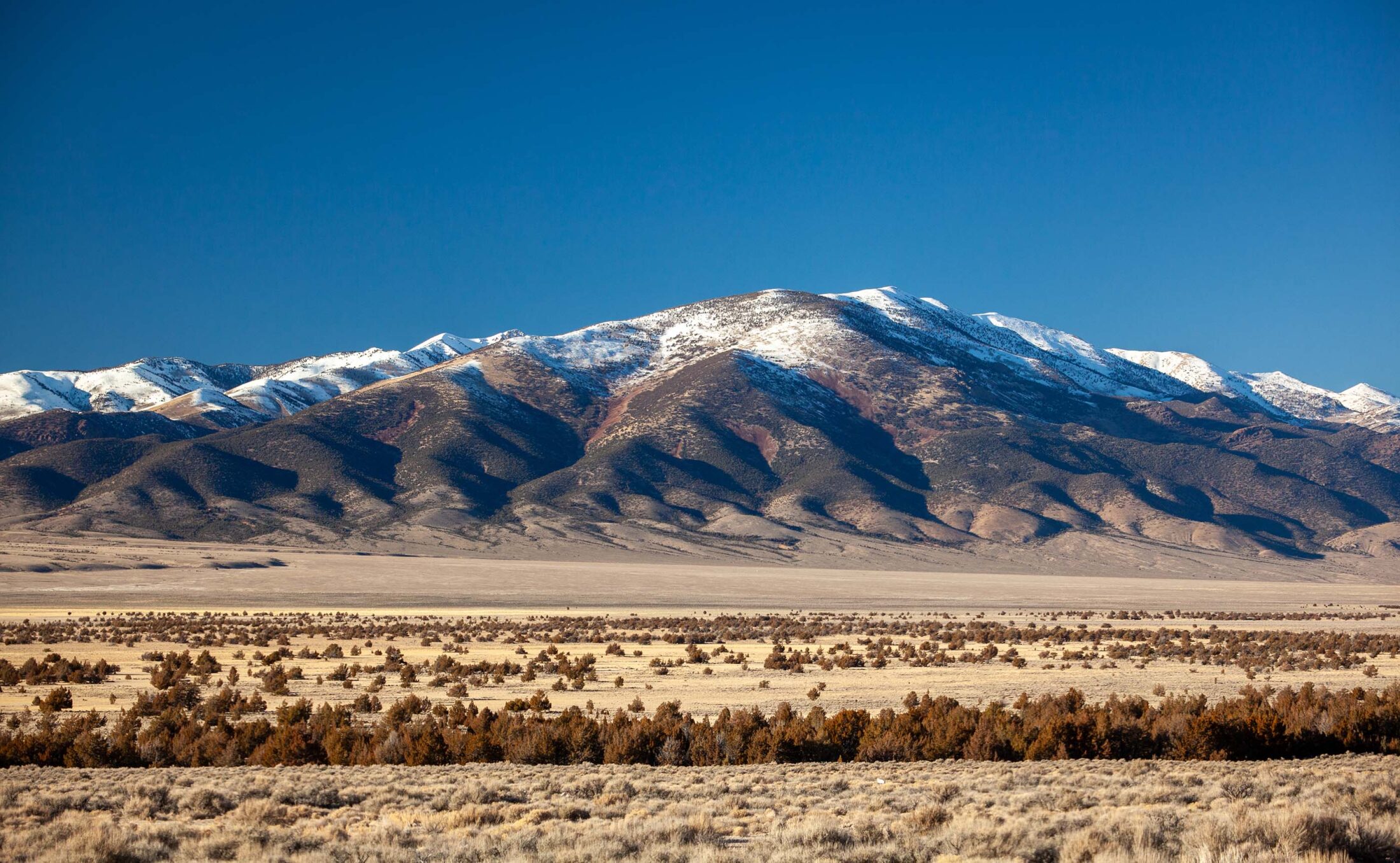
There are more than one hundred of these seeps scattered across Spring Valley. The valley stretches ninety-six miles from north to south and ten miles from east to west, sandwiched between the Snake Range and the Schell Creek Range in the Great Basin Desert in far eastern Nevada. The springs are fed partly by snowmelt and rain falling in the surrounding mountains and partly by older groundwater moving slowly through the region’s deep carbonate aquifer system. An underlying layer of clay traps some of this water close to the surface, forming a shallow perched water table. Most groundwater remains hidden, but where it rises, the springs create ribbons of wetland in an otherwise arid landscape, a vital refuge that has drawn migratory birds, mammals, and people here for thousands of years.
These springs are the origin of everything that follows.
I’m here with Delaine Spilsbury and her son, Rick, both elders of the Ely Shoshone Tribe. Their people, the Newe, call this place Bahsahwahbee, a name that translates to “Sacred Water Valley.”
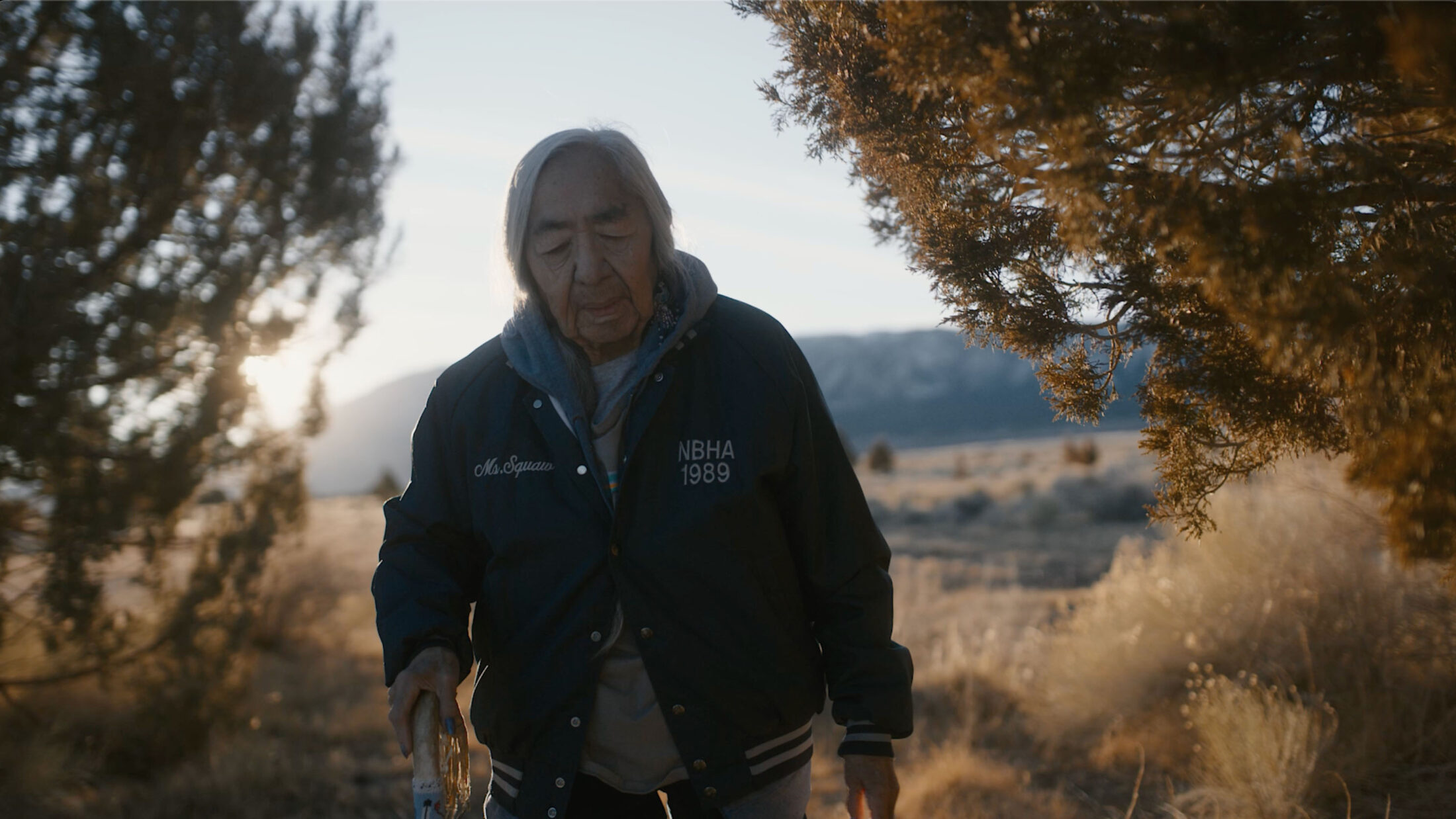
We move around the springs without hurry, bundled against the January cold. Delaine, eighty-eight, wears a gray hooded sweatshirt beneath her jacket, its hood pulled over her long gray hair. Emblazoned across the back of the jacket are the words “Nevada Bowhunter Jamboree Champion”; on the front, “Ms. Squaw.” Her long, ornamental earrings shine in the afternoon sun. She leans on her cane as we walk, then seems to forget about it, using it to point out old trees or punctuate stories about the valley.
She calls the water rising from the springs the “milk of Mother Earth,” a conduit for the spiritual and physical connection between the Newe and the land. For Newe communities, Bahsahwahbee is a temple, a sanctuary without walls, with springs at its heart and a rare grove of sacred trees rising from the basin floor.
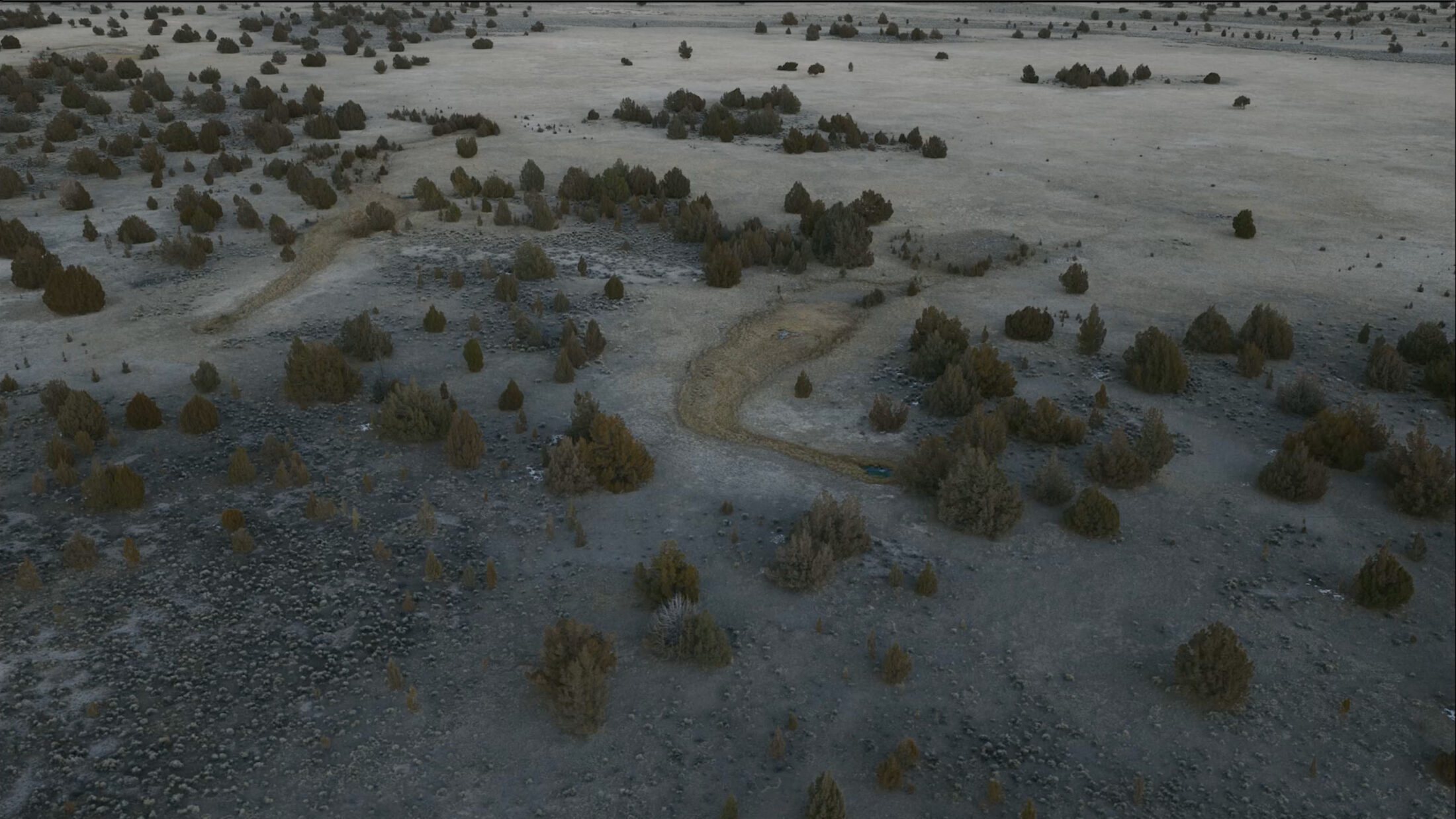
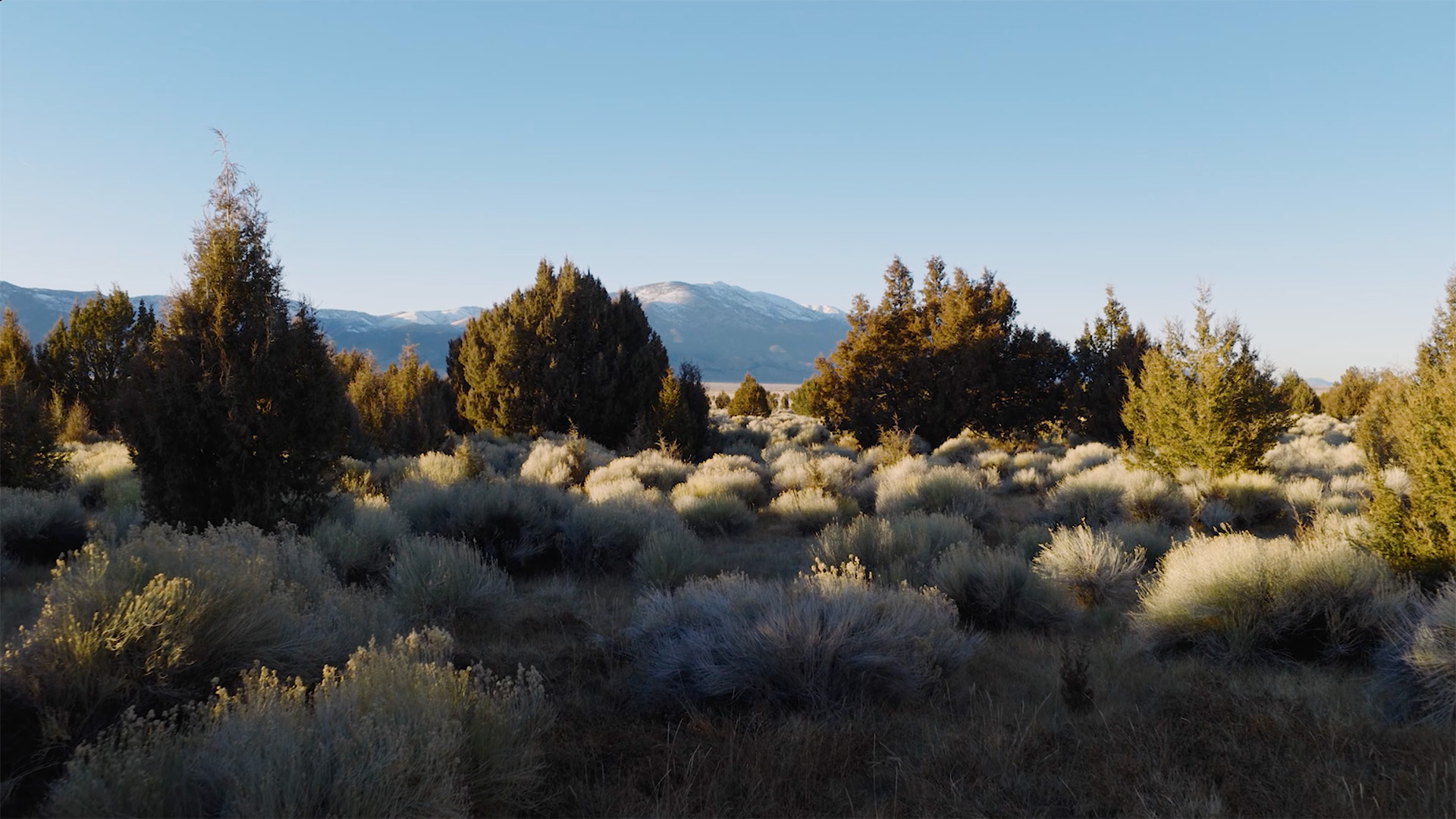
Those trees are Rocky Mountain junipers, known locally as swamp cedars. In Nevada, they typically grow thousands of feet higher on mountain slopes among pines and firs, yet here they have found an entirely different home at elevations as low as 5,640 feet. There are two small groves left in the valley. One is here at Bahsahwahbee. The other lies twelve miles to the south.
Biologists believe the unusual groves are remnants of the Pleistocene Epoch, when the species was driven down into the valley during glacial events. As the climate warmed during the Holocene, Rocky Mountain junipers gradually retreated upslope. Across nearly all of Spring Valley, trees gave way to shrubs characteristic of the Basin and Range: greasewood, shadscale, saltbush, rabbitbrush, and big sagebrush. The two groves remain conspicuously out of place and are so genetically isolated that one biologist described them as “well on their way to becoming a new species.” Nowhere else on Earth does the Rocky Mountain juniper exist under this combination of elevation, salinity, and aridity. Spring Valley receives less than ten inches of yearly precipitation and annual temperature extremes can span one hundred degrees—dropping below zero in winter and topping ninety in summer.
The survival of these trees in these conditions feels almost miraculous. The springs have transformed this patch of the valley into a refugium, where these holdouts from the Pleistocene have endured even as the basin grew drier around them.
From the spring, Rick leads us into the grove, weaving between lingering patches of snow and dense stands of rabbitbrush, whose bright yellow blooms of autumn have given way to pale, fluffy seed clusters. Some trees stand alone, rising up to forty feet, their rounded crowns poised like sentinels. Elsewhere, they gather in dense copses, the branches of young saplings and ancient elders commingling until it becomes difficult to tell where one tree ends and another begins. The only color to break the junipers’ dark green foliage comes from the female trees’ abundant glaucous-blue seed cones, which perfectly resemble tiny blueberries.
Beside a lone swamp cedar, Delaine draws a branch heavy with cones toward her face. She closes her eyes and breathes deeply. I follow her example, twisting a spray of foliage between my fingers until resin clings to my skin. It smells like gin.
Earlier, Delaine told me about what her ancestors had experienced here. “It was a very wealthy place. There was so much water and so much food available. The fish were at their most. The animals were fat, ready to save for the winter.”
That wealth drew Newe communities back to Bahsahwahbee year after year, century after century, for the autumn harvest. The gathering lasted several weeks, filling the valley with people who had traveled from across what is now eastern Nevada and western Utah. Hunters pursued deer, elk, waterfowl, and sage grouse, while communal drives brought families together to hunt pronghorn and rabbits. Others caught fish and gathered pine nuts and edible plants. Among the swamp cedars, communities tended fires, held traditional Round Dances, made offerings, and shared stories that carried knowledge of the land from one generation to the next.
Delaine has been coming to Bahsahwahbee since childhood, when her family would often stop to visit the trees while traveling between Ely and Baker to see relatives. The children were told to remain quiet and respectful, though no one explained why. She did not learn what had happened here until her late twenties, when she found herself alone among the trees while bow hunting for pronghorn and felt something she could not explain: neither frightening nor joyful, but solemn. When she described the feeling to her father, he told her the story of the grief held within this sacred grove.
Bahsahwahbee is a temple, a sanctuary without walls, with springs at its heart and a rare grove of sacred trees rising from the basin floor.
Photos by Josh Jackson
A pot of elk chili was already gurgling softly on the stove, steam curling upward like campfire smoke, when I met Delaine and Rick the night before at their log cabin in the Duck Creek Basin outside Ely, Nevada. Cornbread cooled on the counter, and the cabin smelled of onions and toasted butter—the aroma of a kitchen that had been working all afternoon. We exchanged handshakes and settled into rocking chairs beside the wood stove while dinner finished cooking. Wine and champagne were poured, and we raised our glasses to clear skies and crisp winter air. Above us, a mounted bull elk Rick had taken with a bow watched over the room—the same animal simmering on the stove.
Beyond the wood-framed windows rose the Schell Creek Range; on the other side lay Bahsahwahbee. Delaine, a retired engineer, had bought the property in the 1990s, while she was still living in Las Vegas. She moved up in 2002, living in a trailer while the cabin she had designed was being built. Rick joined her in 2005.
“I bought it because it was just covered with pine trees. I could walk out my door and pick pine nuts,” she told me with a smile. “I can’t climb in the trees anymore,” she added later. “So if somebody is kind enough to give me some nuts, I’ll certainly imbibe.… You can’t put them down until they’re gone.”
“It feels kind of like our ancestors must have felt living out here,” added Rick. “That’s what we really wanted. And we got some of that.”
For Rick, who had always thought of himself as a city kid, the move reoriented him to a way of life familiar from childhood.
“We picked pine nuts every year. We went out hunting and fishing, and we spent a lot of time out in the wild. That was something a lot of the people I grew up with didn’t understand. They ate baloney sandwiches and I ate venison.”
On the walls, elk, mule deer, and pronghorn mounts shared space with family photographs and hand-carved bows; baskets and pottery rested around the room, and well-worn blankets lay draped over rocking chairs. Nothing felt ornamental. Each object seemed to belong, as though the room were an extension of the country beyond the windows.
Over the next several days, we walked among the swamp cedars, shared meals around their table, and talked for hours over morning coffee and evening wine. No matter where our conversations took us, we always found our way back to Bahsahwahbee.
Newe have been living in the valley for a very long time. Their traditional homelands extended across the hydrographic Great Basin, from Death Valley in the south through Nevada, western Utah, and into southern Idaho. Over ten thousand years of Indigenous presence, local bands developed ways of living attuned to the seasons and the resources here, while adapting to changes in the environment. These changes unfolded gradually over generations.
Colonial disruption did not.
The organized exploitation of Newe resources began in 1828, when Peter Skene Ogden and his party of trappers entered Newe territory along Nevada’s Humboldt River. Ogden, chief trader for the powerful London-based Hudson’s Bay Company, had been directed to carry out a scorched-earth campaign against beaver and other fur-bearing animals along the river and its many tributaries. In less than a year, his party killed four thousand beavers, inaugurating the depletion of Newe resources.
The expeditions into the region that followed, led by John C. Frémont, helped open Newe homelands to mass migration. Commissioned by the United States in the 1840s, Frémont mapped new routes across the West and published accounts of the lands and people he encountered along the way, depicting the Newe as “among human beings, the nearest approach to mere animal creation.” His widely circulated reports, which recast Indigenous resistance as savagery and removal as progress, drew settlers from Europe and the eastern United States, reenforcing a vision of the West as a landscape waiting to be claimed and the people already living there as obstacles to possessing it. At the heart of this drive towards possession was a failure to recognize what was already present: homelands sustained by generations of relationship, knowledge, and reciprocity.
The discovery of gold in California accelerated migration, sending hundreds of thousands of emigrants streaming through Newe territory. And with them came livestock. In 1852, an estimated 1.5 million head of cattle crossed through the region. As wagons diverged from the main routes in search of gold, silver, and well-watered land to settle and farm, trails multiplied through the valleys like tributaries, drawing emigrants deeper into Newe lands.
By 1858, the consequences were unmistakable. Newe Chief Washakie described to Captain F. W. Lander what emigrant incursions had done to his people.
“Before the emigrants passed through his country, buffalo, elk, and antelope could be seen on all the hills; now, when he looked for game, he saw only wagons with white tops and men riding upon their horses.”
As emigrant incursions continued, confrontations between the Newe and emigrants became increasingly violent. The United States responded in 1858 by establishing military posts throughout Newe territory and stationing soldiers to protect emigrants moving west.
The breaking point came in the summer of 1859, when the Army sent Captain James H. Simpson to map a shorter route to northern California. The trail Simpson marked ran directly through Bahsahwahbee. Emigrants soon followed the shortcut, funneling through the sacred grove that Newe bands returned to for harvest and ceremony. Their temple had become a thoroughfare.
Just a few months later, after scouts captured two Newe men and learned from them the location of a large Newe encampment north of the swamp cedars, four companies of soldiers surrounded it at night and attacked at daybreak. Watching from a nearby mountain, the soldiers’ interpreter and guide, Elijah Nicholas Wilson, later recalled: “This was the worst battle and the last one that I ever saw. It lasted about two hours, and during that short period of time, every Indian, squaw, and papoose, and every dog was killed.” An estimated 525 to 700 Newe were murdered, making it one of the largest known massacres of Indigenous people carried out by the United States government.
Within a few years, the poverty that Chief Washakie had described deepened into starvation. Federal Indian agent Warren Wasson reported in 1861 that the Newe were surviving on barley washed from manure at overland stables, “after the manner of separating gold from the earth with a pan.” Wasson’s analogy reveals the brutal irony: While settlers washed earth through a pan in search of gold and silver, the Newe were washing manure through a pan in search of food. The contrast exposed how this new colonial order, fueled by what could be extracted from the land, was simultaneously destroying the relationships that had allowed people to exist on it for millennia.
Simpson’s shortcut soon became infrastructure for permanent occupation. By 1862, the route had become a corridor for the Pony Express, the Overland Stage, and the transcontinental telegraph, while the Homestead Act offered each settler family legal claim to 160 acres of land the government had unilaterally declared public.
Dispossession took hold in Spring Valley: “When the emigrants came to this area, they moved in on the springs and the places that were livable,” Rick said. “And when that all got fenced off, our people were left in a very hard way. There was no reservation or anywhere they could go. They were chased off everywhere they went.”
The military campaign against the Newe intensified in 1863. On May 3 and 4, Captain Samuel P. Smith’s company killed twenty-nine Newe at Duck Creek, in the basin where Delaine and Rick now live. Two days later, the soldiers crossed the Schell Creek Range. At sunrise, they attacked Newe people gathered at Bahsahwahbee for their annual spring Circle Dance. An 1881 history reported that the swampy ground halted the cavalry’s charge, allowing many Newe to escape, but twenty-three were killed in this second massacre.
That October, five months after the attack at Bahsahwahbee, tribal chiefs met with United States officials to sign the Treaty of Ruby Valley. It ceded no land, yet authorized emigrant roads, military posts, railroads, mining, ranching, and settlement across Newe territory. While the treaty acknowledged the destruction of game, it called the resulting devastation an “inconvenience.” The treaty also authorized the president to decide when the Newe should “abandon the roaming life” and be removed to reservations. In return for these rights, the government promised five thousand dollars a year for twenty years. The treaty called this “full compensation.”
Rick described it more plainly: “It was basically a recipe for exploitation.” Western Shoshone leaders signed, he told me, because the massacres had left them “desperate to not be killed anymore.”
The history of the final massacre at Bahsahwahbee in 1897 lives in memories passed down through Newe families, including Delaine and Rick’s family.
That fall, families gathered among the swamp cedars for the annual harvest. Most of the men were away hunting when a band of vigilantes attacked the encampment and killed almost everyone who remained. Only two girls, both about ten years old, survived: Annie Jack and Mamie. The girls had wandered away from the encampment before the attack and hid when they heard the violence begin. When they returned, they found their families and community slain. Mamie fled south through Spring Valley and eventually reached the Swallow Ranch, where she began a new life. She would later become known as Laurene Mamie Swallow.
For Delaine and Rick, this history is not ancestral in the abstract. Laurene Mamie Swallow was Delaine’s grandmother and Rick’s great-grandmother. As Delaine tells me the story, she holds up an oval-framed portrait of her grandmother as a teenager. Mamie wears a long, ornate dress, a white long-sleeved blouse, and a bonnet framing her face.
“Her family was all killed off and left her an orphan,” Rick said, his voice growing unsteady. “It’s sad to think of because, being part white and part Indian, basically what happened is that my white ancestors treated my red ancestors like vermin to be chased off and killed.”
He fell silent, tears running down his face.
In that silence, I thought of what Rick had told me about the trees.
“Part of the reason they’re so special to us is because the remains of our ancestors who were massacred there fed these trees. Literally what used to be our ancestors are in those trees, breathing carbon dioxide and exhaling oxygen and completing the cycle of life.”
For many Newe communities across the basin, the grove holds both memory and presence: Its oldest trees, some over three hundred years old, are living witnesses to the ceremonies held and the massacres carried out beneath their branches; the younger trees carry the ancestors who died there.
“Any kind of destruction to the tree is a destruction to our spirits and our history.”
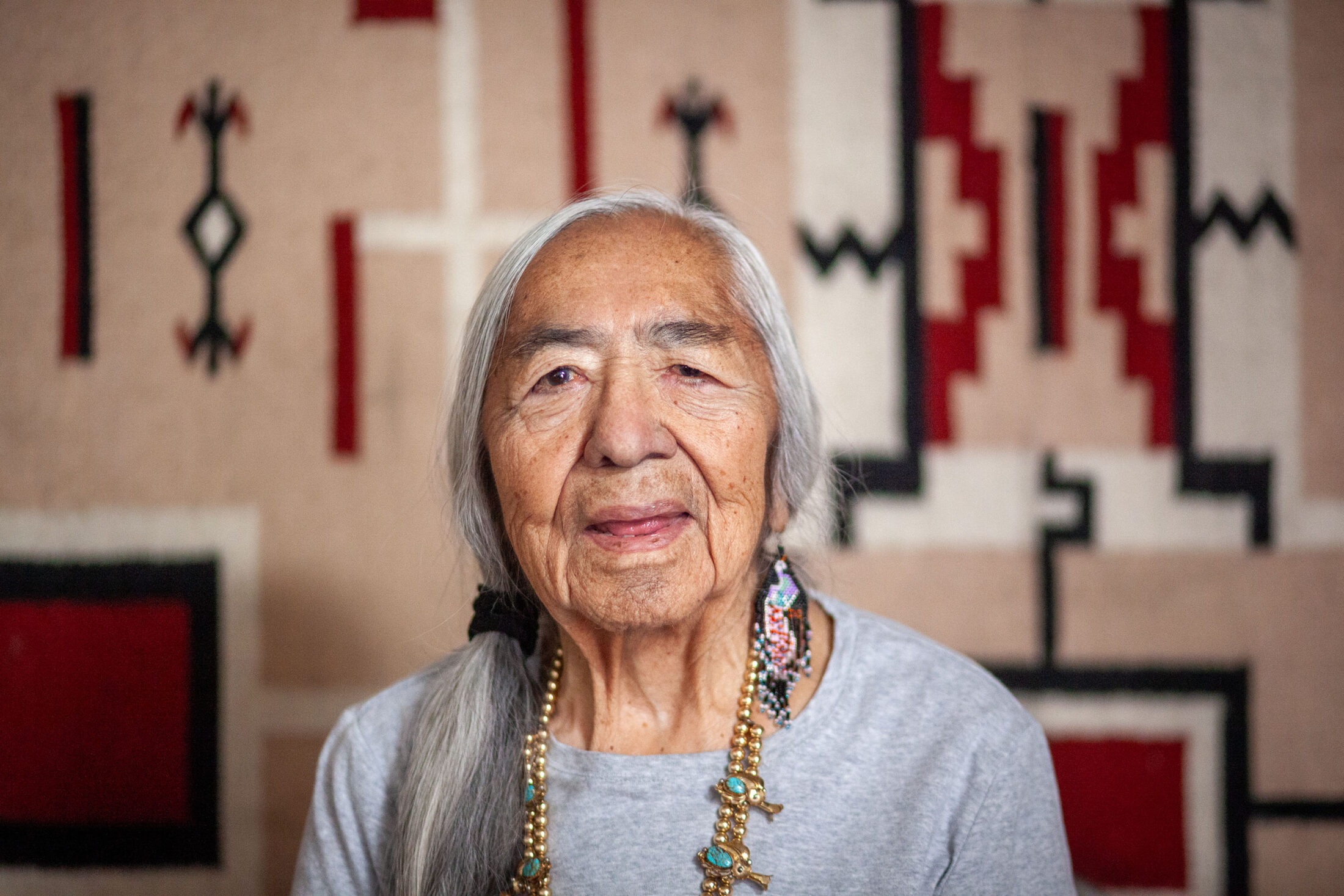
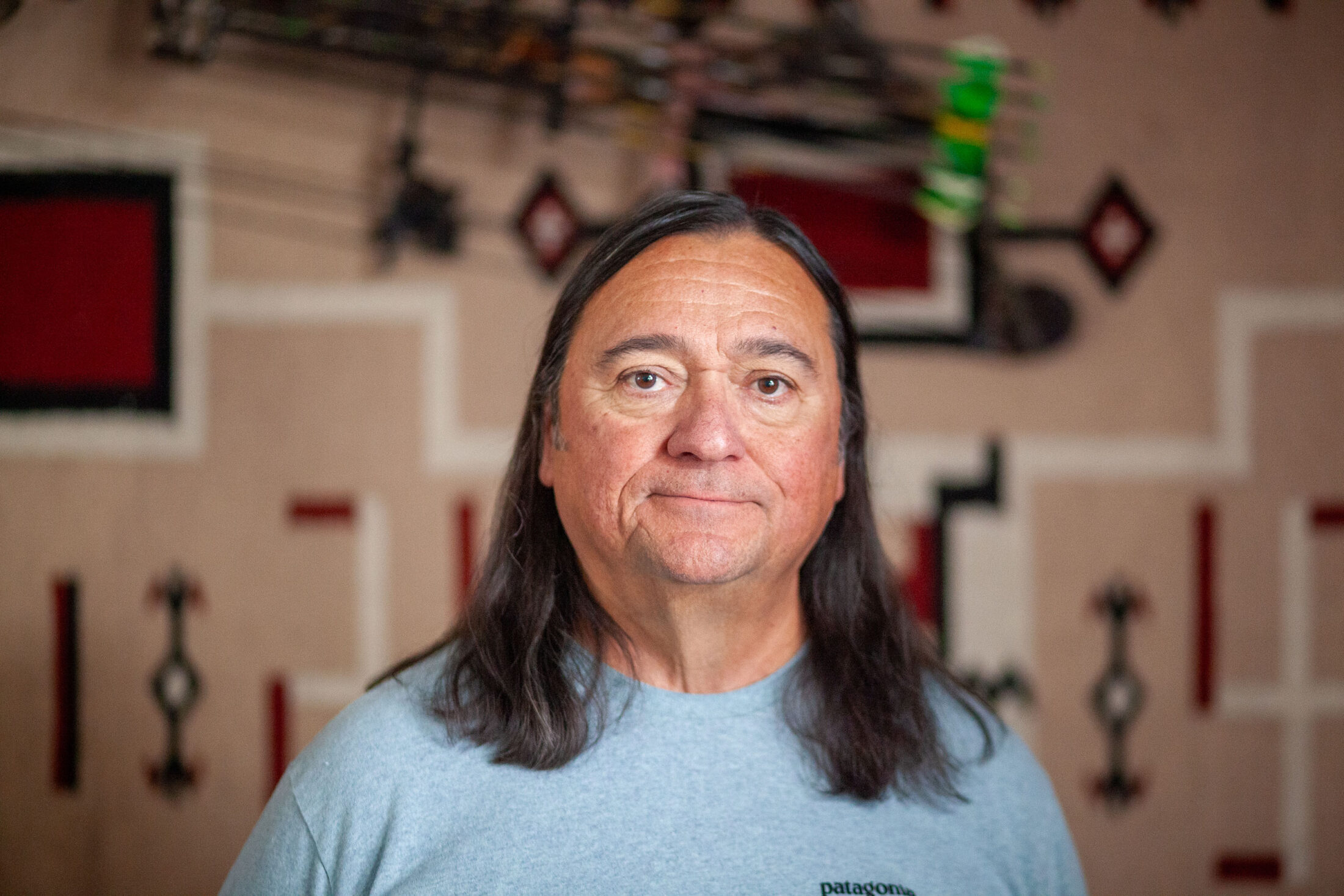
Delaine and Rick Spilsbury
At Bahsahwahbee, the emergence of new trees is a wait measured in decades. Female trees take ten to twenty years before they can produce their first seeds, which require another two growing seasons to mature. Even then, their dispersal depends on birds and small mammals, which consume the waxy cones and then scatter the seeds across the wetlands. Once on the ground, the seeds must wait for a rare sequence of warmth, cold, and moisture before they can germinate.
By the time a sapling takes root and pushes its first shoot skyward, years of favorable conditions have brought it into being. Yet for all the resilience that has allowed these trees to survive, there is one threat they cannot overcome:
The disappearance of water.
For generations, the story of the massacres remained largely with the Newe. But when a proposal to pump Spring Valley’s groundwater south to Las Vegas gained momentum in the early 2000s, silence became its own danger. Protecting Bahsahwahbee required tribal members to tell outsiders what had happened there and what the valley still held.
The Southern Nevada Water Authority (SNWA) proposal would have pumped groundwater from Spring Valley and neighboring basins and carried it through a three-hundred-mile pipeline to Las Vegas. The plan ominously echoed the Los Angeles Aqueduct, which began diverting water from the Owens Valley in 1913, disrupting Nüümü irrigation systems and reducing much of Owens Lake to an exposed salt flat. Now another desert metropolis was seeking to sustain its growth by drawing water from a distant Indigenous homeland. A 2006 study by biologist David Charlet warned that groundwater pumping would make the swamp cedars the “first plant species in the valley to become locally extinct.” In other words, the only tree species to persist on the floor of Spring Valley since the last ice age was unlikely to survive another fifty years.
The projected loss could not be measured in trees alone. “Any kind of destruction to the tree is a destruction to our spirits and our history,” Delaine said. Rick compared the grove to a living cemetery: “You wouldn’t want somebody to cut down all the trees in the cemetery where your relatives are buried. You want to go to a place that’s alive so that you don’t have to feel the death so much. It’s amazing to me that people would think lawns in Las Vegas are more important than a cemetery and a memorial.”
For the past twenty years, Delaine and Rick have been members of the Great Basin Water Network, a coalition of tribes, ranchers, rural communities, and conservationists that opposed the pipeline. Delaine began taking non-Native members of the coalition to Bahsahwahbee and telling them what had happened among the trees.
Together, they fought the project through years of hearings and litigation. In 2020, after a succession of legal defeats, the SNWA abandoned its applications for the water rights needed to build the pipeline.
But the victory did not end the struggle. As Kyle Roerink, former executive director of the Great Basin Water Network, told me, “Our victories are temporary and their wins are permanent.” Rick explained why the struggle never seems to end: “As long as there’s something worth taking, there will be somebody trying to take it.” The SNWA still owns land in Spring Valley, controls substantial water rights, and operates a large agricultural enterprise there. The consequences of that enterprise are visible twelve miles south of Bahsahwahbee, where the southern grove of Rocky Mountain juniper shows what water extraction has already done.
Walking through the southern grove felt like entering a forest on the brink of collapse, the ghost of a woodland. Hooves had severely compacted the soil, and scattered stands of sagebrush resembled dried-out tumbleweeds. Roughly half the trees were dying, their crowns reduced to branching skeletons that held only a few sprays of rust-colored foliage. Others stood completely bare, the last of their sprays blown off by the wind. Some were so brittle you could have pushed them over.
The force driving the grove’s decline becomes visible from the sky. Satellite images reveal enormous circles surrounding the grove: vibrant green fields made possible by groundwater pumped and surface water diverted by the SNWA to grow alfalfa and hay. Rick captured the paradox: The fields were “green at the expense of the natural life.” At the dying southern grove, the future feared for Bahsahwahbee is already taking shape.
Rather than defend Bahsahwahbee from each new threat as it arrives, the Ely Shoshone Tribe, Duckwater Shoshone Tribe, and Confederated Tribes of the Goshute Reservation, together representing approximately fifteen hundred enrolled members, are seeking more enduring protection through the creation of Bahsahwahbee National Monument. The proposed monument would encompass twenty-five thousand acres and transfer management from the Bureau of Land Management to the National Park Service, an agency the tribes believe would be a more suitable partner for telling their story and establishing a framework for co-stewardship.
Despite unanimous support from the Nevada legislature in 2021, backing from both Nevada senators, and a 2023 poll showing that 77 percent of Nevadans supported the monument, legislation introduced by Senator Catherine Cortez Masto in 2024 never made it out of the Senate Energy and Natural Resources Committee. The campaign remains in limbo, with little prospect of progress under an administration whose hostility toward national monuments was demonstrated most recently by its reduction of Bears Ears and Grand Staircase-Escalante in Utah by roughly 90 percent. Still, the tribes remain hopeful.
Rick emphasized that the monument effort extends beyond the tribes. “This is public land, which means it’s the land of the American people. It’s not just Native Americans who have a stake in this.”
Rick believes people are willing to sacrifice that shared land because they fail to see what is already there. “There are people who don’t see rural Nevada as a place worth saving,” he told me. “They see Nevada as a wasteland.”
The language of wasteland renews permission for extraction. If nothing of value is present in Spring Valley, pumping its groundwater elsewhere can be made to seem like no loss at all.
To have a stake in Bahsahwahbee is to realize that everything exists in relationship. “We are of this land,” Rick once wrote. “The land is us.” Water, trees, wildlife, ancestors, and the Newe are bound together, and we now share the responsibility for whether those relationships endure.
By our third day together, the unhurried rhythms of Rick and Delaine’s cabin had become familiar: long meals, the coffeemaker’s endless drip, logs crackling in the wood stove, the mingled smells of cornbread and woodsmoke, laughter around the table. When it was time to leave, the handshakes of my arrival were replaced by hugs.
As I drove out of the Duck Creek Basin and back through Spring Valley, the Snake Range loomed to the east while the sun descended in the west.
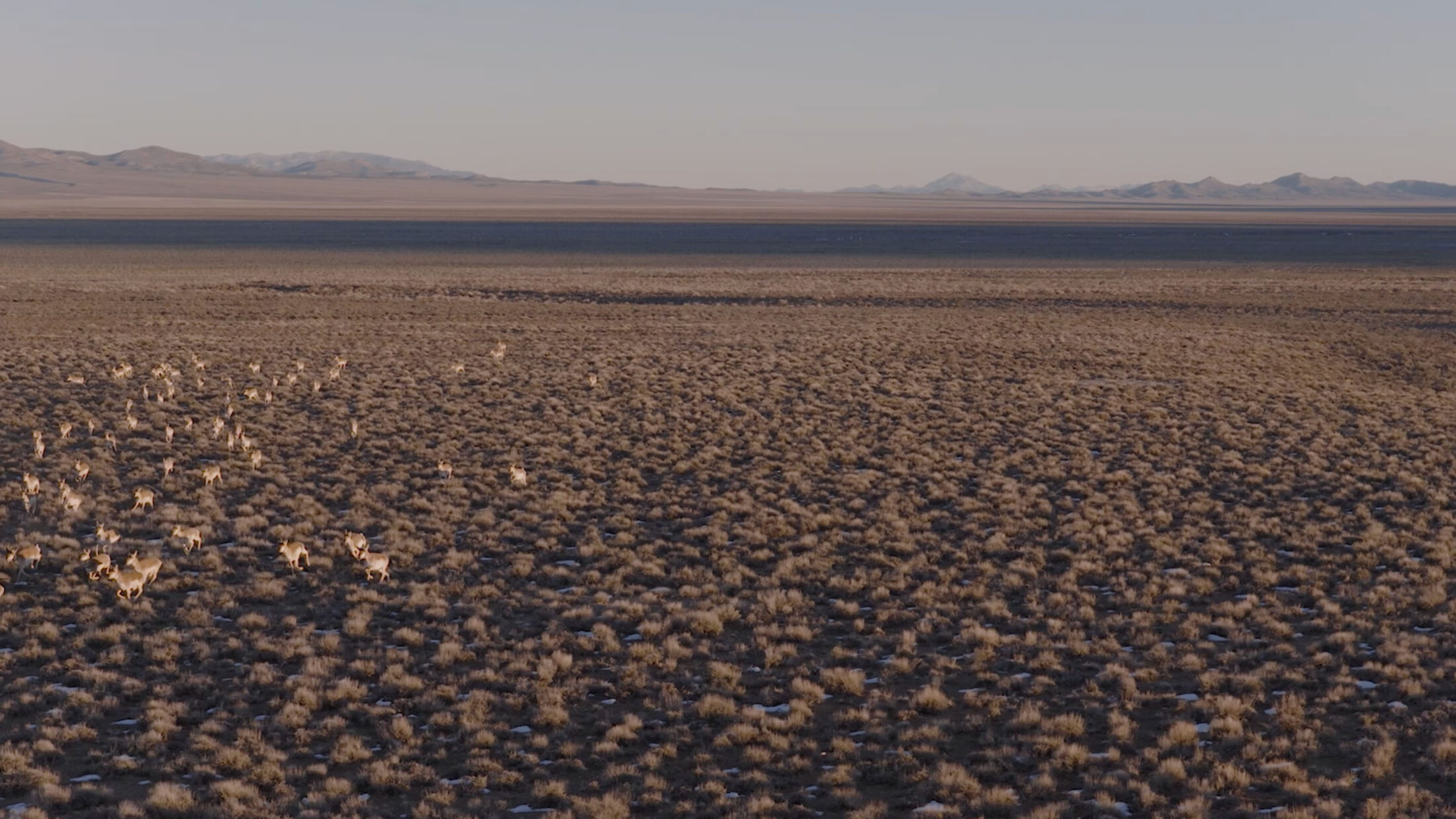
Near the southern end of the valley, a flicker of white appeared against the muted winter sagebrush. Then another, then dozens. The longer I looked, the more animals emerged: tawny bodies scattered across the valley floor, their white rumps flashing in the fading light. I pulled over.
Through binoculars, I saw at least a hundred pronghorn strung across a quarter mile of open ground. I scanned the herd slowly, stopping to admire charcoal-colored horns and those peculiar white bands around their necks. Every head was turned toward me. Then they began to move, and the land itself seemed to shift as they bolted north through a sea of sagebrush, changing direction as one, like a school of fish. I watched until they sprinted over a small rise and disappeared from sight.
I set my binoculars down and took in the valley one final time. Towering seven thousand feet above me, Wheeler Peak’s pyramidal summit and the aspen- and bristlecone-covered slopes beneath it were buried in snow. I stood there and watched as the last light turned the sky mauve and the mountain gave way to shadow.
In the coming months, the days would warm and the snow would slowly loosen itself from the mountain, melting across the slopes and descending through streams, canyons, and washes before disappearing into the basin. There it would merge with the older groundwater, replenishing the aquifer before rising again through the springs and into the roots of the swamp cedars.
This brought to mind something Rick had told me.
“Bahsahwahbee is not just a cemetery. It’s a garden.”
Read More Essays