A Thousand Ways to Live Within the Seasons
David George Haskell is a writer, biologist, and adjunct professor at Emory University in Atlanta. His books include The Songs of Trees, winner of the 2020 Iris Book Award and the 2018 John Burroughs Medal; The Forest Unseen, winner of the National Academies’ Best Book Award, finalist for the Pulitzer Prize in nonfiction, winner of the 2013 Reed Environmental Writing Award, and winner of the 2012 National Outdoor Book Award for Natural History Literature; Sounds Wild and Broken, a finalist for the Pulitzer Prize; and his most recent book, How Flowers Made Our World. Haskell’s classes have received national attention for the innovative ways they combine action in the community with contemplative practice. His teaching has been profiled in USA Today, and recognized by the Carnegie and CASE Foundations and The Oxford American.
Dara McAnulty is an award-winning autistic author, naturalist, and conservationist from Northern Ireland. After writing his blog, Naturalist Dara, he published his debut book, Diary of a Young Naturalist, when he was fourteen years old, which won the 2020 Wainwright Prize for Nature Writing and the British Book Awards Book of the Year for Narrative Non-fiction; most recently he published his third children’s book, A Wild Child’s Guide to Nature at Night. In 2022 Dara became the youngest recipient of King Charles III’s first New Year’s Honours List and was awarded a British Empire Medal for services to nature and the autistic community. He is a prolific environmental campaigner and has worked with Chris Packham, the Royal Society Protection of Birds, National Trust, and the Wildlife Trusts. He is an ambassador for the RSPCA and the Jane Goodall Institute, and has worked with Chris Packham, the Royal Society Protection of Birds, National Trust, and the Wildlife Trusts.
Emmanuel Vaughan-Lee is an author, Emmy- and Peabody Award–nominated filmmaker, and a Sufi teacher. He has directed more than twenty documentary films, including Taste of the Land, The Last Ice Age, Aloha Āina, The Nightingale’s Song, Earthrise, Sanctuaries of Silence, and Elemental, among others. His films have been screened at New York Film Festival, Tribeca Film Festival, SXSW, and Hot Docs, exhibited at the Smithsonian Museum and London’s Barbican, and featured on PBS POV, National Geographic, The New Yorker, and The New York Times Op-Docs. His new book, Remembering Earth: A Spiritual Ecology, is forthcoming from Shambhala in summer 2026. He is the founder, podcast host, and executive editor of Emergence Magazine.
Volume 6: Seasons contributors David G. Haskell and Dara McAnulty come together to share how the seasons are both a collective and deeply interior experience. Finding wonder in the symbolism of daffodils in spring, carnivals of pollen-dusted black bees, and the feeling of joy tinged with grief as familiar seasonal moments return each year altered, they invite us to open our eyes, ears, and hearts to the celebration that lives within the seasons.
Transcript
Emmanuel Vaughan-LeeDara, David, welcome to the show. It’s wonderful to be in conversation with you both again.
David G. HaskellThank you, Emmanuel. It’s a delight to be here and it’s a pleasure to join Dara here, too.
Dara McAnultyThank you, David and Emmanuel, for the space that we’re having to be able to talk about probably some amazing things in the next thirty, forty minutes or an hour, if we’re lucky.
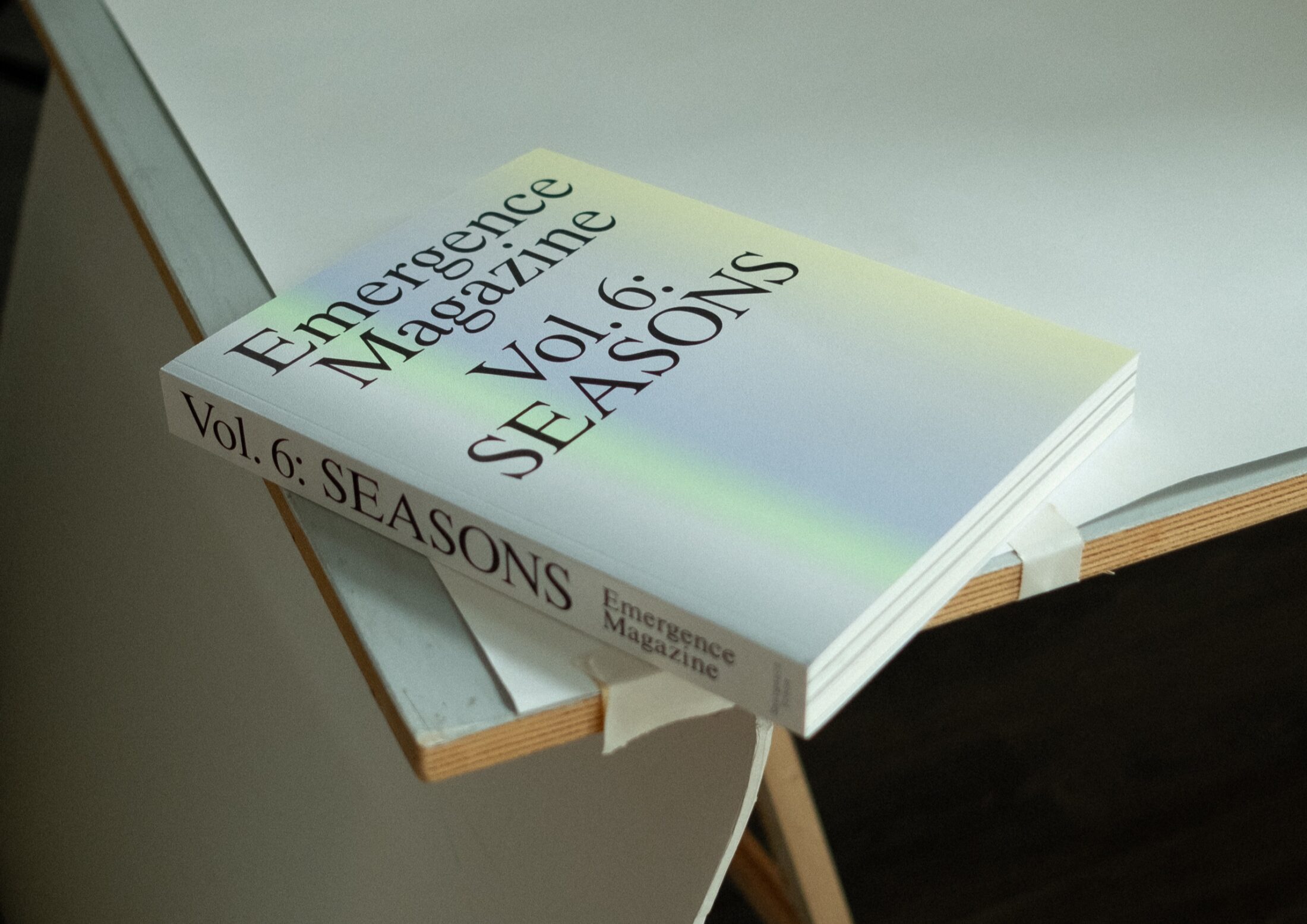
EVLSo we’re going to talk about the seasons today, but specifically the celebratory aspect of the seasons, which is one of the main themes in Volume 6, our latest print edition, which you both contributed to.
Dara, you wrote an essay for us called “The Thread of Belonging,” which celebrates the seasonal moments that hold profound meaning for you and bind you into relationship with your environment—which has changed as you moved away from your childhood home in Northern Ireland to Cambridge University in England—and how, while the rhythms and cycles of these places differ, the invitation they offer to honor the living world remains the same.
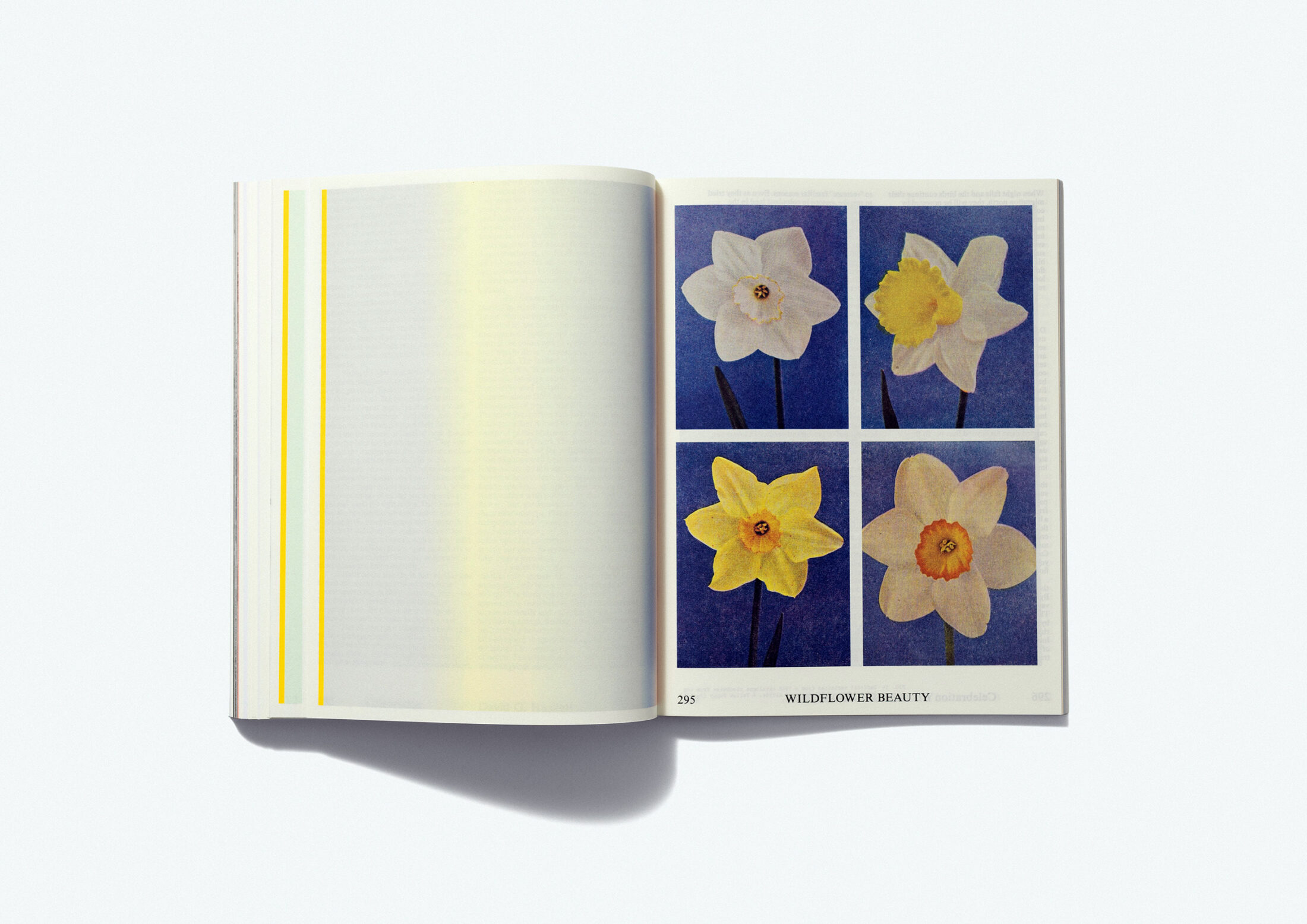
And David, you wrote “Wildflower Beauty and the Search for Home,” which is a glorious celebration of flowers, their intelligence, beauty, and ability to survive. But it’s also about seeking a sense of home amid seasonal convulsion, with the beauty and blooms of wildflowers as a guide. And you explore how, to know the seasons, we often look to plants as a way to shape our sense of belonging.
And I guess I’d like to begin with the sensory, because in both your essays there’s a great, real depth of sensory engagement with the living world, and the seasons are something profoundly felt through the senses. They are our most essential way we interact with the seasons, and one we increasingly don’t engage enough in at this time. So to start, I’d like to invite you each to speak about this—the importance of our sensory engagement with the seasons and what happens when we insulate our senses from their unfolding. So maybe I’ll come to you first, David.
DGHI think you’re absolutely right that the senses are of primary importance. I mean, how else do we connect to the lives of the living Earth, to other beings, to rocks, to water? I mean, the senses are our primary mediators. They’re the primary methods through which we receive invitations and accept those invitations. They’re also a source of joy and delight and, of course, of pain. So there are all kinds of stories wrapped up in what we perceive through our senses, what we learn through our senses, and also where we direct our attention. Because, of course, now we’re in a society where our phones, our laptops, are drawing us—mostly with the visual sense—into a tiny little, but very brightly illuminated box, which is almost wildflower-like. So, you know, this is how flowers get animals’ attention: They create these incredible little concentrations of wonderful hues. And that’s what my cell phone is doing as well, which is why I keep my eye on it more than I probably should. So accepting the invitation from other species, from the more-than-human world, as David Abram would call it, is a way into those stories of the living Earth, and a way of reclaiming what it is to be human: an embodied being.
EVLRight. Dara, what’s your relationship to the senses here?
DMI think the sensory is everything, nearly everything. I feel like there is some form of processing in the back of your brain that goes on, but whenever you go out into the natural world, you smell things, you see things, you hear things. You are in a different sensory environment or a different sensory paradigm than the one of the human world. And when we take the sensory paradigm that we are not used to, or at least I’m not used to, which is the one of like a shopping mall or whatever, and I get overwhelmed and I can’t deal with it, I go out into a forest. The entire sensory experience becomes shifted into something that feels— I wouldn’t like to speak in magnitudes, I think it’s simply different.
I used to speak in magnitudes. I used to say the human world is so much more. It’s too intense, it’s too much, it’s too this. I think it’s just different now. And that difference is hard to compute in my brain. So I thought it was more. Because usually when people shout at you, you go, “Oh my goodness me, I can’t deal with whatever on Earth is going on here.” But then I was like, no, no, no, this is a different experience that I’m having, and I simply don’t understand it. Also, I shouldn’t understand it. Whenever I’m out in the natural world, I understand completely what’s going on. Nearly. Or at least I understand everything that’s going into my brain. Obviously I don’t understand the natural world as a whole. That would be immaterial and silly, but I at least understand the thoughts that are coming into my brain, instead of this bombardment of human thoughts, which are consistently colliding against your head.
And so whenever I talk about seasonality, in the mind-thought, I usually mean this is a comfortable space that I understand at this time-moment. So whenever we are in autumn, we expect autumn to happen—or fall for our American viewers. Or if we’re in winter, we expect winter to happen. We expect the leaves to fall off the trees. We expect snow. We expect certain things. These things aren’t entirely required. Many countries don’t have these seasonal cycles, but at least for some people, these are the ways that we mark our cycle. And whenever you stop paying attention, or whenever you stop having the conscious realization of these things, it becomes almost incomputable, if that makes sense.
EVLIt does. And the next question was really about attention, actually, because both your essays explore how paying attention to the unique cycles of the seasons where we live can deepen our sense of belonging. So not just the senses, but as you were pointing to, the way the senses create a relationship with place and feel the living world as “home.” And I’d like to go a bit deeper into this idea, because each of you have had very different experiences. You live in vastly different landscapes: Northern Ireland, England. Atlanta, David, and obviously the places you’ve lived elsewhere in America and overseas as well. But also in how you each have found yourself drawn to finding a sense of belonging by celebrating the rhythms and the cycles of the seasons that are local to you—these different ways you’ve been drawn into that relationship.
And Dara, you wrote about how moments of celebration in the seasons “bind and bond” you to the landscape, “stamping imprints on memory and love.” And in this way, space is enlivened into a wonderland where life is happening not only all around us, but with us, and in us. Tell me more about this.
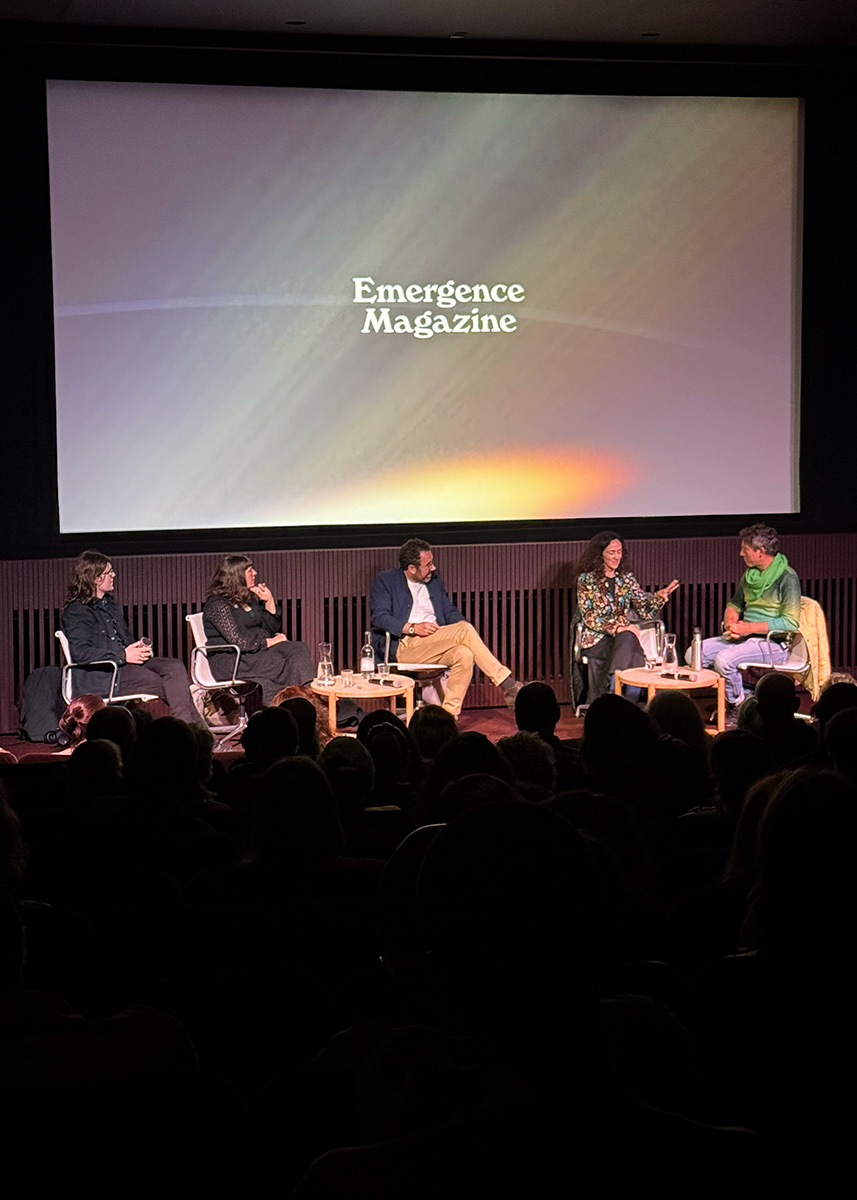
DMOkay then. So, I remember, I think I remember, the moment that you’re talking about specifically, which was a moment in Grantchester Meadows. I believe that is the moment I’m speaking about, which was whenever a barn owl started going over the fields this way and that way. And me and my friends had just finished exams, and we were going on a picnic out into the fens. And it was an insane year. And we were just sitting there, completely spellbound. I’ve never experienced collective joy as we did then. And we watched this barn owl just keep on going and going and going and going and going. And we were overcome by this sort of natural joy that I have no explanation of. There is no way of physically explaining the emotion that we had. And then we sort of placed this emotion in our seasonal calendar—I remember during the talk we did [at the Tate] I talked about this a little bit—and it became a part of our lives. This moment, this natural moment, became a part of our lives. We celebrate this day every single year. Since that moment, we come back to the same place, have the same picnic, and we’ve never seen the barn owl since. [laughs] But we keep on coming back just to enjoy that peace again, that life again, that moment of exaltation. And I feel like all of us have, sort of, those moments.
Like David, I’m sure you have a moment in your life where you saw something. It marks a part of your year for the rest of your life. I feel like all of us have that sort of— Whenever we come back to that time of season, we see it, even if it’s not there. [laughs] And I think that is where seasonality comes from. It’s a condensation of memory, cyclic memory, that is based upon the natural world. So we take the natural world, our brains go, okay, this is a lot. And then we go, okay, there are these natural moments that occur at these specific times. And from that function, we sort of draw out where seasonality occurs, like specific moments in a year, because we’ve defined a year as our base measurement. And then we go, okay, at springtime this certain thing should happen, in summer we should hear a cuckoo. But in different places it’s entirely different. Seasonality is not defined in any way. It’s defined by observation and experience.
And I think I said in the talk, we all contain a season within us. We all contain a cycle within us and we all have our own different marks within the cycle that define a differential season. And that’s important, because the season is within us. Oh, that sounds awful. [laughs] Oh my god. The season’s within us. No, the season is sort of contained in our brains, because it’s us processing changes in the natural world, really. And it’s hard. And I think we should have some recollection of that. Because this means that whenever the seasons do change, because they always will, we actually have some knowledge of what was lost and some celebration of what was there.
EVLDavid, you have a very simple but wonderful line in your essay, “There are many ways to make a home in the seasons.” Why did the blooming of wildflowers become a way for you to recognize this sense of home?
DGHYeah. I just find so much joy in the diversity of different ways that creatures make their lives in the world. And wildflowers, of course, are some of those that for many of us are the primary markers of the seasons. I mean, for me it’s the wildflowers, but also birdsong, and the two sort of interact to create hundreds of different seasons, you know? Every week, every day is a different combination. And of course they change through time because of big things like climate change, but also just through the vagaries of the weather being a little warmer or colder one year or a little more rainy, as they’ve always done. And these cycles, I think of them almost like a Newtonian beat, so the Earth spinning around the sun and spinning around its axis, and, you know, of course that’s the reason we have seasons, as in changes in day length, and rainfall interacting with ocean currents, and the changing day length, and so forth. So there’s this sort of very physical fundamental beat underneath everything. And then within that, life forms and finds many different melodies and variations.
So for example, some wildflowers are annuals, right? They flower, they set seed, and then they go dormant as seeds; and there’s no trace of them on the landscape, except if you were to look in the mud and find tiny little seeds. Whereas others are perennial, of course. They stick their roots down and take several years to grow their flowers. They grow right next to one another. So in the very same place—in places of very northern latitudes, of course, it’s just a few dozen species; in the rainforest, it’s thousands of different ways to live within the seasons. How you germinate, when you bloom, which flowers, what bees are attracted to the flowers, what ants or birds take away the seeds—all these different combinations that then create possibilities for other creatures. And, of course, if you’re in a forest that is mostly blooming at a particular time of year, then evolution generates all sorts of interesting biodiversity—mostly insect biodiversity—to take advantage of that, which then provides food for birds. And so there are all these knock-on effects.
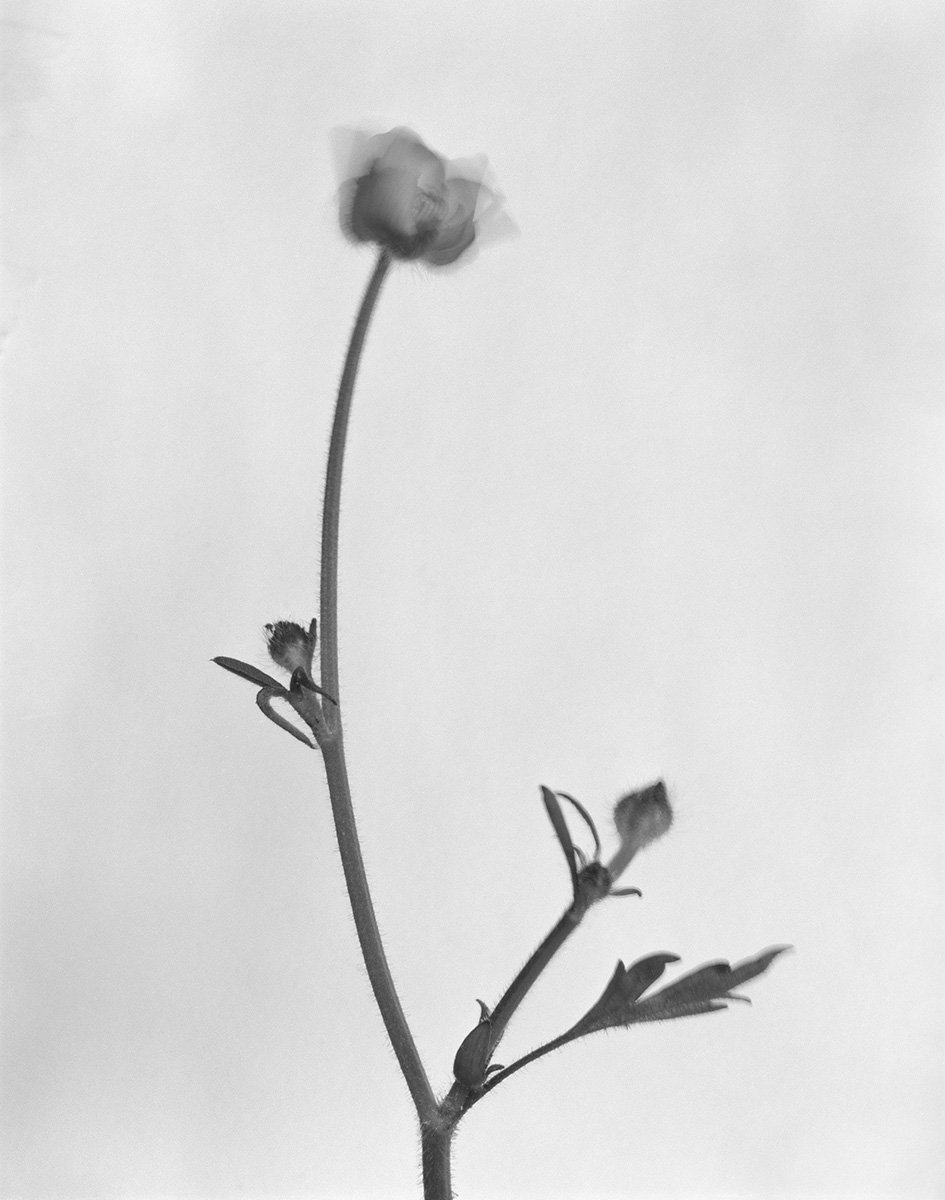
So there’s this incredible filigree, if you like, of variation. If you were to ask a snorkelwort, which is one of the plants I wrote about—a little semi-aquatic plant—what the seasons mean, it would give a very different answer than an oak tree or a woolly ragwort. Each of these are different plants living in exactly the same place that have found different responses to the seasons. And, of course, there’s information in that, that scientists can use to track change in the climate and in biodiversity loss and gain, but there’s also just sensory delight, to come back to the senses. Going out and appreciating the wildflower meadows—and other forms of taking pleasure in being on this Earth for the short time that we have here—I think is important. And I love Dara’s point about doing this collectively and forming collective memories. And, of course, there’s nothing wrong with having your own personal individual memories, but the more we do this together, we knit things into the stuff that really lasts, which is human culture. And most of us inherit traditions that have got seasonal celebrations in them, right? So Hanukkah and Easter—I mean, these are seasonal celebrations that are actually tied to the rhythms of the living Earth that are important to remember; that there are ecological roots to all of these things that we think of as just quote, unquote, “purely religious.” But, in fact, the religion, through the wisdom of the people who wrote those scriptures, actually encompasses quite close attention to the variations of, for example, the climate and the seasons in the Middle East for the people who wrote the scriptures for the Hebrew Bible. And then many of us have stepped out of those traditions. So we need to reconnect. So when you’ve let go of those seasonal anchors coming from religion or culture, how do we reform these collective celebrations of the passage of the seasons, which is cyclical, but also the linear passage of time? Because springtime means something very different for me now in my later fifties than it did back when I was a teenager, and presumably, if I live long enough, when I’m much older. And so there’s a geometric puzzle of an intersection between linear time and cyclical time that I think is really, really fascinating.
EVLHmm. You also talk about the complexity of human cultures in this moment, of engaging in celebration when homes and cultures are woven from both immigrant and Indigenous peoples. And there’s a lot of complexity in how to be present to that, you know, politically, historically, and whatnot. Talk to me a little bit about this layered complexity present in culture, in place.
DGHYeah. And the complexity—I don’t presume to offer an answer to how we should deal with that complexity, because, of course, legacies of colonialism, current day policies around immigration, and so on, are all very complex topics. Let’s talk about daffodils, which I mentioned in the essay. So daffodils are found in Europe, Asia, parts of North Africa—particularly in the Iberian Peninsula—but they have been transported all around the world, mostly by northern Europeans to plant in their gardens, mostly as symbols of springtime. And in that there’s a spread of beauty. It’s wonderful to see daffodils growing in meadows in New York, but also that’s a legacy of colonialism and an imposition of a particular view of springtime onto other peoples. Jamaica Kincaid has written extensively about this and has a nuanced approach, first, as a child being forced to think about daffodils where she lived: In Antigua, where she grew up, there are no daffodils, they can’t grow there, and yet being forced to memorize Wordsworth’s poems about daffodils. And now she is planting tens of thousands of daffodils in her garden in Vermont, reclaiming for herself—I’m interpreting her words here—what it means to celebrate springtime and also to engage with canonical literature. So the idea here is that wherever we are— And when I ask my students, for example, name a flower that means springtime for you, most of them say daffodils.
EVLRight, right.
DGHEven though daffodils are absolutely not indigenous to the place where we live—and there are hundreds of other wildflowers that actually have, in my view, way more interesting and, at least, locally adapted stories connecting to bees and birds and ants in a way that the daffodils really don’t— They’re pretty, but they don’t really feed the local ecosystem. So paying attention is the first way into solving some of those stories, I think.
DMI feel like there is— I feel like you are tapping into the collective seasonality right there, which is occasionally colonial, where we impress a sort of seasonality upon a collective population. And I feel like, especially with the daffodil—because obviously Wordsworth wrote … I think, it’s a decent poem? [laughs] Bold words. But it’s passed a long way through the world, yet people consider the daffodils as a sign of spring, even if they don’t have daffodils. And that is a part of collective seasonality, which is why I am going to say something controversial. [laughs] Which is that we have a collective seasonality where we, as a collective, agree upon the seasons. We then have an individual seasonality. So each of us has like a mark of a season in our mind. Every single one of us. We know specific events that have happened in specific seasons, or at specific times of the year, that have occurred. And whenever we use all of these together as a collective, we create the collective season. We cannot, in that way, impress colonial seasonality upon it, because it’s the people.
Let me explain this better. We all have our inner cycles of things that we experience, and that creates our seasonality. Like in spring we notice this thing, in summer we notice this thing. And then we come to the end of the year, and then we do it again and again and again, and then eventually we build up a notion of seasons. And then we sort of collectively, as a people, get an idea of a season in a place. So whenever Wordsworth says “daffodils,” it doesn’t mean daffodils; it means spring in the collective sense. I do not know if Wordsworth meant it in this way, but whenever I read that poem, it doesn’t mean daffodil; it means signs of spring. And I know that Wordsworth, at his heart, is a romantic, and also probably quite colonialist, but I do find that he’s more talking about what the signs of a season are. And I think that’s the beautiful thing about wildflowers. We all know the wildflowers that appear whenever they do. We know what a place looks like at certain parts of our year. It’s beautiful and diverse and it’s varied—and it varies in like these gorgeous forms—but we also, sort of, we know if something’s wrong with the seasonality or if something’s been disturbed. And I think that’s the important part, if that makes sense? And then we go into just existing in the seasons and experiencing the seasons. Oh, David, do you have a point to say? [laughs] I can feel it.
DGHYeah. I mean, I love what you’re saying, but I’m also thinking about all the other students who weren’t out on Grantchester Meadows.
DMOh, yeah.
DGHI think our culture now has a way of training us not to pay attention to those seasonal cycles, so we lack the sensory connection. For example, at least here in the US, it’s possible to get a degree in biology without ever stepping outside of the lab building, and certainly that was my experience in the UK. We spent one three-hour period in my entire three-year degree studying things outside the lab. The rest of it was all inside. So education is just one of those cultural filters that we impose that put a barrier between us and the birdsong and the wildflowers and others. So part of our task is to see those barriers and, through acts of the will, to say: I’m going to go, with other people or by myself, and pay attention to these. And then to share the story with others and invite other people into the delight.
DMOh, definitely.
EVLIt also speaks to the complexity of symbolism—that a symbol can represent spring in a way that invites people in and also represents spring in an oppressive way, and that we have to hold both those realities as individuals and collectives. And that’s the complexity within the seasons as we work with them in literary form and poetry and representatives of culture that are complicated.
DMYeah. And they are heavily complex. Like trying to disentangle, or like David said about, well, not everyone’s going to have their Grantchester Meadows moment. Not everyone’s going to have that moment. I think that most people notice something. I’m going to give them that much grace. [laughs] I feel like people have some sense of the world around them, but perhaps we need to give more opportunity for experience. And experience is what leads to seasonality at its heart. You experience snow. That creates winter. You experience the leaves falling. That creates autumn. You experience new birth; that creates spring. And you experience heat; that creates summer. These are things that we’ve applied upon the world, and then divided them into quarters, because that’s lovely mathematically. [laughs]
DGHWell, it’s also, sort of, how the seasons work in particular parts of northern Europe.
DMPrecisely.
DGHWhereas in, you know, other parts of the world, those seasons don’t really work. And so my concern is that most people think of autumn as a time when Starbucks has pumpkin spice latte. And that the solstice season is a time when you put your Spotify Wrapped up on social media. And so this increasing disconnection—I think we are at crisis point. When the most powerful species in the world ceases to listen to the voices of other species and lives within structures and institutions that actively discourage this through policies and algorithms and fairly well-established cultural practices now, we are not going to be good kin, we’re not going to be good neighbors. And so there’s a joyful element to connecting with the hundreds of seasons wherever we live. But there’s also, I think, a sort of moral imperative to do so, so that we can open ourselves to the necessary knowledge that comes from the living Earth and that comes from the people who know this place the best, wherever that place is on the world, so we can find our way to right action.
DMYeah, definitely. And before Emmanuel asks his question, I would just like to say that, literally, when you said the pumpkin spice lattes, I nearly had a heart attack of laughing, because it’s so stupid that we, as a society, have these capitalistic-like “at this time of the year, Spotify Wrapped comes out; autumn is the time for pumpkin spice lattes; or Christmas is the time for buying things.” There is a capitalistic urge to commodify seasonality, or there’s a commoditization of seasonality that does occur. And we should pay attention to whenever people are demanding seasonality. Because at its heart, what capitalism, or at least what the market, currently is doing is demanding us to pay attention to seasonality rather than us observing the seasons and seeing how the world turns. Instead they are demanding at certain quarters we have to experience a certain thing.
EVLBut when you have the pumpkin spice latte as a symbol of the seasons, it’s removed from a space of relationality…
DMPrecisely.
EVL…with all the other relationships around it. So it’s no longer about the pumpkin, in relation to the Earth, that’s grown with the seed, and the changing weather patterns, and the celebration that comes with All Hallows’ Eve or whatever it is. It’s something very different. And you both spoke to this because you spoke about the broader living web of relations that exist around the seasons. And Dara, you write about how the rhythm of the seasons aligns you with how the Earth “sways, dances, and larks,” which I don’t know if a pumpkin spice latte will do.
DMI’m not convinced that a pumpkin spice latte is entirely larking me back to the Earth or giving me a melody that I can dance to, to be fair. Like it might taste good, but I don’t think it is giving me any connection to the Earth. [laughs]
EVLYeah. And you talk about that there’s a bigger thing that arises from that swaying and dancing and larking that you are bound to, that’s very different also than the individual expression of a season. There’s both existing side by side.
DMOkay. I think what you’re talking about is the ancestral seasonality, because I believe that whenever people die, we build landscape upon landscape. Everything dies eventually—that’s just about a fact. If anyone lives forever, let me go and kill them [laughs], because I don’t think that’s a good thing. I think we should all cycle through the world. And then the seasonality that is brought up by tradition and our culture and our people— Every single winter I go to a place in Downpatrick—a stone circle—and it’s my favorite place, probably, in the planet. And what I do is, every single—I think it’s like usually in December or early January, sometimes in New Year’s; if I’m lucky and I can convince a bus to get me down there, I’ll get there on New Year’s—and I lie down on top of the mound where my ancestors are buried, and I’ll just lie there. And it’s really cold. [laughs] But it’s a sort of seasonality that is experienced not just on an individual level, but on a grander cultural level. These are people that died here. And we are now in the— We just left, actually, we just left a few days ago, the month of Samhain. We’re now on the 4th of December, so we’ve left, officially, Samhain, which whenever we did our event at the Tate, had just started.
EVLYeah. It was November 1st.
DMYeah, it was November 1st, and Samhain had begun. Because in Irish culture, Samhain is not Halloween, it’s the entire month. It’s this moment where the thinning takes place. We go thinner. The land between our ancestors and our people becomes dissolved—almost permeable—and we can hear them. And so every time in that— December as well is pretty decent for it. And so what I would do is, every single time, I would go down to the stone circle and I would just go down and just listen to my ancestors for a bit. I think there was one time that I laid down in that stone circle and didn’t come up for like forty-eight hours. And that is not a lie. I just was so entranced by the other things that can exist in seasonality. I don’t think I was thinking about seasonality, obviously. I was thinking about many other things, like: What does it mean to be human? Or, Oh good lord, all my people are dead. Or, Oh my goodness me, I’m going to die someday. And then, Oh my goodness me, that’s okay. We go in cycles. The leaves come in the spring, they die in the winter. It’s a natural process. And so if we take seasons as a process of death and life, seasons exist over a far grander life span than just one year. You can call it maybe the season of a life—you’re born, you grow, you die, you decompose, your memories go into other people, that grows new life. And seasonality, at its heart, is that cycle between birth, growth, and death. One of my favorite quotations, and I have genuinely no idea where it comes from, is about oaks, oak trees: “They have three hundred years to grow, three hundred years to live, three hundred years to die,” because the average lifespan of an oak is about nine hundred years. That’s a season. Just over a millennia. And I think we treat seasons as discrete, but at their heart, they are entirely defined by life and death.
EVLHmm. David, with wonderful scientific detail, you explore how the blooming and flourishing of flowers is only so thanks to an intricate, beautiful, and always evolving series of relationships between pollinators, weather patterns, human activity, and the genetic memory of plants and animals. Can you speak a bit more about this and how the seasons themselves are woven from these relationships?
DGHYeah, and we’ve been talking about the sort of cultural memory of seasons within humans. And as a biologist, I would add that the seasons are inscribed in our DNA as well, and in the DNA of every species, including wildflowers, as expectations of when to germinate and when to flower; of when to fatten up your roots and when to put out your leaves. And these come internally, actually from conversations between cells, say, within a dormant seed. The seed looks dead, but, in fact, particularly at the tip of the embryo, there are all sorts of little chemical conversations going on trying to figure out, is this the right time to germinate, and they pick up on changes in the temperature and so forth. And through that—those little chemical whispers—the plant then decides when to germinate or or not. And every plant has a different way in which those conversations unfold, and that’s largely controlled by genes. So you think of the seasons as an external thing, but seasons actually live within us. And it’s an interesting question, then, to ask: How does human DNA bear the mark of seasons, given that we’ve been such a migratory and mobile species? I mean we were on the savannahs in Africa for a few hundred thousand years, but then we were in trees for millions of years before that. And so which of those seasons are we living with now?
But then for the plants, as you mentioned, this then fans out into relationships that go beyond chemical conversations within a seed, out into relationships with pollinators and seed-dispersers. For example, many of the wildflowers in the eastern United States time their blooming and their fruiting to coincide with migratory birds. So when the ruby-throated hummingbirds are moving through, the columbines put out their red flowers, and the columbine’s flower in the east is shaped to beautifully fit the head of the hummingbird so that they can get some nectar and get their heads dabbed with pollen. And here in Atlanta, the columbines are out for just a few weeks, and those are exactly the weeks when the peak of migratory songbird movement and hummingbird movement is happening. Then in the fall, red fruits are produced by lots of the wildflowers, and also shrubs and trees, to attract migratory birds on the way back. And so each one of those flowers has found its way to enter into a relationship with other species, and the seasons are made not so much out of heat and cold, but out of: “When are my dispersers gonna be here?” “When are my buddies coming back from Central America to help me spread my pollen?” So there the seasons are all about relationality and all about interconnection. And there’s some parallels there with humans, of course, that the seasons for us— When we, say, gather during the winter solstice, we’re doing that to support one another in the hardest time of the year.
And I feel a little guilty about living in the modern world now, where, for me, the seasons are mostly a source of delight. But for my ancestors, I knew that mostly— I mean, there was delight, but there was also at least fifty percent dread, because the winter was a time when the food would run out, when your kids would die, when you would get sick. And so now I’m, as many of us are, emancipated from that because of the privilege of industrial agriculture and central heating and so forth. The celebratory cycles of the seasons are closely linked to the sense of the seasons carrying with them difficulties. And then when we gather, say, at the winter solstice, which is the time when things are about to get really bad and stay bad for at least a couple of months, we’re there to support one another.
So that’s another way to reframe this: The ecological aspect for columbines and hummingbirds is also present with humans. We need to gather with one another to support one another through those tough times. And I do think although, say, the solstice season is highly commercialized in many parts of the industrialized world, let’s reclaim the ecological roots of that. Why is it that we give presents to one another at the winter solstice? It’s because, paradoxically, we have found that the answer to scarcity is generosity: that at the time when I should by all rational accounts be hoarding stuff for myself, I’m actually going to give other people gifts—which is easy to do in the summertime when the harvest is in and all the rest, but in the midst of winter it’s this paradoxical thing, that we’re going to be generous at a time when the scarcity is about to get worse—which, I think, is worth remembering.
And the pumpkin spice latte, right, is also about, well, pumpkins are indigenous to the Americas, so let’s reframe and reclaim the sort of commercial aspect of this. It’s like, well, we are actually celebrating indigenous plants in the Americas through this kind of over-sugary drink and so forth. And the spice came to us through the intricacies and the horrors of colonialism, because, of course, the spice trade was one of the things that brought colonialism first—Western colonialists—to many spice-growing countries, with devastation there included. So that one silly little drink actually has a lot to celebrate and a lot to mourn. We could own that story instead of letting the corporations tell us what it means.
EVLIt also raises, I guess, one of the main themes that was present in this edition, and although you wrote about celebration more directly, both your pieces also speak to requiem and loss. And the issue as a whole is about this notion of, how do we hold loss and celebration and the invitation of the seasons and the paradoxes and contradictions and complexities there? Because there’s a story of seasonality that is about requiem there when you look at the colonial loss of what unfolded through the spice trade that resulted in the pumpkin spice latte. But I think it’s a really important thing, because we’re at this juncture where the changing nature of the seasons forces us to confront the complicity of our actions individually, collectively, historically; and also just mourn loss that’s happening right in front of us, whether it’s, you know, you described when we were last together that there had been no snow in Ireland for three winters…
DMThere has been some snow, I was just not lucky–
EVL… that you had seen, but where, previously, there has always been snow, or more consistently. And there’s a loss inherent to that. And you talk about this directly in your piece, Dara: about how becoming “more than an onlooker” has helped you both hold celebration and change, and understanding that the shifting nature of the seasons is “an invitation to feel truly alive.” There’s a lot there in those two quotes. Tell me about this.
DMSo I always have had the belief that things change. Nature changes, the world changes. Every year we see different wildflowers in different formations. We have different people in our lives, different loved ones. We have a different nature. We have the habitats that we love and hold dear, as long as they’re not destroyed. I’ve had my forest near me for all of my life. I love my forest deeply. But the seasons change. We have these cycles that shift, and it’s terrifying. And we have this way of things creeping into us that makes us whole; we have all of the different pieces of our lives slowly seeping into us. And I remember during, whenever we last spoke, the absolutely stupidly hilarious term that I created for this exact thing: noticelings. Noticing is a thing that creeps inside you. It’s a thing that sort of goes into your brain. It’s always trying to get in. You have to stop it, if you’re not so brave. And as a result, I think we have to let the seasons seep into us before we can really deal with the seasons.
And whenever I was talking, I was— I think I was just quite sad, really, because I’m— David was talking about pumpkin spice lattes and people who didn’t have a Grantchester Meadows moment, or people who don’t have their seasonal structures, and I do want to touch on that briefly, because I think that is the most terrifying thing to me. Whenever we lose our identity with seasonality or time—specifically, I think time itself—we sort of phase into an un-being. And I talk about all of these things. I talk about, perhaps, beautiful things. I talk about gorgeous things. I can make philosophical arguments. I can talk about all of this and this and this—whatever. But whenever we go back down to it, there are people that aren’t experiencing seasonality, and that might be the most terrifying, genuinely scariest, thing to me.
And as we move forward into the next season—we’re moving through winter now, it’s the cold months—we do need to keep some awareness of the fact that some people are going to feel these seasons very keenly: people who don’t have shelter, people who don’t have food. Seasons are the thing that almost informs us as a society when we’re going wrong. And I feel like I am going off topic, but I did want to just say this, at least on the podcast, because whenever humans— Like we have a lot of control and power over our own natural state. We don’t have a lot of power over nature or we don’t have any power over seasonality, really. Seasonality happens. It’s a happening. Then, whenever the joy happens, it’s glorious, because it is a happening. Humans didn’t create it. We go from all of this sadness and this desperation until you get a moment whenever you see an autumnal sky and it’s all clear and you have a nice warm coat on and you can see the moon in the sky before it is nighttime, and you’re looking at the sky and you can feel happiness. And, in this way, joy comes out of knowing that you’re not— Joy comes out of a sense of grief.
EVLNegative joy.
DMYeah, negative joy.
EVLNegative joy, yeah. Grief is negative joy.
DMI think joy comes out of grief, if grief is a sort of particle soup, or the physics term, “particle foam” or “cosmic foam,” which is like the quantum matter that everything leaps out of. I think that whenever we experience joy about these specific things, we are sort of embedding on a root that is everything that’s come behind us, which inherently must require grief because there’s a lot of dead things behind us. And that requires grief. We should process the grief, but then we leap up out of it with joy in our own experience. And then we see the sky, and then we see the moon, and then we see the stars and the sun and the trees and the birds and the insects and the wildflowers, and then we feel joy again. We are alive. We are true. And I think maybe grief is not anti-joy, but joy is more anti-grief.
EVLHmm. David, what are your thoughts? I mean Dara covered a lot of ground here, from people who aren’t able to experience seasonality in the way that allows them the comfort of being able to bask in its glory because they’re viscerally affected by cold or hunger, to also this broader relationship of grief and joy and the contradictory moments that I was speaking to in the question earlier.
DGHYeah. I do think it’s important to note that the seasons within our culture now, given that there are a lot of people who are unhoused and food insecure, the experience of the seasons differs quite a bit because of injustice within our culture. And we need to acknowledge that. I don’t think that erases the grief and the joy. I think it actually in a way highlights it, in that, given that we live within these cycles that contain both, we should have a society that extends the invitation and allows everyone to feel that joy and to have the capacity to feel grief for things that extend beyond the grief of the challenge of just putting food on the table for your family for that particular day. I have a life where I’m privileged to worry about the declining songbirds and not seeing these wildflowers anymore, and so on, and I recognize that. I think it’s important. It is a privilege in that I know where my food is coming from most weeks.
This relationship between grief and joy, of course, is the subject of most major religious traditions. I don’t really think I have much more insight to add to that other than to note that, culturally, when we bury another person, often the rituals that we use for that combine—literally the word “celebration” is in there—a celebration of life along with grieving. And we need to bring that into the ecological realm, as we say goodbye to certain rhythms and cycles and even species and ecosystems, to have a celebration of what was, and also a welcoming of what can be.
And I think one problem with the media landscape we live in now is that our algorithms know very well that bad news gets more clicks and keeps our attention. And it’s a good thing that we hear the difficult news about climate change and species loss, but I think it’s also really important to remember, for example, that until recently the air in most American cities was almost unbreathable. Same thing in London and Paris, where I spent part of my early life and I go back to those cities now. I can’t believe that you can actually breathe the air. You can dive into the rivers running through many American cities now and swim—something that would be unimaginable just a few decades ago. So to acknowledge the ways in which people working together have actually renewed some of these cycles: have restored salmon; have restored runs of shad in the east; have brought back forests that were previously horrifically degraded to places where wildflowers and birds can be. Sensory connection to the world is, in a way, an antidote to just being victims of whatever the algorithm or the headline writers want to feed to us in terms of narratives about the nature of our world. We also need to go and check in with the real world through our own senses. And one reason why I try and get outside and take my students outside as much as possible is that it disrupts the human narrative and allows the ravens and the oak trees and the spring beauty wildflowers to have their say and to show us things in the moment that perhaps we need to pay attention to. And some of those are sad things and other things are actually quite full of hope.
EVLHmm. There was a line in your essay that speaks to this. Because I feel this in your writing generally—all the books of yours on trees, on sound, and this forthcoming one on flowers, which this essay I think is connected to—is this overall urge to embrace the creative potential of the living Earth that is present in the change and the complexity. To get outside, to pay attention. And there’s this line: “The carnival goes on. Not just in woodlands, but even in wilder, unsprayed lawns, spring beauties and their pollinators continue the celebratory feast of sugars and sex. Witnessing this springtime exuberance teaches us to give space to others so that the seasonal rhythms can not only continue but find their new pulses.” Which is just beautiful, beautiful prose, but it’s also about seasons as teacher, there. It’s like stepping back and recognizing we can be taught by that.
DGHAnd as sources of creative energy.
EVLYeah.
DGHFor four billion years, life on this planet, without any direction from humans, has built ecosystems, come up with new species. There’s so much energy, so much creativity there. I have a ritual of going and finding the spring beauty wildflowers and looking at them through my little magnifying glass, because I love seeing little black bees dusted in pink pollen, feeding on sugar—that’s the sugar and sex part of the carnival. [laughter] For me, it’s a renewing ritual. It’s a moment of gratitude. Thank you. I’ve made it through another year on this planet. Years go by. It gets a deeper and deeper thank you every year for that privilege of having gone through another cycle of the twelve months here. And also to connect my senses into something that really does renew me in ways that I can’t quite put words to, because I know spring beauty wildflowers are in trouble in some places and not in others. There’s some sadness in their story, too. But to just be with those creatures allows me to walk away and to find a path to right action, to give some energy back to the things that I’m trying to do, whether it’s write or be a teacher or a member of a community; allows some of that flower energy, some of that bird and tree energy, back into my life. In a way, I just feel I need that, and our culture needs it. As Dara has said, the more we dissociate ourselves from that, the more unmoored, unrooted, and apathetic we become. It’s pretty hard to be apathetic after hanging out with some wildflowers for an hour.
DMTrue. [laughs]
EVLDara, you echoed much of what David just said in something you wrote, which is: “I reach for the flow of life and allow rivulets to spring into cascades, to force me back into movement, to keep me connected.”
DMYeah.
EVLI felt like that pushes us again towards this space of urging engagement.
DMYeah, because whenever these rivulettes or ripples appear, I don’t know exactly what causes them half the time. Maybe it’s a really cool protester who’s suddenly taken it upon themselves to combat stuff. Or maybe it’s— Actually, I had one of these moments happen today. I hung out with a jay for about an hour, because we have a bunch of jays at our university. And I was just hanging out with a jay, and I was just like, this is the best thing that’s happened to me in a very long time. Because I climbed up into the tree with the jay, and the jay was just sort of sitting there. I was just like eating— It had a few nuts that I was eating. And I think these are the ripples. These are the rivulettes in our reality. Those are the things to give me energy.
Ripples—if we’re going to tie it back to seasonality—ripples happen as a result of actions, and actions occur on cyclical bases. And I remember, in that moment, it was just the full expression of stuff happening. And I don’t know when it’s going to happen. You never know when it’s going to happen. It’s what I think being a creative is. Like, you know whenever you see something and you’re like, yeah, that’s the thing. And you get really annoyed very quickly because you’re like, oh, it’s going to be that thing, isn’t it? And I’m going to have to dedicate much of my life to trying to understand that thing. But it’s also quite exciting, and you’re like, ooh. And you come back to these moments of joy.
And I don’t know if— I’m going to be honest, I don’t know if I was speaking about seasonality in that moment. I think I might have been speaking about moments in that instance, in that I was really interested in what happens in a moment. Whenever you see something that you just want to understand, or can’t understand and it blows your brain out from the backside. You’re just like, Oh Jesus, this is the best thing ever! And I think actually it does tie back into seasonality, because those are the moments that build up the personal season. I’ve said about the cultural season, the personal season, David’s been talking about the biological season. So you have a season in biology that goes on for a year, or two years if you’re a perennial plant, or, if you’re an oak tree, nine hundred years. You then have the personal season, which is based around leaves, which is interesting in of itself. You can have the season of a bee—it goes around a year, but is highly different to what we conceive as a season. Seasons are really life cycles that are trackable by human perception. So whenever you get these little fluctuations of joy, it expands outwards and envelops you as a whole. And I do not know if I’m answering the question correctly [laughs]. But that is what I think. I believe I dodged a question so completely that I may have gone onto a completely different subject.
EVLNo, no, I don’t think so, because to me it was about, as you said, maybe this wasn’t about seasonality, it was about a moment.
DMYeah.
EVLBut then I would also say that that’s, from my experience, where a true connection through attention to the seasons can take us—to appreciate a moment. I mean, haiku, as a form of poetry, has devoted its whole nature to that, as have so many other art forms. So I actually think, no, I don’t think you dodged the question. I think you answered it, and I think it’s a good place to end, too. Because I feel like that is a place of celebration, which is the value of the moment. When we can give our attention and give the moment attention and the flower attention and the jay attention and the season attention—that is celebration. It doesn’t need to be an outer gathering of community, which is one form. But it can also be the simple way of just engaging with the living world as it makes itself known in front of us.
So, thank you both for coming together today to talk about celebration and to talk about your work and your essays and this theme we’ve been exploring. It’s always lovely to be in conversation with you, David, and you, Dara. And thank you both very much.
DGHThank you, Emmanuel. Thank you, Dara.
DMThank you so much, David and Emmanuel.